



News:
Brokerage
Posted: July 27, 2015
Condominium conversions keep the Manhattan development market strong
The development market in Manhattan has been as active as any asset class in recent years, even with the continued rise in land prices. Year to date, the asset class has seen a total of 66 transactions with an aggregate dollar volume of $3.9 billion.
Included in these figures are land deals that are emblematic of prime development sites commanding significant dollar amounts in Manhattan. For example, in January, 1865-1869 Broadway on the Upper West Side was sold for $300 million for 225,750 buildable s/f translating to $1,329 per buildable s/f More recently in May, 764,250 buildable s/f at 501 West 17th St. in Chelsea was sold to HFZ Capital Group for $870 million which translates to $1,138 per buildable s/f.
As a result of the continued rise in land prices, developers throughout New York City, and noticeably in Manhattan, have turned their attention to condominium conversions as an appealing alternative to ground-up development. Of the referenced 66 development transactions, 30 of these transactions are identified as conversions, which accounts for slightly more than 45% of the total right before the mid-year mark. Ariel Property Advisors research department was able to ascertain that, at minimum, eight out of the 30 conversion sites are condominium conversion projects. These numbers are significant due to the fact that some developers may find that there are fewer cost efficient development opportunities since condominium conversions started to increase in popularity in 2011.
One notable deal that has taken place over the first half of 2015 is the purchase of a 10-story 25,000 s/f commercial building for a condominium conversion at 34 West 17th St. by Atkins & Breskin. The property sold in January for $20 million which translates to $800 per s/f. The conversion will allow for full-floor condos and sales are expected to launch by spring of 2016.
This change of strategy is supported by a multitude of reasons that may make conversions more economically feasible for developers. First, even though a conversion project of an existing building may bring its own set of unpredictable expenses, a developer may have more confidence in being able to factor in all the hard and soft costs when compared to a ground up development project. Additionally, the timeline for a condominium conversion is generally much shorter (with an average of less than two years) than executing a ground-up development, for which a majority of projects take over three years. This turnover enables ownership to tap their cash flow and generate income in a significantly shorter amount of time.
Conversely, there are some perceived limitations to a condominium conversion. For instance, even with the opportunity to execute capital improvements and alter unit configurations, the developer is generally required to work within the confines of the existing architectural structure. Still, many of the limitations tend to be avoided or recognized in the initial stages of project evaluation and development.
Total transaction and dollar volume figures are expected to strengthen as developers continue to scour Manhattan for condominium conversion opportunities. In fact, between new condominium buildings and condominium conversions, at least 6,500 new condo units are projected to be brought to the market below 96th St. by the end of 2015, compared to about 2,500 units in 2014. This influx of condominiums to the market shows the remarkable growth over the last few years that are now resulting in an unprecedented number of available units reaching the market.
From a geographical perspective, of the 30 conversion transactions that occurred so far in 2015, 24 of them are located in Midtown East and Midtown West. However, we are also seeing the demand for condominium conversions stretch to all parts of Manhattan including Flatiron, Little Italy, Sutton Place, The East Village and the Upper West Side. There is virtually no neighborhood in Manhattan below 96th St. that has been untouched by developers' demand to acquire a prime condominium conversion property.
As long as there are available conversion opportunities for developers to capitalize on, expect to see this trend continue.
For more information regarding the Manhattan investment sales market or available listings, Howard Raber can be reached at 212-544-9500 or via e-mail at [email protected].
Howard Raber is the vice president, Ariel Property Advisors, Manhattan, N.Y.
Tags:
Brokerage
MORE FROM Brokerage
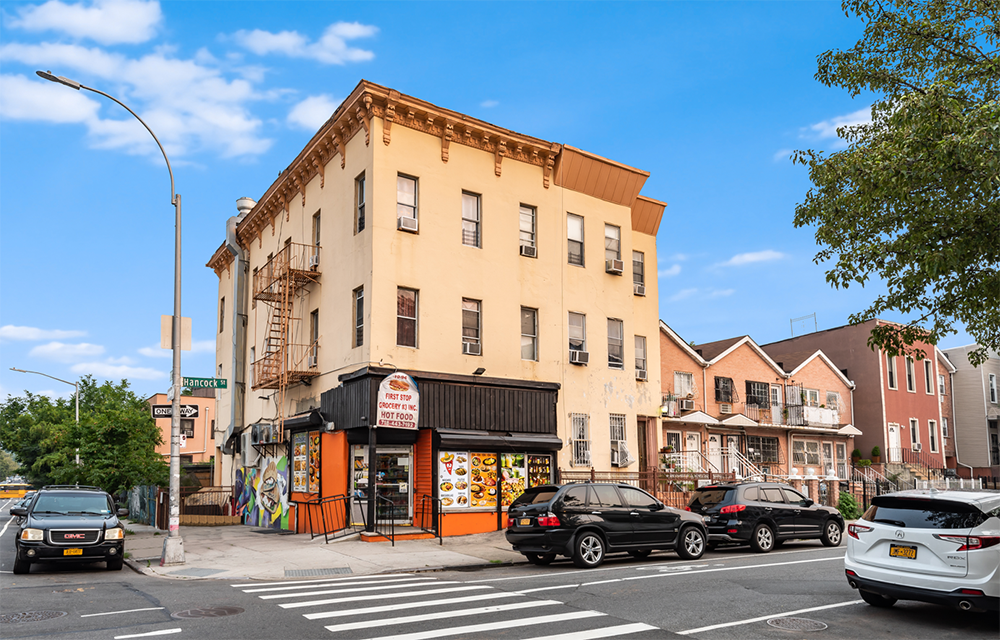
Investment Property Realty Group closes $1.75 million sale of 1094 Hancock Street in Brooklyn
Brooklyn, NY Investment Property Realty Group (IPRG), a New York-based commercial investment firm, has closed the sale of 1094 Hancock St., a mixed-use building in the Bushwick section, for $1.75 million.


Quick Hits

Columns and Thought Leadership

Hunt commercial real estate question and answer: Fortune 500 wisdom - by David Hunt
Yes, there are lessons to be learned from the largest companies in America when comes to managing your real estate. But the decision to buy or lease real estate may not be one of

Hunt CRE question and answer: Choosing a real estate agent - by David Hunt
First, we will only work with one agent exclusively. The primary reason is that we want that agent to legally represent our client’s interests. In New York State, a real estate agent has a fiduciary

A guide to finding the right NYC property management company - by Sanjay Gandhi
Being a small to midsize landlord in NYC is an increasingly demanding endeavor. From navigating complex regulations, increased compliance demands to dealing with tenant issues and remediating violations. It is wise to enlist the assistance of a partner, a professional

New York’s streets are full again, and the retail numbers prove it - by Noam Aziz
Walk down any New York block this year and you can feel it. The sidewalks are crowded, the storefronts are lit, and the energy that defines this city is back at full volume.
.gif)