



News:
Spotlight Content
Posted: March 19, 2019
Company of the Month: Peak Power uses battery energy storage and AI tech to lower energy bills and support utilities
New York, NY Peak Power provides smart software and technology solutions for the modern energy market. Through their intelligent Peak Synergy platform, Peak Power empowers building owners to achieve long-term savings from rising electricity bills, reach sustainability goals and increase on-site resiliency, while aiding utilities in addressing aging infrastructure and peak demand requirements.
The Peak Synergy software optimizes the operation of distributed energy assets such as battery energy storage, electric vehicles, and solar power. It forecasts moments of peak demand in buildings and on the grid through the use of “Big Data and Machine Learning,” a form of Artificial Intelligence (AI).

Peak has developed three specific product lines that leverage the advanced forecasting capabilities of the Synergy software. Peak’s Building Insight Platform (BIP) is an innovative energy dashboard that uses wireless internet enabled sensors throughout a building paired with AI analytics to provide building operators with data-driven insights to operate buildings more efficiently. The BIP features an intuitive customizable user interface and mobile app so operators can access important building data anytime throughout the day. The BIP allows operators to proactively deal with issues before they become problems, improve tenant comfort, and reduce electricity costs.
Peak Power also offers a Battery Energy Storage Solution (BESS) controlled through the Synergy software. Peak’s BESS is offered at no-cost to building owners through a shared savings agreement to lower electricity costs. This business model reduces risk because clients don’t pay anything unless the systems saves money.
For the third product line, Peak Power is developing an Energy Market Platform (EMP) that will test innovative models to allow consumers to buy and sell electricity in an open energy market based on real-time price signals. Peak is planning the world’s largest demonstration of this concept which will feature 20 commercial office buildings installed with energy storage and 200 electric vehicles with bi-directional energy capabilities to provide grid services to utilities.
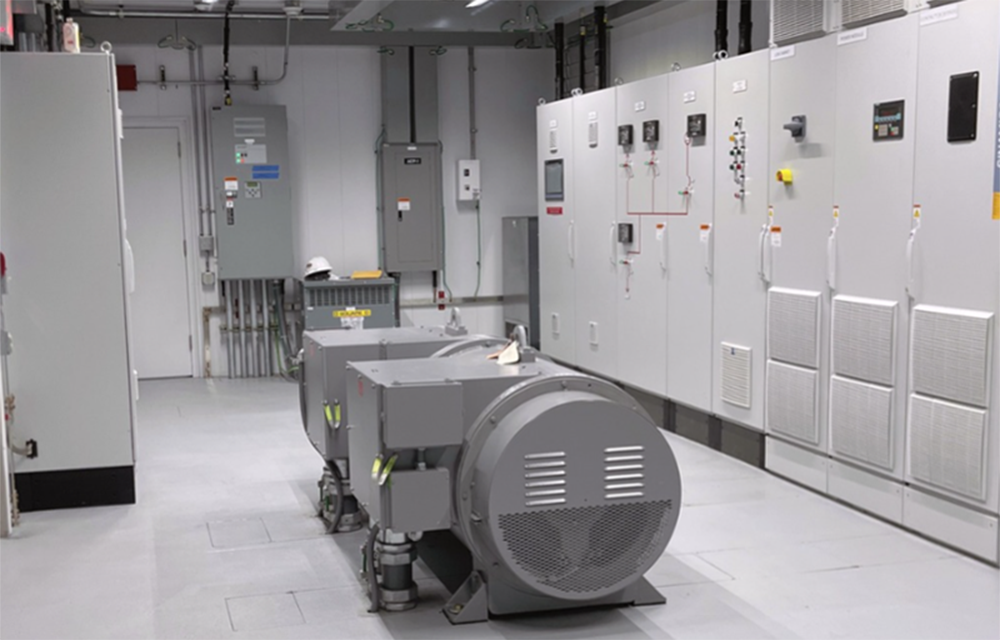
Peak Power recently partnered with GHP Realty, a division of Houlihan-Parnes Realtors, LLC to install a battery energy storage system at their head office located at 4 West Red Oak Ln. in Westchester. This project represents one of the largest energy storage installations in a commercial building in the state. The project with GHP Reality features Lockheed Martin’s Gridstar 2.0 energy storage technology, paired with Peak Power’s intelligent software platform. This project also utilizes Peak Power’s BIP as part of a comprehensive energy management system.
GHP is currently in discussions with Peak Power to install storage systems at various other GHP properties which would create one of the largest virtual power plants in the state. A virtual power plant allows a fleet of assets to provide grid services to the utility just like a generating station, but at much lower cost and without the negative environmental impacts of conventional power plants.
“The New York Public Service Commission has set an ambitious target of installing 3,000 MW of energy storage by 2030 due to the benefits these systems can provide to the grid,” said Derek Lim Soo, CEO of Peak Power. “This project really demonstrates how GHP Realty is taking a leadership role in commercial real estate technology as the industry matures.”
Peak Power’s energy storage system generates significant long-term savings and a reduction in greenhouse gas emissions from electricity use. It also helps reduce the need for power from Con Edison’s grid at times when the demand for electricity is high, which usually occurs on hot summer days. That will help Con Edison keep its service reliable for its 3.4 million customers in New York City and Westchester County. Energy storage systems are crucial for the future of the electrical grid to more effectively and efficiently balance energy supply with demand.
“We have been extremely impressed with Peak Power’s capabilities and the simplicity of the overall process,” said Michael Cinicolo, vice president of property management and construction at GHP. “We are very excited to be one of the early adopters of energy storage in New York.”
Peak Power also helps buildings meet BOMA Best and LEED Certifications. Only 2-3% of buildings achieve the Platinum level requirements, and in Toronto, Peak Power helped a 50-year-old building do it in one year. After 15 years of working hard to receive the BOMA Best certification, it was Peak Power’s BIP platform that became the game changer for a building at 95 St. Clair Ave. West.
“This was undoubtedly one of the most collaborative efforts I have ever seen,” said national energy & sustainability manager for Colliers which manages the site, Phillip Raffi, when speaking about the teamwork and innovative thinking it took to accomplish such a feat.
Tags:
Spotlight Content
MORE FROM Spotlight Content

NYREJ's 2026 Developing Long Island Spotlight is here!
This spotlight showcases projects completed and currently under construction across Long Island as well as highlights improvements made to the region through Industrial and Economic Development Agencies and BIDs.



.png)

Quick Hits
 (2).gif)

Columns and Thought Leadership

Properly serving a lien law Section 59 Demand - by Bret McCabe
Many attorneys operating within the construction space are familiar with the provisions of New York Lien Law, which allow for the discharge of a Mechanic’s Lien in the event the lienor does not commence an action to enforce following the service of a “Section 59 Demand”.

CRE Guide Featured Company: Merritt Environmental Consulting Corp.
Merritt Environmental Consulting Corp. (MECC) was established in June of 2009 after being part of a larger engineering firm for almost 20 years. The focus of the company is to assist lending institutions, attorneys, real estate investors, and property owners with environmental concerns. Today, MECC has offices in New York, Florida, and Vermont and has grown into a regional consulting firm serving clients along the East Coast.

2026 Developing Queens: Long Island Board of Realtors advances commercial growth and advocacy in Queens
The Long Island Board of Realtors (LIBOR) Commercial Network continues to play a key role in advancing opportunities and strengthening the commercial real estate landscape across Queens. Through targeted programming and global outreach

From vacancy to vitality: How adaptive reuse is reshaping Long Island’s CRE landscape - by Andrea Tsoukalas Curto
Adaptive reuse has become one of the most important conversations in commercial real estate today. Long Island has a large inventory of aging retail, office and industrial