
president,
Evolution Energy Partners
(Evolution Sustainability Group)





New York, NY When Chuck Hurchalla spun off UGI Energy Service’s brokerage division into Evolution Energy Partners (EEP) (Evolution Sustainability Group) just three short years ago, his goal was to create an energy consultant that handles much more than the typical supply agreement. Hurchalla founded EEP with two primary divisions working closely together for the benefit of their customers: One focused on design-build energy efficiency and the other focused on energy procurement.
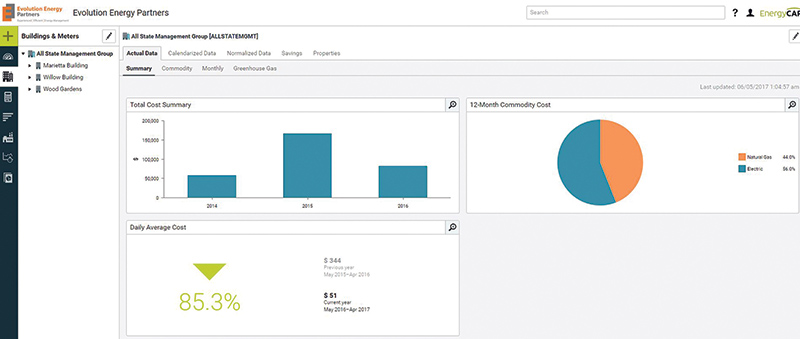
EEP’s procurement division can work with customers in de-regulated states to manage their cost per kWh and/or “therm,” with transparent fees that are often 20 to 60% less than other brokers. EEP’s procurement side is comprised of specialists with over 100 combined years of experience, strong industry knowledge, hedging expertise and deep ties in the various utility and supply companies. In addition, EEP applies risk mitigating procurement strategies that involve utility bill auditing, tariff analysis, market forecasting, and independent contracting. In addition to the procurement expertise, EEP offers utility bill management software to all clients at no charge, which monitors energy bills and usage. This management software also tracks water usage, allowing for easier benchmarking and compliance with New York City’s strict LL84 benchmarking law.
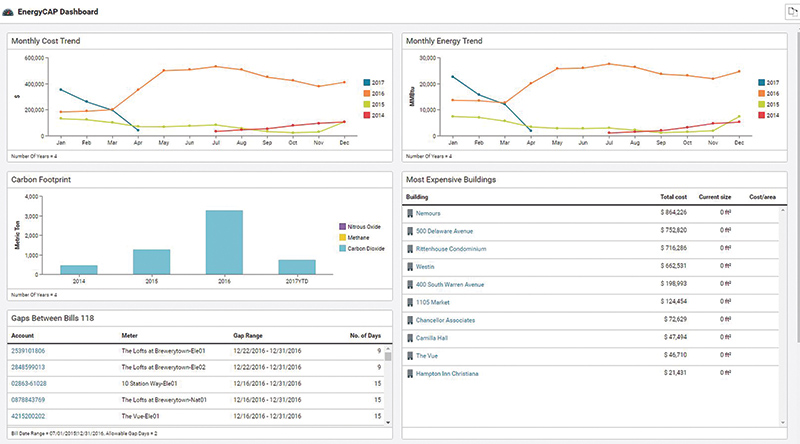
At no cost, EEP assesses a customer’s facility and determines how much energy a customer uses and where and why the energy is being consumed. Simultaneously, EEP determines how much their customer is paying per unit of energy (i.e. kWh, therm, gallon, etc.). To address energy consumption, EEP relies on their expertise in more than six dozen different engineering approaches and energy conservation measures (ECM). Their engineers, Certified Energy Managers (CEMs), and LED lighting specialists can evaluate all energy consuming loads across facilities in literally any industry or vertical (from hotels and office buildings to hospitals and country clubs to food processing and heavy industrial).
“The energy assessment begins with a deep dive into the customer’s HVAC systems, process loads and lighting systems,” says Robert Holdsworth, vice president of engineering. Then, the EEP team engineers multiple potential ECMs which allows them to identify those measures which produce the highest ROI and fastest paybacks and remove those measures with longer paybacks.
As a simple scenario, consider a high-rise building with 30,000 s/f of common area space conditioned and lit year round. The annual utility costs amount to more than $100,000 allocated approximately 40% for HVAC, 25% for lighting and 5% for domestic hot water. If we were to reduce the building’s consumption by just 20% we would realize more than a $20,000 expense reduction. According to NYU’s Stern School of Business, the average net income based profit margin for real estate operations and services is 4.96%. That means that the bottom line annual savings of $20,000 equates to more than $403,000 in newly generated revenue every year.
And it’s not just offices or residential buildings. A 500,000 s/f city hotel built just a few years ago recently reduced their electric consumption and corresponding cost by more than $65,000 per year. The project garnered over $160,000 in utility rebates and federal tax benefits and has an 86% ROI (pays back in just 14 months). Additionally, the hotel had the option to finance the entire project with zero upfront capital, where the project was able to self-fund and generate more than $20,000 in immediate positive cash flow every year during the financing term.
So how does a company realize savings and returns like this? From a technical perspective, there are many potential energy conservation measures available. The trick is to analyze all possible options specific to the particular building’s unique energy profile and electrical and mechanical systems. Then weed out the long payback measures and reduce scope to include only the solutions with the greatest cost benefit.
Consider engaging an experienced energy engineering firm to lend a hand. Preserving profit margins will always be a struggle, but significantly reducing and controlling the second largest expense category can be easy and it is a sure way to help win the fight. Look for a firm with the following attributes:
• A company that will do the upfront work at no cost and no obligation. Make sure to find a company that will provide you with a free ASHRAE Level II report showing all recommended solutions and project economics in detail. The best companies don’t ask you to spend a dime until you have all of the information necessary to make an informed decision.
• A company with experts on staff with comprehensive experience in all of the dozens of available energy efficiency measures out there. You never know which measures will be best for your building until the analysis is done.
• A company that will both administer the utility rebate process and accept the incentives directly as partial payment for the project.
• A company that will perform the installation of their solutions on a complete design/build, turnkey basis.
Our roadmap at Evolution (Evolution Sustainability Group) also includes keeping a close eye on battery storage and micro-grids; “We believe this to be the future in energy distribution and energy management,” said Hurchalla, President of EEP. In the meantime, EEP will continue providing one-stop shopping for energy cost reduction while addressing both the supply and demand side of the energy equation.

.png)

 (2).gif)