



News:
Brokerage
Posted: February 7, 2017
Company of the Month: Cleareon Fiber Networks: Building connectivity with clarity, integrity and transparency
 New York, NY In the modern-day commercial real estate market, connectivity is just as important as location. In fact, for many prospective tenants, connectivity may even be more important. As strong broadband and wireless connectivity are critical for business operations, today’s businesses also demand connectivity choices.
Enter Cleareon Fiber Networks.
Recently, two telecom visionaries set forth on a mission to democratize the telecom industry, and bring new connectivity opportunities to commercial real estate property owners and their tenants in and around the NYC metro area. Co-CEOs Cliff Kane and Michael Collado, backed by NYC real estate developers at Taconic Investment Partners and private equity firm Dubilier & Co., decided to make access to connectivity easier, quicker and without restrictions for commercial real estate owners, service providers and large enterprises. Cleareon brings unbiased clarity to connectivity.
 Cliff Kane, Cleareon Fiber Networks
After two years of acquiring and building infrastructure, back office systems and obtaining franchises from NYC, Cleareon Fiber Networks launched in September of 2016 as a network services provider that is rapidly gaining credibility for pioneering a new, transparent and straightforward way of doing business. For years, the conventional way of shopping for connectivity has limited businesses to choosing between just one or two “old-school” telcos. Cleareon changed that – offering building owners and businesses more choices when it comes to fiber connectivity in their buildings.
Cleareon’s dark fiber and lit (Ethernet) services enable its customers access to hundreds of digital service providers, including traditional telcos, as well as wireless carriers, cloud service providers, big data companies, storage networks, international carriers, social networks, financial market services and content networks. The company can also implement In-Building Wireless, Small Cell & DAS Solutions.
Cleareon works with building owners to enable them to meet their tenant’s demands for connectivity that is fast, dependable, and without restrictions.
“Now more than ever, the commercial real estate community realizes the benefit of having ‘connected’ properties. Cleareon is leading that charge,” said Kane. “We are committed to bringing transparency and neutrality to the otherwise opaque, restrictive and biased market for dark fiber and lit services.”
At Last – Connectivity with Clarity
Cleareon recognizes the complex challenges property owners face when considering wireless and wireline systems. Tenants demand “five bars” of service on their mobile devices and have broadly diverse and frequently changing needs for their wireline connectivity.
Landlords and property managers are faced with potentially significant capital investments to upgrade their buildings to meet today’s connectivity expectations. Sometimes wireless carriers offer to pay the cost of installing in-building cellular systems, known as DAS (Distributed Antenna Systems) in return for exclusive long term “wireless marketing rights” for the property. Frequently, these systems only support one wireless carrier and thus make it difficult and expensive for the property owners to add another carrier – creating an environment where many tenants will not benefit at all. Additionally, these “free” arrangements are only available to large venues and buildings, typically over 1 million s/f, and now these offers are being pulled back by the carriers as they simply cannot afford to install DAS ‘everywhere.’
Regarding wireline connectivity, such as Internet access, Ethernet services, private line and voice, most buildings have only one or two incumbent carriers, such as Verizon. The tenants in these buildings have very limited choices as the incumbent carrier, not the building owner, controls the connectivity. Any other service provider that wishes to reach a tenant in the building must buy “access” from the incumbent. Further, many landlords falsely believe that if the incumbent has installed fiber into the building, then their building is ready for the future – nothing could be further from the truth.
Cleareon offers choices. The company designs, builds and maintains network systems that allow for maximum flexibility, not only with connectivity, but also with the costs associated with these systems. Cleareon installs a structured wiring system, within the building, which facilitates the distribution of DAS, wireline and other services including WiFi, public safety and video systems. The inside wiring is connected via fiber optics to Cleareon’s “ecosystem” of digital service providers. This ecosystem consists of Cleareon’s network, which runs through numerous data centers and “carrier hotel” buildings where hundreds of individual digital service providers can easily access the infrastructure that connects them to your building and your tenants. Most importantly, the tenants of the building now have access to virtually every service provider (globally), creating unrivaled choices, controlled costs, and other efficiencies for their businesses.
Cleareon is pioneering flexible solutions that ensure property owners are prepared to meet the wireless and wireline connectivity needs of the most demanding tenants. The company takes a partnering approach when working with commercial property owners that can allow for profit or revenue sharing. With Cleareon, building owners in and around NYC can provide tenants with the choices they want, and hence the connectivity they need now and well into the future.
Tags:
Brokerage
MORE FROM Brokerage
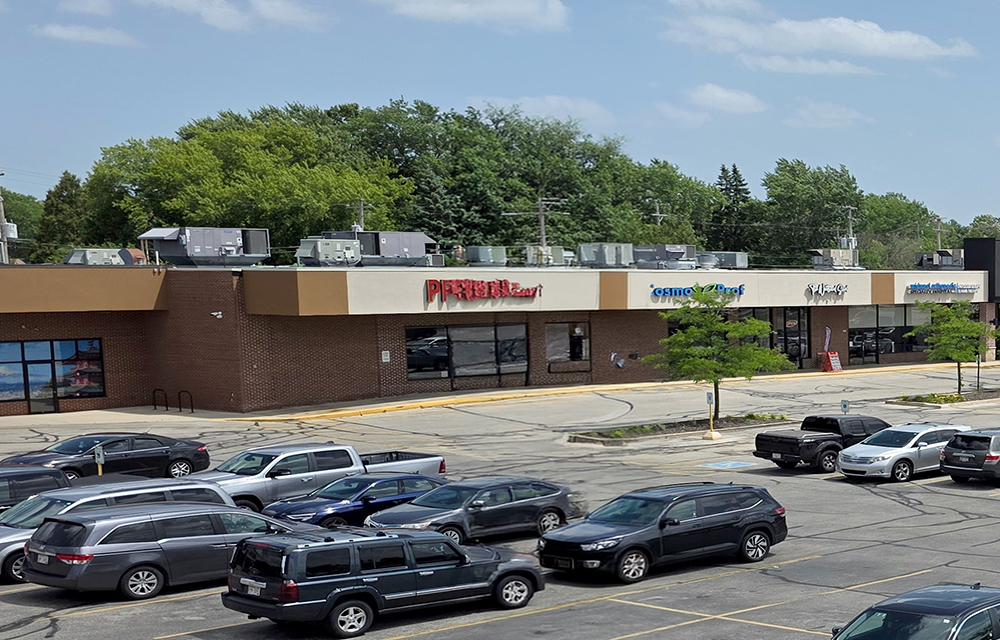
United Properties Corp. expands Wisconsin and Illinois retail presence adding 200,000 s/f
West Allis, WI United Properties Corp. completed two retail acquisitions totaling $27.4 million across Illinois and Wisconsin, adding 205,000 s/f of shopping center space to its portfolio




Quick Hits

Columns and Thought Leadership

New York’s streets are full again, and the retail numbers prove it - by Noam Aziz
Walk down any New York block this year and you can feel it. The sidewalks are crowded, the storefronts are lit, and the energy that defines this city is back at full volume.

A guide to finding the right NYC property management company - by Sanjay Gandhi
Being a small to midsize landlord in NYC is an increasingly demanding endeavor. From navigating complex regulations, increased compliance demands to dealing with tenant issues and remediating violations. It is wise to enlist the assistance of a partner, a professional

Positive forecast for New York’s pro-housing push? - by Philip Butler
New York’s housing crisis remains a hot button topic despite growing consensus that varied and affordable housing is desperately needed statewide. Governor Hochul has recently introduced several initiatives to overcome N.Y.’s anti-housing

Hunt commercial real estate question and answer: Fortune 500 wisdom - by David Hunt
Yes, there are lessons to be learned from the largest companies in America when comes to managing your real estate. But the decision to buy or lease real estate may not be one of
.gif)