



News:
Brokerage
Posted: June 9, 2015
Commercial and industrial industry changing in Upstate
The commercial and industrial real estate industry has been changing rapidly here in Upstate N.Y. The state, in the past and present, has been plagued with increasing bureaucracy on a state and local level, as well as taxes, which has driven a great number of businesses from us, to the southern U.S., as well as to European, Asian and Central American economies. The unfortunate result has been dramatic decline in real job growth here, with declines having been the norm for the past decade.
Hopefully that is changing. Our firm, specializing in commercial and industrial properties here in Upstate, has found a somewhat dramatic increase in two significant areas. First, new-to-the-area retail businesses have been aggressively seeking sites, even in smaller communities here. This has often meant that those retailers, including restaurant chains, have been happy with their business in larger communities, such as Syracuse, Albany and Rochester, and are now looking outward to expansion into the smaller communities. That type of expansion is usually a result of profitable business in the larger communities, which is particularly encouraging.
Secondly, there has been increased interest in industrial space. We previously had significant square footage available, to lease, in local industrial buildings. That is no longer the case, with increasing saturation of the industrial space. The result now is that there is minimal available space, for manufacturing, as well as distribution facilities. We have found out there have been two significant reasons; first, many local industrial operations, that had begun as "starter" or incubator businesses, have grown, sometimes dramatically, and have outgrown their initial location.
Next, many larger manufacturing and distribution companies have found Upstate Central N.Y., to be in the very center of their customer base. Consequently, Upstate distribution facilities have helped reduce transportation costs for them. Also, because of the loss of several major manufacturers over the past years, newer manufacturers have found an excellent source of skilled labor. That has helped provide a quality product, with excellent, dedicated, employees. We're looking for this trend to continue in our area for the foreseeable future.
John Bouck is the president/broker of Bouck Real Estate, Auburn, N.Y.
Tags:
Brokerage
MORE FROM Brokerage
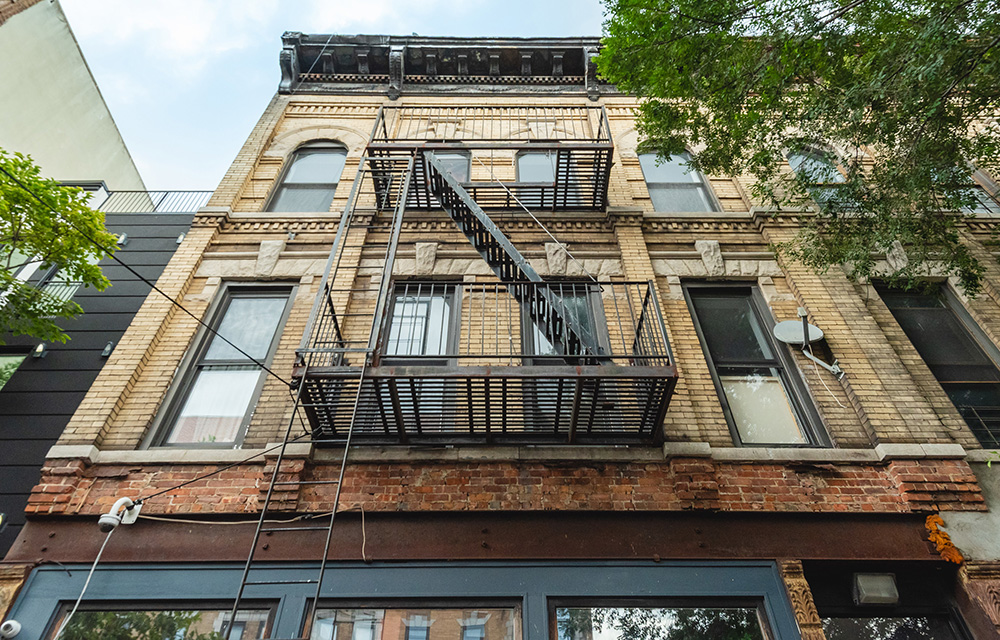
Marcus & Millichap brokers $2.8 million sale of free-market mixed-use property in Brooklyn
Brooklyn, NY Marcus & Millichap brokered the sale of 733 Dekalb Ave., a fully free-market multifamily and retail property in the Bed-Stuy neighborhood. The asset sold for $2.8 million.





Columns and Thought Leadership

Hunt commercial real estate question and answer: Fortune 500 wisdom - by David Hunt
Yes, there are lessons to be learned from the largest companies in America when comes to managing your real estate. But the decision to buy or lease real estate may not be one of

Positive forecast for New York’s pro-housing push? - by Philip Butler
New York’s housing crisis remains a hot button topic despite growing consensus that varied and affordable housing is desperately needed statewide. Governor Hochul has recently introduced several initiatives to overcome N.Y.’s anti-housing

A guide to finding the right NYC property management company - by Sanjay Gandhi
Being a small to midsize landlord in NYC is an increasingly demanding endeavor. From navigating complex regulations, increased compliance demands to dealing with tenant issues and remediating violations. It is wise to enlist the assistance of a partner, a professional

New York’s streets are full again, and the retail numbers prove it - by Noam Aziz
Walk down any New York block this year and you can feel it. The sidewalks are crowded, the storefronts are lit, and the energy that defines this city is back at full volume.
.gif)
September Promotion
