



News:
Brokerage
Posted: July 13, 2015
Commentary on the 2015 Buffalo apartment market
Multifamily sales in the Buffalo area market totaled $167 million in 2014. Total sales have exceeded $100 million the last three years, well above the levels seen in the mid 2000's. Buyers are local; institutional investors are not active here.
Significant transactions in 2014 include Linwood-Allentown Preservation's purchase of 295 units in 13 pre-war apartment buildings in Buffalo for $42.2 million including renovation and soft costs. The properties will remain as subsidized affordable housing for low and very low income households. Rents range from a $750 studio to a $1,275 four bedroom. Linwood-Allentown is organized as a for profit corporation and at $143,050 per unit the sale plus renovations is far above recent sale comparables for these rent levels but funding includes federal low income housing tax credits and $27 million in tax-exempt bonds and both Buffalo and Erie County approved a 15-year Payment In Lieu of Taxes (PILOT) agreement. Glendale Development bought the 875 unit 1970's portfolio of the Williamstowne and Garden Village in Cheektowaga and the Fairways in Tonawanda for $41 million or $46,857 per unit; typical of recent class B suburban market rate garden apartment sales.
Schneider Design is planning to sell the Historic Warehouse Lofts in downtown Buffalo as condominiums. The 30 apartments were developed in 2007 at a cost of $7.5 million. Prices will range from $215,000 to $365,000. Many loft conversion apartment buildings have been completed in the few years with the benefit of various tax credit and other incentive programs but none but one has reached the resale market as investment properties. Investment is a different calculation than development, and comparables don't justify the construction costs of up to $250,000 per apartment for these developments. The Historic Warehouse Lofts currently pays $7,400 a year in property taxes versus $110,000 at full assessment. Rent rates, already the highest in the area in these downtown developments, will be pressured even higher as the property taxes rise. This eventual rise in property taxes along with expiration of the sale exemption contained in the rehabilitation tax credits will drive other rental loft projects to the sale market. Several of the developers have been quoted as stating that the apartments were designed with condominium finishes in anticipation of conversion but how many $300,000 loft condominiums the downtown market can absorb at one time is unknown.
MHT Holdings and McGuire Development are planning to begin construction on Campus Square, a six story 260,000 sq. ft. housing development containing 152 apartments and retail space. The apartments will be a combination of affordable and market rate. The $70 million project will be financed with low income housing tax credits and according to the Buffalo News rents could range from as little as $5 per month for the most subsidized to $2,000 per month for the market rate units. A portion of the existing Pilgrim Village apartment complex near the Buffalo Medical Campus will be demolished to allow construction.
New apartment development has been driven by the federal historic rehabilitation tax credit and most of the buildings suitable for loft apartment development are finished and occupied in the desired downtown locations; further development of this type will have to move to less desirable buildings and to less desirable areas. The total number of new apartments added is still under 1,000 compared to the areas 58,000 unit market and there's been no appreciable impact on rent rates or occupancy. In the next few years what to watch will be how the market reacts as these new complexes adjust their rent rates as the property tax exemptions and abatements expire to maintain their net operating income (NOI) or transition to the for sale condominium market.
Brian Heine is a licensed real estate broker in New York state.
Tags:
Brokerage
MORE FROM Brokerage
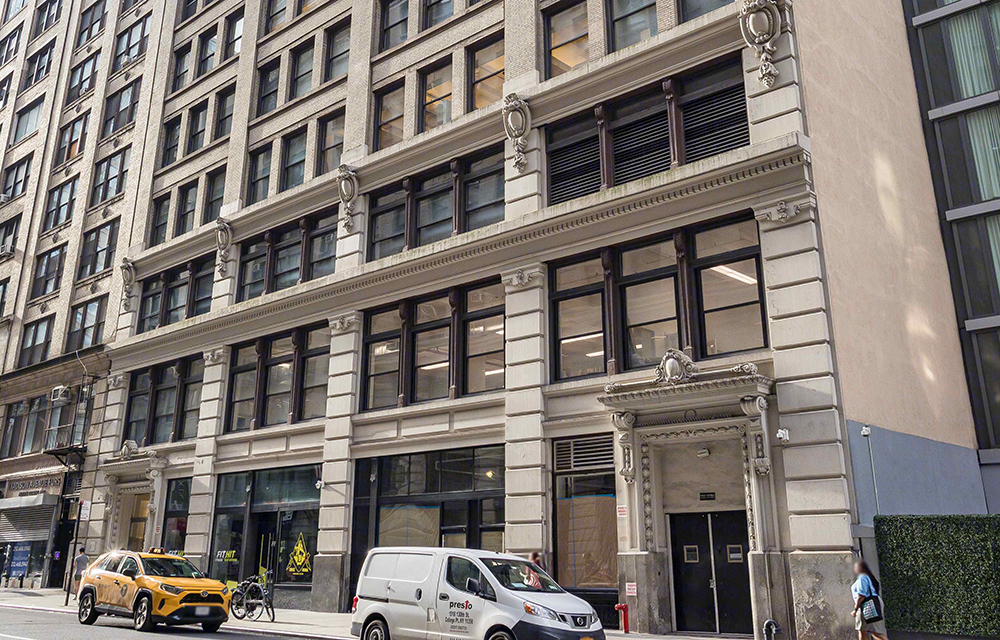
Koeppel Rosen inks 16-year 33,783 s/f lease for coworking firm Nomadworks at 122 West 27th St.
Manhattan, NY According to Koeppel Rosen LLC, leasing and management agent for the Rosen family portfolio, Nomadworks has signed a new 16-year, two-month lease totaling 33,783 s/f at 122 West





Quick Hits
 (2).gif)

Columns and Thought Leadership

Hunt commercial real estate question and answer: Fortune 500 wisdom - by David Hunt
Yes, there are lessons to be learned from the largest companies in America when comes to managing your real estate. But the decision to buy or lease real estate may not be one of

The art of investing in real estate - by Thomas Donovan
Real estate investing is as much an art as it is a skill. No one can time the market, or the factors that drive it, perfectly. Location, zoning, size, transportation, and neighborhood density give you a baseline for

Hunt CRE question and answer: Choosing a real estate agent - by David Hunt
First, we will only work with one agent exclusively. The primary reason is that we want that agent to legally represent our client’s interests. In New York State, a real estate agent has a fiduciary

New York’s streets are full again, and the retail numbers prove it - by Noam Aziz
Walk down any New York block this year and you can feel it. The sidewalks are crowded, the storefronts are lit, and the energy that defines this city is back at full volume.
.gif)