



News:
Brokerage
Posted: April 11, 2023
Clarion Partners announces series of upgrades and renovations to 114 W 41st St.
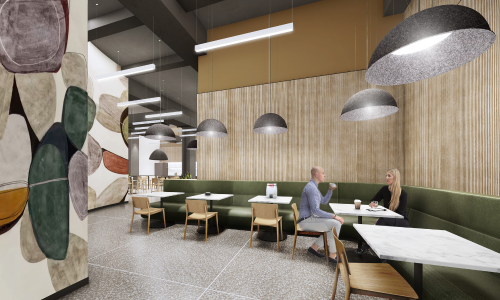
Clarion Partners has announced a series of upgrades and improvements at 114 W 41st St. off Bryant Park. The renovations are intended to create more sophisticated, modern, and functional common areas and amenity spaces for tenants and visitors.
The redesigned common areas by MKDA will provide an environment of enhanced collaboration, comfort, and convenience. The spaces will feature high-end finishes and modern and versatile furniture, as well as a new private fireside lounge. The pantry, dining galley and lounge can be combined to accommodate larger private tenant events for up to 115 attendees. Both building lobbies on 41st and 40th St.'s will also be upgraded with new desks and turnstiles.
"We are thrilled to reveal these new renovations and look forward to offering our tenants an enhanced standard of sophistication and functionality at 114 W 41," said Margaret Egan, Clarion Partners’ senior vice president of Asset Management. “As tenants in the market gravitate towards higher-quality, institutional assets, we are confident the redesigned common areas will provide a more productive, inspiring, and enjoyable location for their organization. The upgrades will enrich the building’s distinctive boutique ambiance while appealing to a wider array of tenant types seeking turnkey, one-of-a-kind space in a premier business environment.”
The new common area upgrades are the latest improvements to 114 W 41. Renovated in 2017, the 22-story, 352,000 s/f building was reimagined with a contemporary aesthetic. Tenant floors feature flexible open layouts. Each available space is pre-built with high-end finishes and fixtures, large open pantries, and customizable interior glass walls.
“The new upgrades to the amenities at 114 West 41st St. will allow the building to remain one of Bryant Park’s most highly sought destinations for tenants seeking a boutique, creative atmosphere with market-leading full floor prebuilt spaces,” said Newmark vice chairman Scott Klau, who heads up the leasing efforts at the property. “This is demonstrated by the building’s incredible tenant roster of firms, such as Anhueser-Busch Inbev, Snowflake, Inc and VTS.”
Current availability ranges from full floor pre-builts of 16,000 s/f to partial floor units of 7,356 s/f. The building’s retail spaces are fully occupied, featuring Maman bakery, Dos Toros, and Glaze Teriyaki.
Tags:
Brokerage
MORE FROM Brokerage
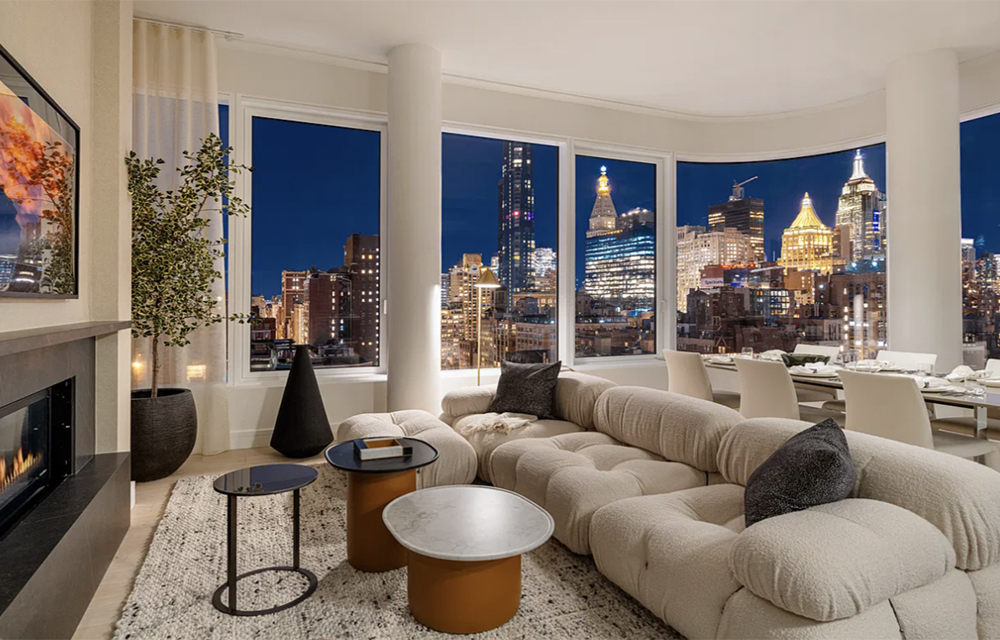
200E20TH sells out in Gramercy, penthouse A closes out sales at the CetraRuddy-designed condominium residences
Manhattan, NY 200E20TH, the CetraRuddy-designed architectural masterwork that brought a curved, contemporary sensibility to Gramercy’s Beaux-Arts streetscape, has





Quick Hits

Columns and Thought Leadership

Hunt CRE question and answer: Choosing a real estate agent - by David Hunt
First, we will only work with one agent exclusively. The primary reason is that we want that agent to legally represent our client’s interests. In New York State, a real estate agent has a fiduciary

Hunt commercial real estate question and answer: Fortune 500 wisdom - by David Hunt
Yes, there are lessons to be learned from the largest companies in America when comes to managing your real estate. But the decision to buy or lease real estate may not be one of

The art of investing in real estate - by Thomas Donovan
Real estate investing is as much an art as it is a skill. No one can time the market, or the factors that drive it, perfectly. Location, zoning, size, transportation, and neighborhood density give you a baseline for

New York’s streets are full again, and the retail numbers prove it - by Noam Aziz
Walk down any New York block this year and you can feel it. The sidewalks are crowded, the storefronts are lit, and the energy that defines this city is back at full volume.
.gif)