


News:
Owners Developers & Managers
Posted: May 7, 2019
City council passes Int No. 1253: A required reduction of Greenhouse Gasses in NYC by 80% - by George Crawford

Green Partners
The city council has just passed Int No. 1253, which is awaiting the mayor’s signature as this article is written. The bottom line is that by 2050, there will be a required reduction of Greenhouse Gasses in New York City of 80%. To achieve this mandated goal, buildings will be evaluated on the basis of the totality of their energy consumed, which includes electric as well fuel for heating and hot water. While the city is prepared to set emission limits on the burning of fossil fuels, such as oil gas and coal in individual buildings, the better and most cost effective solution is to reduce electric consumption as soon as possible, to try and avoid the city stepping in and imposing emission limits.
Electric consumption reduction can be achieved in two steps. Proceed with Local Law 88 requirements including the LED upgrade for common areas in multifamily properties and the building wide LED upgrade in commercial properties. These required steps will result in significant savings as electric consumption will be reduced by 50% on average. In residential buildings consider taking the LED upgrade a step further. Encourage building residents, on a voluntary basis, to upgrade to LED. Some assistance may be required to ensure that the LED replacement products meet required aesthetics in apartments, but the energy reduction is well worth it.
There are additional mandates that tie into this overall 80% Carbon Reduction Goal, including building emissions restrictions for buildings that do not meet goals that commence in 2022. To monitor these requirements, there will be annual audits for every building conducted by a Registered Design Professional. This proposed Local Law covers buildings that are 25,000 s/f and larger. Since the fines are huge for non compliance, buildings will have no choice, but to comply. The limits on building emissions will start in 2022, so make sure that LED upgrades are completed well before 2022.
As soon as this Local Law is signed by the mayor, there will be more information publicized.
As meeting these mandates may involve investment, we further recommend reaching out to your accountants to discuss tax advantaged strategies that are available. Review EPAct 179D which is applicable to buildings that pay taxes, such as commercial buildings, hotel and rental properties. This tax provision allows immediate deductions for the cost of energy saving measures to offset income as opposed to an amortization schedule that allows gradual deductions against income.
If your accountant is not set up to handle EPAct 179D submissions, there are a small group of tax providers that have the qualifications and computer capabilities to meet these requirements and can coordinate the related tax preparation with your own tax provider. All that is needed are the details or drawings of your LED or energy savings project. Most of these tax providers will review your project on a complimentary basis. To proceed with the actual documentation and the required computer model, there is a small fee based of tax savings realized.
One example of a well established tax provider specializing in this work is Energy Tax Savers. Their website, is www.energytaxsavers.com, contains helpful information with regard to EPAct179D including an online webinar.
George Crawford is the principal of Green Partners, New York, N.Y.
MORE FROM Owners Developers & Managers
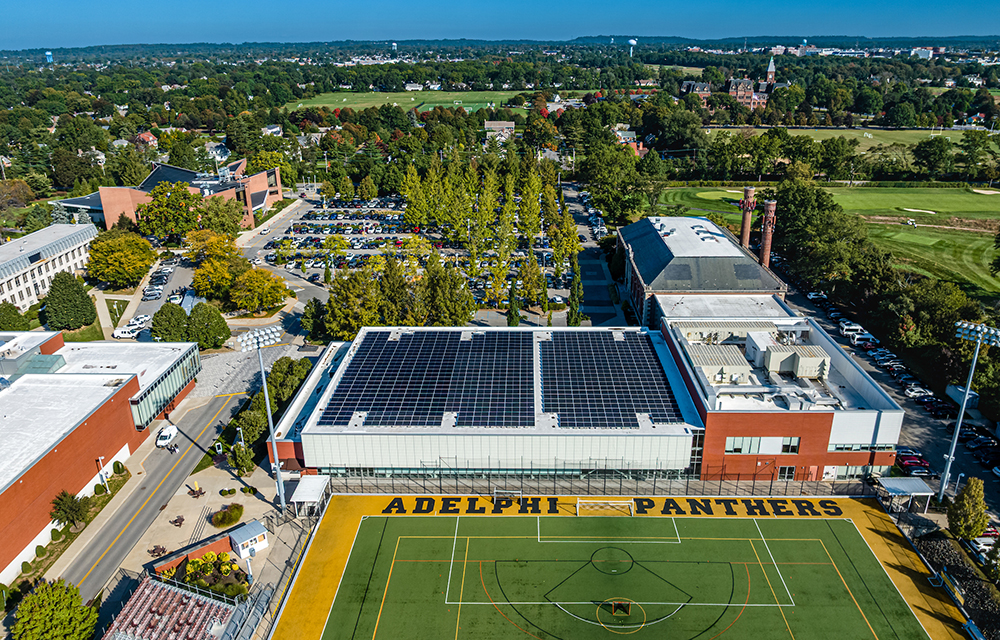
Adelphi University turns roof challenge into solar opportunity with SolarKal and Greenskies
Garden City, NY Adelphi University, Long Island’s top-ranked private university, today announced a major new solar energy initiative on its 75-acre main campus. A new 295 kW solar system on the roof of its Center for Recreation and Sports is now providing renewable solar electricity for the university over the next 20-plus years.





Columns and Thought Leadership

New York City’s historic rent freeze now rests with the courts - by Ron Cohen
New York City’s first-ever two-year rent freeze is now in the hands of a state Supreme Court judge, and the decision could reset income for owners of roughly one million rent-stabilized apartments housing some 2.4 million residents.
NYC's Community Opportunity to Purchase Act is back - and multifamily owners should pay attention - by Ron Cohen
New York City’s Community Opportunity to Purchase Act (COPA) is back, and this latest version could have a much better chance of becoming law. The proposal would give qualified nonprofit organizations

Don’t leave severance damages behind - by Sebastian Jablonski
When the government takes a portion of a landowner’s property, most assume just compensation stops at the value of the land taken. However, in partial takings, that is only half of the equation.

Hunt Commercial Real Estate Q&A: Location, location, location? - by David Hunt
In working with our clients, we break down our search objectives into two categories. The first category involves the specific needs of your business such as warehouse height, amount of office space and number of loading