



News:
Brokerage
Posted: September 24, 2024
CIBS hosts panel on the future of Melville town center development
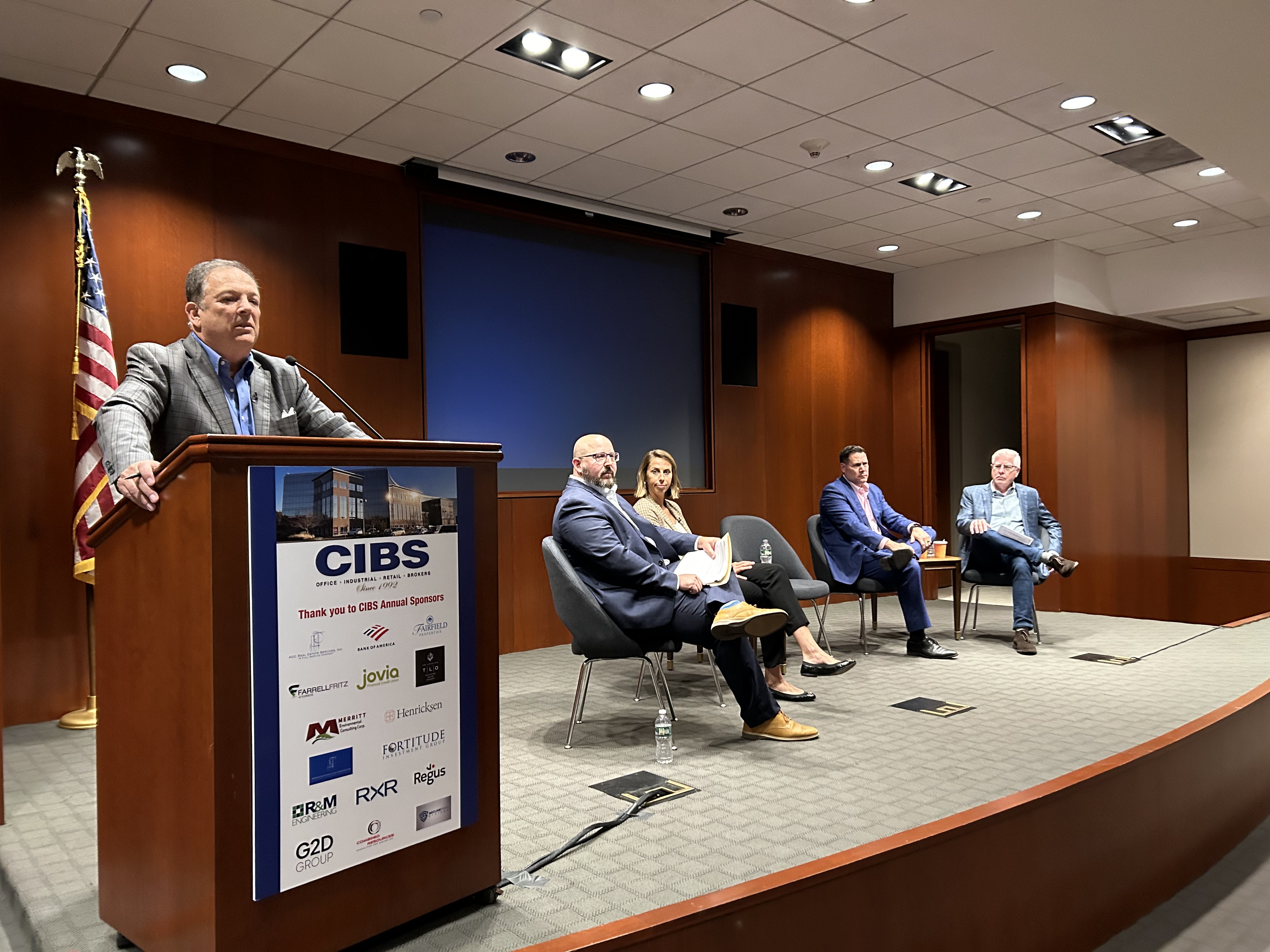
Melville, NY The Commercial and Industrial Brokers Society of Long Island (CIBS) hosted its panel discussion titled, “The Melville Town Center – Will it Succeed and is It a Model for Other Long Island Municipalities?” on Wednesday, September 25, 2024. The event gathered industry leaders and real estate professionals to discuss the potential of the Melville Town Center development and its broader implications for Long Island municipalities.
Moderated by Peter Curry, partner at Farrell Fritz, P.C., the panel featured notable experts in the real estate and development sectors:
- David Pennetta, CIBS co-president and executive managing director at Cushman & Wakefield of Long Island
- Michael Florio, CEO of the Long Island Builders Institute
- Louis Bekofsky, principal and managing director at VHB Engineering
- Kelly Coughlan Heck, executive vice president and partner at Tritec
The discussion provided valuable insights into the challenges and opportunities presented by the Melville Town Center project, which seeks to redevelop the Maxess Road Neighborhood from outmoded industrial and office uses into a vibrant mixed-use community encompassing commercial, residential, and recreational spaces. The panel also explored whether the project could serve as a replicable model for other municipalities on Long Island.
“The Melville Town Center project has the potential to reshape the way Long Island approaches mixed-use development,” said Curry, who emphasized the importance of the project. “This conversation demonstrated that this initiative could indeed serve as a blueprint for other municipalities looking to balance commercial and multi-family growth with community needs.”
The event underscored the importance of collaboration between developers, local governments, and the community to ensure that Long Island continues to thrive as a commercial and residential hub. Touching on the broader issue of Long Island’s real estate development, panelists delved into the need for sustainable growth strategies, community engagement, and the critical role of infrastructure investment.
“CIBS is proud to facilitate important conversations like this one,” said CIBS co-president David Pennetta. “As Long Island continues to evolve, it’s essential that we remain proactive in addressing the challenges and opportunities of major development projects like Melville Town Center.”
Tags:
Brokerage
MORE FROM Brokerage

200E20TH sells out in Gramercy, penthouse A closes out sales at the CetraRuddy-designed condominium residences
Manhattan, NY 200E20TH, the CetraRuddy-designed architectural masterwork that brought a curved, contemporary sensibility to Gramercy’s Beaux-Arts streetscape, has



Quick Hits

Columns and Thought Leadership

The art of investing in real estate - by Thomas Donovan
Real estate investing is as much an art as it is a skill. No one can time the market, or the factors that drive it, perfectly. Location, zoning, size, transportation, and neighborhood density give you a baseline for

Hunt CRE question and answer: Choosing a real estate agent - by David Hunt
First, we will only work with one agent exclusively. The primary reason is that we want that agent to legally represent our client’s interests. In New York State, a real estate agent has a fiduciary

Hunt commercial real estate question and answer: Fortune 500 wisdom - by David Hunt
Yes, there are lessons to be learned from the largest companies in America when comes to managing your real estate. But the decision to buy or lease real estate may not be one of

New York’s streets are full again, and the retail numbers prove it - by Noam Aziz
Walk down any New York block this year and you can feel it. The sidewalks are crowded, the storefronts are lit, and the energy that defines this city is back at full volume.
.gif)