



News:
Brokerage
Posted: July 29, 2013
CBRE Group hires Medina to New Jersey office
CBRE Group Inc., one of New Jersey's largest commercial real estate brokerage firms, has hired Gualberto (Gil) Medina as an executive vice president in brokerage services in the firms Saddle Brook office.
Medina will focus on providing and coordinating integrated real estate solutions on behalf of corporate, governmental and academic research organizations in addition to local and global business development across all CBRE service lines.
Most recently the executive managing director for Cushman & Wakefield's New Jersey offices, Mr. Medina's involvement in both governmental and business organizations is widely known and highly respected throughout New Jersey. He served as the secretary of commerce for the state under Governor Christine Todd Whitman, and was responsible for planning and implementing business climate and organizational reforms that dramatically improved the state's economy, as well as formulating technology policy in various capacities. He personally conducted complex negotiations that brought relocations and expansions to New Jersey. At Cushman & Wakefield, Mr. Medina was responsible for strategic business development for the New Jersey market and co-founded the firm's life science and technology practices.
"This is an ideal time for Gil to be joining CBRE as his deep vertical expertise is a perfect compliment to our broad service platform," said Jeffrey Hipschman, senior managing director, CBRE New Jersey. "The Garden State is experiencing a renewed vitality as part of the economic recovery and offers many strategic advantages in the ever-changing structure of how business is conducted locally, nationally and globally. Gil will be a tremendous asset to CBRE by taking his high-level, C-suite approach to business and leveraging it with CBRE's extensive platform of services."
Hipschman said, "As one of the most accomplished real estate professionals in New Jersey, Gil brings unparalleled relationships and extensive knowledge of the state's key government, corporate and real estate players to our organization. His decision to join CBRE reflects the strength of our team's market position as we continue to deepen our bench of exceptional professionals to deliver best-in-class service for our clients."
"The role of the real estate services provider is changing," Mr. Medina said. "Clients today are looking for us to provide more than real estate solutions. They want us to be strategic advisors who make a positive impact on their businesses. CBRE not only has a reputation for integrity and superior market research intelligence, but also offers the most comprehensive array of service lines and expertise in the commercial real estate business. My goal is to always provide clients with the utmost in service and added value. With CBRE's depth and breadth of key insights and knowledge, I can successfully help clients make informed decisions that align with their overall business strategies."
Medina's career experience includes having served as vice president for International Business Development for a Voice-Over-Internet Protocol (VoIP) telecommunications company. Following that, he was the president and general counsel of a start-up biotechnology company that integrated technologies to perform protein analysis for the discovery of human pharmaceuticals and therapeutics. In addition, Mr. Medina is an attorney and Certified Public Accountant (CPA) who has developed extensive expertise in technology, regulatory and administrative matters.
A highly active member of the business and academic communities, Mr. Medina serves on a number of boards, including the National Association of Industrial and Office Properties-NJ (Board of Directors, Executive Committee, vice president, Associate Affairs); New Jersey Chamber of Commerce - Executive Committee; Rutgers University School of Business - Advisory Board; Rutgers University- Edward J. Bloustein School of Planning and Public Policy - Chairman of the Dean's Leadership Council; Thomas Edison State College - Chairman of the Administration, Audit and Finance Committee; New Jersey Community Development Corporation - Chairman of the Real Estate Committee; New Jersey Future; and Solix Corporation - Chairman of the Board.
He holds a Bachelor of Arts degree from Rutgers University and a Juris Doctor degree from Temple University.
Tags:
Brokerage
MORE FROM Brokerage
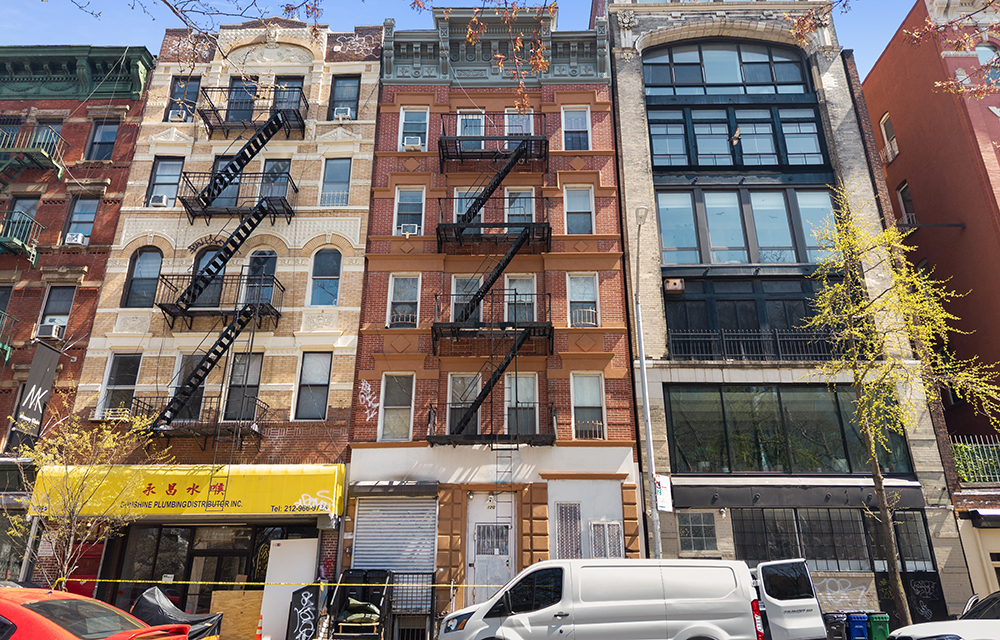
Investment Property Realty Group sells 120 Forsyth St. for $1.35 million
Manhattan, NY Investment Property Realty Group (IPRG) closed the sale of 120 Forsyth St., a mixed-use building located in the Lower East Side section of the city, for $1.35 million.





Columns and Thought Leadership

New York’s streets are full again, and the retail numbers prove it - by Noam Aziz
Walk down any New York block this year and you can feel it. The sidewalks are crowded, the storefronts are lit, and the energy that defines this city is back at full volume.

A guide to finding the right NYC property management company - by Sanjay Gandhi
Being a small to midsize landlord in NYC is an increasingly demanding endeavor. From navigating complex regulations, increased compliance demands to dealing with tenant issues and remediating violations. It is wise to enlist the assistance of a partner, a professional

Positive forecast for New York’s pro-housing push? - by Philip Butler
New York’s housing crisis remains a hot button topic despite growing consensus that varied and affordable housing is desperately needed statewide. Governor Hochul has recently introduced several initiatives to overcome N.Y.’s anti-housing

Hunt commercial real estate question and answer: Fortune 500 wisdom - by David Hunt
Yes, there are lessons to be learned from the largest companies in America when comes to managing your real estate. But the decision to buy or lease real estate may not be one of
.gif)