



News:
Brokerage
Posted: August 26, 2013
Cassidy Turley releases August Manhattan Market Report
Cassidy Turley, a leading commercial real estate services provider in the U.S., released its August Manhattan Market Report, which indicates that for the fourth consecutive month, Manhattan posted positive absorption with 275,433 s/f. The availability rate stood still at 11.4% for the second month. Class A asking rents remained stable, losing only $0.05 per s/f to $69.28, while class B asking rents continued to soar, up 2.5% this month to $52.19 per s/f.
Despite the recent positive notes to the Manhattan office market, office employment numbers dipped for the second consecutive month in June with 2,600 less office jobs than April's 1.25 million. Both professional services and information services, two of the biggest growth areas to date, contributed to this decline with 3,900 and 2,900 less jobs respectively.
Midtown had a slow month compared to the previous three when an average of 650,000 s/f of positive absorption posted. Space return outpaced demand as 175,526 s/f of negative absorption was posted. Availability nudged up 10 basis points to 11.5%, due to three large blocks of space being placed on the market.
Midtown South is still leading the recovery, despite a 10 basis point rise in availability this month. This increase is mostly attributable to a 181,783 s/f Li & Fung sublease at the Empire State Building. Class A asking rents remained flat in July, with a small drop of $0.18 per s/f to $67.12, while class B rents continued its upward trend and jumped $0.99 to $59.79 per s/f.
Availability Downtown dipped 60 basis points in July to 14%. With just over 500,000 s/f of positive absorption posted in July, nearly half of the 1.1 million s/f of negative absorption from the first six months of the year was wiped out. Class A asking rents dipped $0.10 per s/f to $52.44, and class B asking rents $0.13 to $35.96 per s/f.
"Despite the annual slowdown during the summer months, the Manhattan market continues on a positive trajectory," said Peter Hennessy, president, New York Tri-State Region Cassidy Turley. "The improvements should continue come September and the start of the fourth quarter."
Tags:
Brokerage
MORE FROM Brokerage
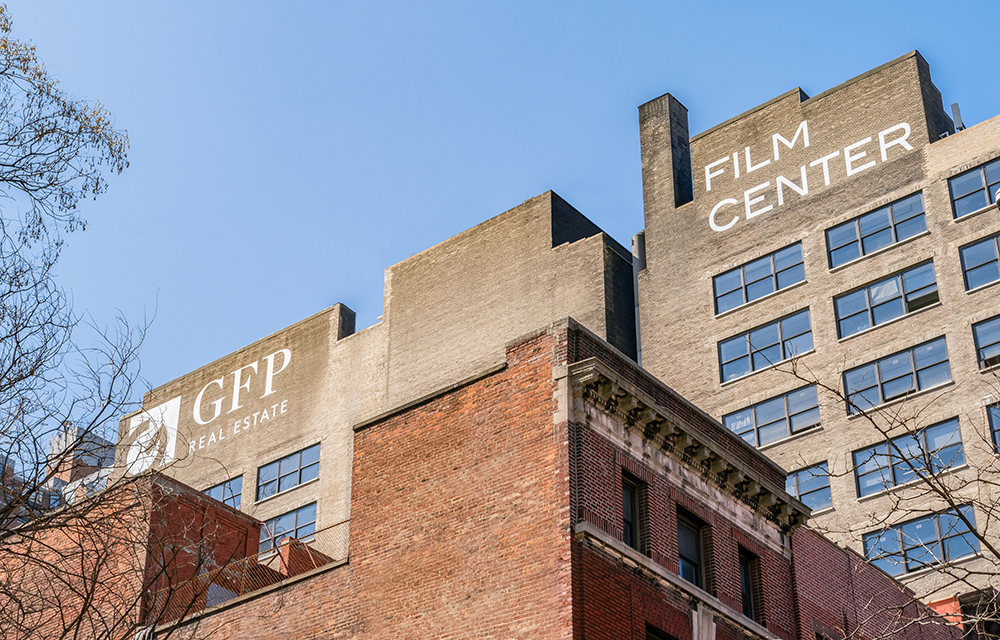
GFP Real Estate signs 11,078 s/f of leasing activity at 630 Ninth Ave.
Manhattan, NY GFP Real Estate closed three office leasing transactions totaling 11,078 s/f at 630 Ninth Ave. in Midtown, including a new lease with Irish Arts Center and extensions by existing


Quick Hits
 (2).gif)

Columns and Thought Leadership

Hunt commercial real estate question and answer: Fortune 500 wisdom - by David Hunt
Yes, there are lessons to be learned from the largest companies in America when comes to managing your real estate. But the decision to buy or lease real estate may not be one of

A guide to finding the right NYC property management company - by Sanjay Gandhi
Being a small to midsize landlord in NYC is an increasingly demanding endeavor. From navigating complex regulations, increased compliance demands to dealing with tenant issues and remediating violations. It is wise to enlist the assistance of a partner, a professional

Positive forecast for New York’s pro-housing push? - by Philip Butler
New York’s housing crisis remains a hot button topic despite growing consensus that varied and affordable housing is desperately needed statewide. Governor Hochul has recently introduced several initiatives to overcome N.Y.’s anti-housing

New York’s streets are full again, and the retail numbers prove it - by Noam Aziz
Walk down any New York block this year and you can feel it. The sidewalks are crowded, the storefronts are lit, and the energy that defines this city is back at full volume.
.gif)
September Promotion
