



News:
Brokerage
Posted: February 18, 2020
Cash flows as high as 8% and credit tenants – Should you consider NNN properties for your exchange? - by Michael Packman

KNPRE
For over 10 years now it’s been extremely fruitful to be a real estate investor. As those of us in the business know, 1031 exchanges can be especially beneficial in good real estate markets. As you trade up properties, they allow you to have the flexibility to exchange assets that you may have extracted all the value you can out of and move to a new property without the expense of paying capital gains taxes. As this current cycle of economic growth has matured, finding new properties to purchase without paying a substantial premium similar to the one you might be receiving on your sale has become more and more challenging. As cap rates have compressed across all markets including those that are more labor intense, one area that has really expanded is the Net Lease or NNN sector. In order to get more details on what is currently happening in this market, I recently sat down with a NNN veteran, Bill Levy, founder of Investment Grade R.E. Income Fund, L.P. He and his team have over 40 years and billions of dollars experience in real estate including more than 20 years in the NNN space.
Bill was explaining to me that with the rapid growth in the 1031 exchange market, the net lease real estate sector has seen an even greater expansion. Exchange clients are primarily seeking to defer their tax gains, but many are also looking to their newly acquired exchange property to require less management, if any, to be occupied by higher quality tenants and lease terms of 10 years, or longer. In other words, less work, less risk, and a reliable and sustainable monthly income.
One way of potentially achieving these goals is by exploring the net lease real estate sector which has grown to over $1.8 trillion since 2013 and has continued to expand at a rate of 15%-18% per year. This growth has also been fueled by our country’s aging population which is expected to reach 100 million by 2027. This sector control’s the majority of wealth within the U.S. and is expected to inherit an additional $15 trillion over the next decade.
Many in this part of the population have already used 1031 exchanges to defer tax gains and move into more conservative and management free properties. Most being beyond their most productive earning years, establish their primary goals as: Preserving their investment capital, obtaining reliable and sustainable monthly income with guarantees by “institutional quality” tenants and enjoying markets that don’t have the volatility of the public marketplace. Net lease real estate has the potential to achieve these goals, plus, provide ”above market” unleveraged current returns of between 5 ½% – 6 ½%. Another compelling reason to look at the sector is that with interest rates as low as they are, the leveraged cash flow can be as much as 8% or more
With the combination of the demographics, the desire for stable, conservative assets, and the potential for higher cash flow, the demand for net lease real estate seems to have the ability to continue its growth and be one of the main real estate investments of choice.
This has been a great time for not only real estate, but the economy as a whole and most asset classes. It might be worthwhile to remember that it’s not always like this and explore what we can do to take some of the risk out of our portfolios. Fortunately for real estate investors, we have the advantage of using section 1031 to defer the gains on the sales of our highly appreciated assets, the key is not to exchange into another property that might be overpriced just because we need to exchange and defer the tax. Every investment should hold to its own merits regardless of the tax benefits and investors need to evaluate each individual opportunity to make sure they are making decisions that are right for them, but having a portfolio of NNN assets might make sense for some. Especially with long-term leases guaranteed by credit tenants that have the potential to generate 8% or more of current cash flow and the ability to be virtually free from the management of the properties.
Michael Packman is a founder and principal of KNPRE, New York, N.Y.
Tags:
Brokerage
MORE FROM Brokerage
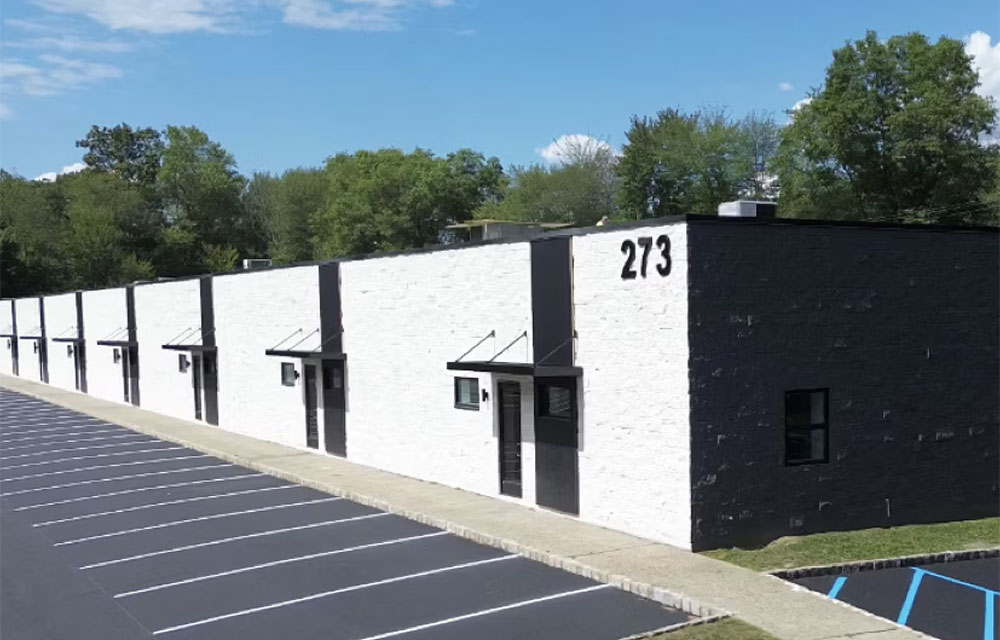
Resource Realty of Northern NJ delivers complete lease-up of 235 Franklin Rd. for Commerce Park Investors
Randolph, NJ Resource Realty of Northern New Jersey (RRNNJ) has completed the lease-up of a 10-unit small-bay industrial property at 273 Franklin Rd., marking the culmination of an investment strategy that began




Quick Hits
 (2).gif)

Columns and Thought Leadership

Positive forecast for New York’s pro-housing push? - by Philip Butler
New York’s housing crisis remains a hot button topic despite growing consensus that varied and affordable housing is desperately needed statewide. Governor Hochul has recently introduced several initiatives to overcome N.Y.’s anti-housing

New York’s streets are full again, and the retail numbers prove it - by Noam Aziz
Walk down any New York block this year and you can feel it. The sidewalks are crowded, the storefronts are lit, and the energy that defines this city is back at full volume.

Hunt commercial real estate question and answer: Fortune 500 wisdom - by David Hunt
Yes, there are lessons to be learned from the largest companies in America when comes to managing your real estate. But the decision to buy or lease real estate may not be one of

A guide to finding the right NYC property management company - by Sanjay Gandhi
Being a small to midsize landlord in NYC is an increasingly demanding endeavor. From navigating complex regulations, increased compliance demands to dealing with tenant issues and remediating violations. It is wise to enlist the assistance of a partner, a professional
.gif)