



News:
Brokerage
Posted: April 27, 2009
C&S' headquarters achieves LEED certification from USGBC
C&S Companies' 22,000 s/f building addition on the firm's headquarters achieved LEED certification from the U.S. Green Building Council. The USGBC said, "The Leadership in Energy and Environmental Design (LEED) Green Building Rating System encourages and accelerates global adoption of sustainable green building and development practices through the creation and implementation of universally understood and accepted tools and performance criteria."
The 22,000 s/f addition at C&S's offices near Syracuse Hancock International Airport was completed in fall 2007 and received certification in March. Sustainable designs were incorporated into the project from start through finish, starting with site selection, incorporating green systems and technologies throughout the design process, using environmentally friendly materials and processes during construction, and continuing sustainable practices as the building is in use today. C&S's offices are only the second building in the city to receive LEED certification.
Rick Fedrizzi, president, CEO, and founding chair of the USGBC, said, "C&S is on a short list of authentic green leaders in central New York and is to be commended for achieving LEED certification on its headquarters addition. This facility is one that both our community and C&S employees can be proud of for a long time to come. The building will be a showcase for high-performance, energy-efficient, healthy design, and an inspiration for others."
With its commitment to being "The Emerald City," the city was a major supporter of C&S for the building project. Mayor Matthew Driscoll said, "The city of Syracuse is a national leader in energy and environmental stewardship, and I'm pleased that C&S, a long-time business partner and leader itself in green design and construction, continues to make such a positive impact on both our natural and built environments. This LEED certification achievement signals our joint commitment to making Syracuse Hancock International Airport—and all facilities on its grounds—a model of sustainability for all of central New York."
As one of the largest full-service design and construction firms in upstate New York, C&S has been a leader statewide in sustainability and green design. Orrin "Mac" MacMurray, the firm's CEO, said, "C&S has embraced LEED and the principles of sustainability for years and see the movement toward more environmentally friendly, energy-efficient designs as the future of our industry. We have dedicated considerable resources to 'greening' both the work we produce for our clients and the policies and practices we employ in our offices. It cost us comparatively little to make this building green, and we know that the investment will pay back in improved employee health and productivity many times over."
C&S has established a firmwide commitment toward making offices and work products more green. The company's internal Green Focus Group comprises staff from every discipline at C&S, who get together monthly to find ways to improve the company's environmental footprint.
Initiatives include the purchase of two Toyota Prius Hybrid vehicles, a recycling program, eliminating disposable cups, and replacing light fixtures with high-efficiency fluorescent bulbs. John Trimble, P.E., president of the firm and a LEED accredited professional says that, "C&S has the unique opportunity to use our in-house re-sources and expertise to make a significant difference in our communities by designing and building projects that are healthier for both the planet and the people who use them."
C&S's project was awarded 29 LEED credits, including the following:
* Alternative transportation (Site Selection Credits 4.2 and 4.3)—The building has preferential parking for low-emitting and fuel efficient vehicles as well as bicycle storage and changing rooms.
* Protection of habitat (SS Credit 5.1)—50% or more of the site was kept as green space
* Maximization of open space (SS Credit 5.2)—The site left a minimum of 25% more open space than required by local zoning regulations.
* Stormwater quality and quantity control (SS Credits 6.1 and 6.2)—On-site structures reduce run-off and trap and remove pollutants and contaminants.
* Reduction of heat island effect (SS Credit 7.2)—A white roof on the building reflects the heat of the sun, reducing the required cooling load on the building.
* Optimized energy performance (EA Credit 1)—The building uses 29% less energy than a stan-dard building.
* Enhanced commissioning (EA Credit 3)— A designated commissioning authority led, reviewed, and oversaw completion of all commissioning process activities.
* Construction waste management (MR Credit 2)—75% of all construction waste (48 tons) was diverted from landfills through recycling.
* Use of regional materials (MR Credit 5)—27% of the materials used in the building came from within a 500-mile radius of the project site.
* Low-emitting materials (EQ Credits 4.2, 4.3, and 4.4)—The paints, coatings, carpet systems, and woods used in construction meet certain restrictions for emissions of volatile organic com-pounds.
* Daylighting and views (EQ credit 8.2)—More than 90% of spaces in the building have views of the outdoors.
Tags:
Brokerage
MORE FROM Brokerage
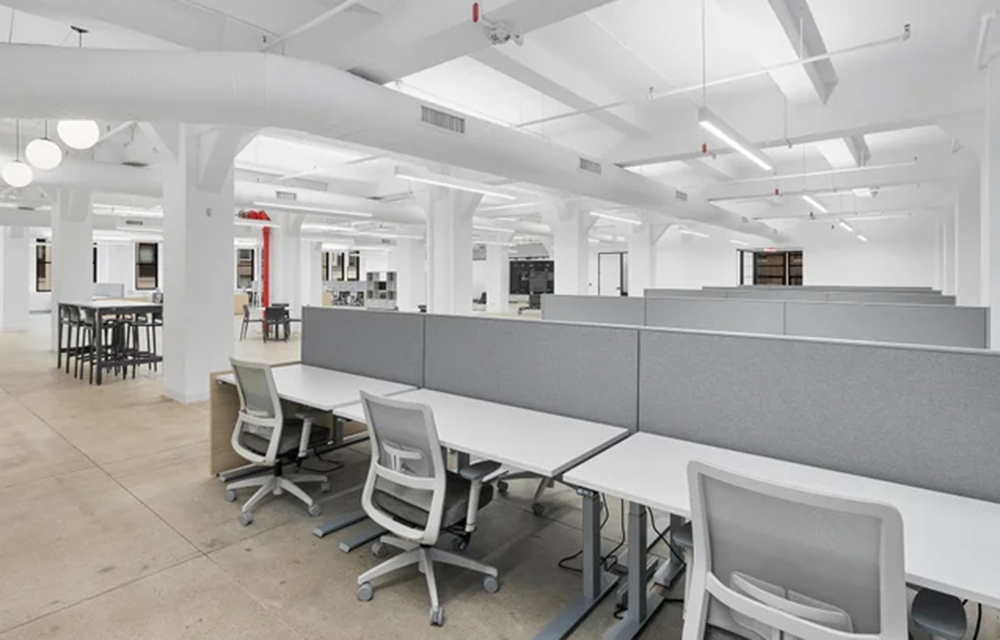
Lee & Associates NYC arranges 14,000 s/f Midtown office lease for Julie Vos
Manhattan, NY According to Lee & Associates NYC, fashion jewelry brand Julie Vos has signed a 14,000 s/f office lease at 218-232 W. 40th St. in Midtown.



Columns and Thought Leadership

New York’s streets are full again, and the retail numbers prove it - by Noam Aziz
Walk down any New York block this year and you can feel it. The sidewalks are crowded, the storefronts are lit, and the energy that defines this city is back at full volume.

Hunt commercial real estate question and answer: Fortune 500 wisdom - by David Hunt
Yes, there are lessons to be learned from the largest companies in America when comes to managing your real estate. But the decision to buy or lease real estate may not be one of

A guide to finding the right NYC property management company - by Sanjay Gandhi
Being a small to midsize landlord in NYC is an increasingly demanding endeavor. From navigating complex regulations, increased compliance demands to dealing with tenant issues and remediating violations. It is wise to enlist the assistance of a partner, a professional

Positive forecast for New York’s pro-housing push? - by Philip Butler
New York’s housing crisis remains a hot button topic despite growing consensus that varied and affordable housing is desperately needed statewide. Governor Hochul has recently introduced several initiatives to overcome N.Y.’s anti-housing
.gif)
September Promotion
