



News:
Brokerage
Posted: October 25, 2022
Building Trades leader offers roadmap for job creation and construction reform
New York, NY New York City has an opportunity to rebuild the physical infrastructure of the region, said Louis Coletti, president and CEO of the Building Trades Employers Association (BTEA). Coletti, who serves on mayor Eric Adams’ Capital Process Reform Task Force, offered a roadmap for the city to take advantage of this opportunity while offering a pathway to financial security for thousands of workers and residents.
The combination of economic upheaval caused by the COVID-19 pandemic and the influx of funding from the Federal Infrastructure Investment and Jobs Act passed last year, as well as other planned investments by the state and city, has created an opportunity not seen since the 1930s.
“Dating back to FDR’s Works Progress Administration during the Great Depression, when 8.5 million Americans were put to work, the construction industry has a history of rebuilding our physical and social infrastructure,” said Coletti. “Back then, we created new schools, roads, bridges, and water systems essential to our quality of life. We now have an opportunity to do it again for the thousands of New Yorkers who lack college degrees.”
A recent NYC Partnership survey that found that 47% of New York City job openings require a college degree, while only 43% of New Yorkers hold high school diplomas or GEDs. A vast majority of the construction labor force falls into the latter category.
Coletti said he expects New York City and State to initiate over $100 billion in building projects over the next 5-10 years that will lead to strong, stable career opportunities for thousands of New Yorkers. Those projects will include the Gateway Rail Tunnel project, Penn Station renovation, a new Manhattan Bus Terminal, 2nd Avenue subway expansion and many other initiatives.
According to the BTEA, every $1 million spent on construction creates eight new jobs in New York City, resulting in what could be a boon for a blue-collar middle class that has been increasingly under threat.
To ensure maximum economic impact and equitable economic participation, Coletti said these investments should be accompanied by reforms that will lower construction costs while promoting inclusive and equitable economic growth for minorities and women. As such, construction work projects should be accompanied by three key action items:
Reducing the cost of liability insurance by repealing the state’s scaffold law, which is responsible for insurance premiums 300% higher than anywhere else in the country, and requiring alternative dispute resolution to reduce Workers’ Compensation costs.
Adopting incentive programs to ensure private sector growth, including zoning and code changes that will allow underutilized commercial space in New York City to be repurposed for residential use, and changing laws that impede the construction of life science developments and affordable housing units.
Spearheading reforms that strengthen the certification and recertification of MWBE construction businesses in New York.
The BTEA represents approximately 1,200 New York union contractors, including 177 MWBE contractors, more than any other contractor association in New York State. Fifty-five percent of workers employed by BTEA contractors are minorities and women. Black union workers earn 36 percent more than non-union Black workers; Latino workers earn 52.7 percent more than non-union Latino workers.
“With major building and infrastructure projects looming, and timely reforms within our reach, New York City is poised to enact a bold action plan that will lead to a better future for all of us,” Coletti said.
Tags:
Brokerage
MORE FROM Brokerage
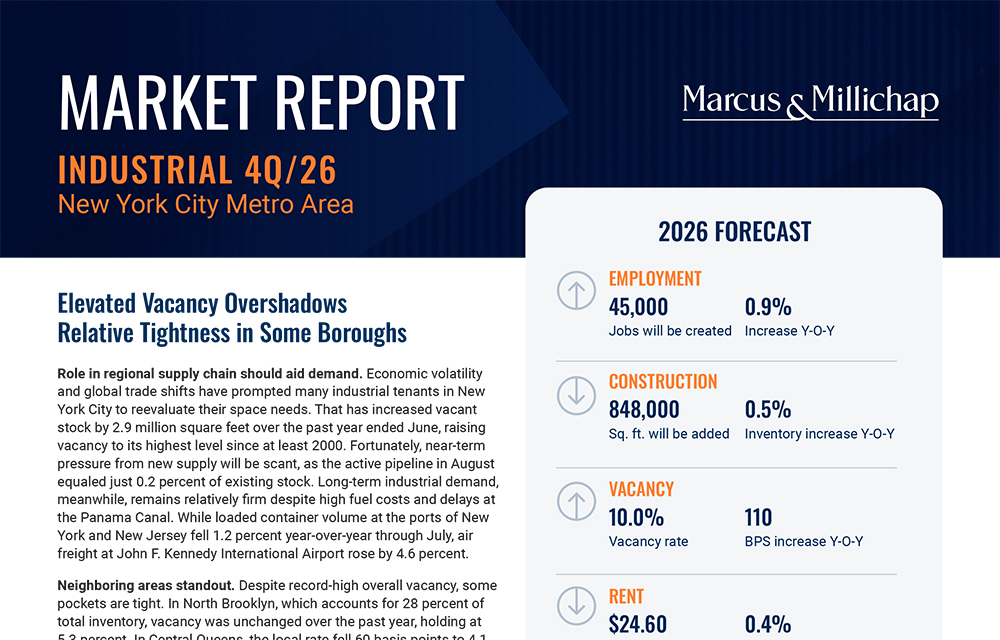
Marcus & Millichap releases fourth-quarter 2026 NYC industrial market report
Manhattan, NY Marcus & Millichap has published its fourth-quarter 2026 New York City Industrial Market Report. “New York City’s industrial market is showing a clear







Columns and Thought Leadership

The art of investing in real estate - by Thomas Donovan
Real estate investing is as much an art as it is a skill. No one can time the market, or the factors that drive it, perfectly. Location, zoning, size, transportation, and neighborhood density give you a baseline for

Hunt CRE question and answer: Choosing a real estate agent - by David Hunt
First, we will only work with one agent exclusively. The primary reason is that we want that agent to legally represent our client’s interests. In New York State, a real estate agent has a fiduciary

Hunt commercial real estate question and answer: Fortune 500 wisdom - by David Hunt
Yes, there are lessons to be learned from the largest companies in America when comes to managing your real estate. But the decision to buy or lease real estate may not be one of

New York’s streets are full again, and the retail numbers prove it - by Noam Aziz
Walk down any New York block this year and you can feel it. The sidewalks are crowded, the storefronts are lit, and the energy that defines this city is back at full volume.
.gif)