



News:
Brokerage
Posted: March 6, 2009
Bowman of Tishman Technologies Corp.'s new book: "The Green Guide to Power: Think Outside the Grid"
Companies and private users, as well as public agencies, can ensure that their future energy needs are met safely and securely by "thinking outside the grid," according to a new book by one of the energy and technology industries' pre-eminent thought leaders, Ronald Bowman, Jr., executive VP of Tishman Technologies Corp. (TTC).
In "The Green Guide to Power: Thinking Outside the Grid," a new book that has already earned a #1 ranking in the energy category on Amazon.com, Bowman explores the environmental and ecological impact of our current network of power plants and distribution lines and offers cogent solutions on what all Americans can do to reduce our dependency on an increasingly erratic and inefficient energy creation and distribution system that produces more CO2 emissions than any other sector, including automotive transportation.
Bowman paints a bleak landscape in his book of our current situation: as demand for electricity continues to grow faster than the supply, and America's aging national power distribution network becomes less reliable, the potential economic costs of an energy shortage for public and private-sector users grows larger every day.
At the same time, the U.S. government has recently taken a leading role on the energy stage through mandating that all federally-owned buildings dramatically increase their energy efficiency over the next few years. Finally, calculations and predictions on the future impact of global warming on economic health vary widely, often guided more by the agenda of the author than the accuracy of the predication.
Bowman urges "Man on the Moon investments," "D-Day coordination" and "Desert Storm" execution to alter our energy path, and he asserts that with proper resolve and planning, America can avoid an inevitable crisis in the utility industry by adopting some of his pragmatic "green solutions."
The Green Guide to Power evaluates the total implementation cost and net energy benefit, with or without a "carbon tax," on a litany of new and untested green decentralized energy solutions, with a critical yet impartial eye and a focus on self-help.
These solutions include:
* Biomass
* Geothermal
* Solar
* Wind
* Ocean/Tidal
* Biowaste
* Hydraulic
"Ron's book does a great job explaining the problems, conditions, and possible solutions to our power grid issue," said Eddie Schutter, senior technical director, AT & T Data Center Architecture and Planning.
Dealing With the Exponentially Increasing Power Demands of Data Centers
By tackling a diverse list of issues impacting the present and future of energy creation, everything from the challenges of replacing the energy footprint of the 103 active nuclear sites across the country scheduled for decommissioning in the next 10 years, to the exponentially increasing power demands of mission critical data centers, to simple conservation measures that can be implemented painlessly and lead to noticeable economic benefits, Mr. Bowman paints a thorough and complete picture of the rapidly changing energy demands of the 21st century and offers an informative guide for focusing on the issues and making strategic decisions that align with long-term goals and interests.
Forrest Norrod, general manager of Dell Data Center Solutions, calls Bowman's book, "A fascinating preview of the impending crisis in the electricity industry and a roadmap to pragmatic green solutions."
Peter Gross, PE, VP for Hewlett-Packard, said, "Ron Bowman has dissected many complex issues and presented...the essence of the problems we are facing today and potential solutions." He also calls Thinking Outside the Grid, "Great reading for anybody interested in the future of our planet."
Copies of the book can be purchased at www.amazon.com for $24.50 plus tax and shipping.
Established in 1990, TTC is the longest operating construction firm focusing exclusively on three key dimensions of mission critical facilities: strategic planning, construction/expansion/retrofitting of mission critical facilities, and energy solutions. Today, the firm is a national leader recognized for clarifying and managing the many complexities in these robust facilities and has built or leased more than 22 million square feet of white space throughout the country.
TTC has played a critical role in the planning, design and building of energy solutions and mission critical facilities of all sizes up to 650,000 s/f - including trading floors for financial service companies, enterprise and main frame data centers (stand alone, shared or co-location), telecommunications switch sites, data processing and call centers, as well as co-location centers. Over the last several years, TTCs hundreds of professionals have completed 12 Tier 3 and Tier 4 mission critical facilities as defined by the Uptime Institute. Visit www.tishmantechnologies.com for more information.
Tags:
Brokerage
MORE FROM Brokerage
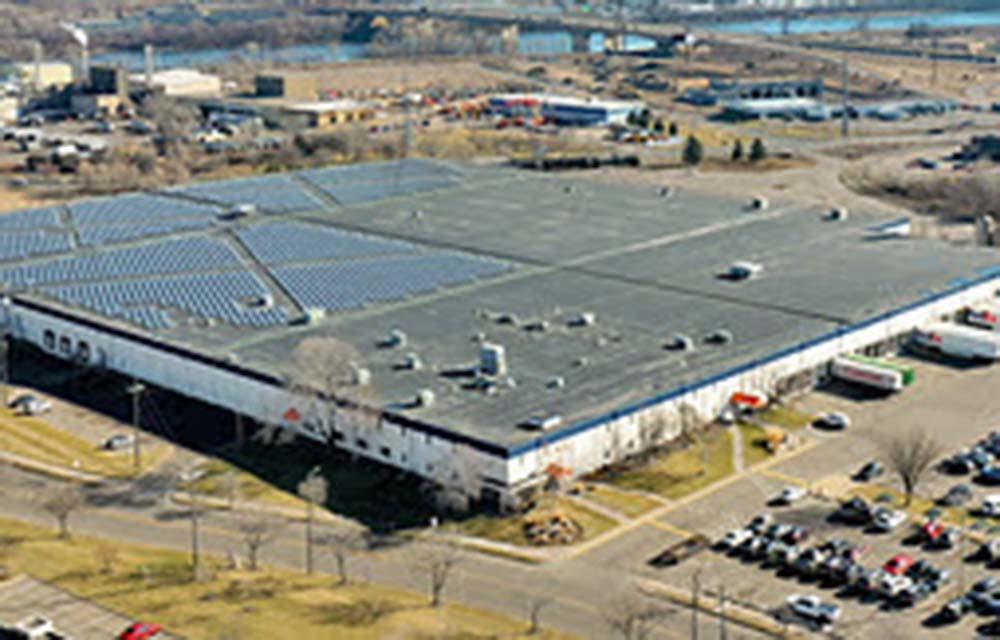
Industrial Realty Group acquires 422,727 s/f distribution facility in south St. Paul
St. Paul, MN Industrial Realty Group, LLC (IRG) acquired a 422,727 s/f industrial distribution facility located at 411 Farwell Ave. in south St. Paul. The property was formerly the headquarters of The Sportsman’s Guide, an online and








Columns and Thought Leadership

Hunt commercial real estate question and answer: The total cost of relocation - by David Hunt
You have a right to be concerned. I am always surprised at the companies that will negotiate the price of their new facility down to the last dollar, without thoroughly analyzing their

The death of the generic offering memorandum: What buyers expect in 2025 - by Kimberly Zar Bloorian
There was a time when an offering memorandum (OM) was pretty bare bones, some photos, a few bullet points on income, and a rent roll thrown in at the back. That used to get the job done. Not anymore. In 2025, buyers are sharper, faster, and more selective. They’re looking

Artificial intelligence in lending - by Lindsay Mesh Lotito
Artificial intelligence (AI) is beginning to help transform lending by enhancing decision-making, improving risk management and streamlining operations. With AI-powered tools that analyze vast amounts of data, lenders are able to assess borrower creditworthiness more accurately and efficiently. AI can evaluate a wide range of factors,

New York’s streets are full again, and the retail numbers prove it - by Noam Aziz
Walk down any New York block this year and you can feel it. The sidewalks are crowded, the storefronts are lit, and the energy that defines this city is back at full volume.
.gif)
August Promotion
