



News:
Brokerage
Posted: January 30, 2024
BOMA Westchester holds annual state of
the market luncheon
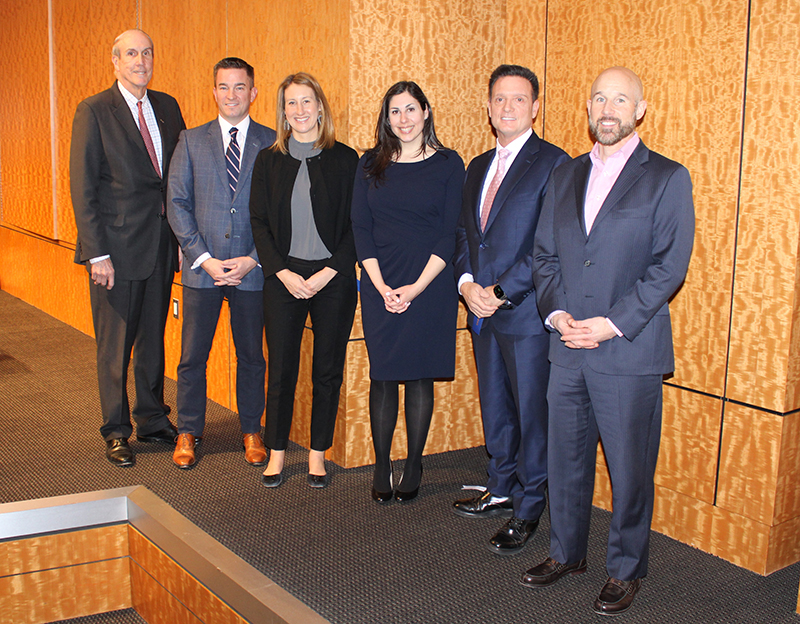
BOMA president Stephanie Manfredi of Colliers; Mark Stagg of Stagg Group; and Ian Ceppos of JLL.
White Plains, NY More than 100 commercial property owners and brokers were on hand for the annual state of the market luncheon presented by the Building Owners and Managers Association of Westchester (BOMA). The event was held January 10th at 360 Hamilton Auditorium.
The panelists included Ian Ceppos of JLL, Kevin Plunkett of Simone Development, Mark Stagg of the Stagg Group, and Kevin McCarthy of Cushman & Wakefield. The panelists were generally upbeat about the outlook for the industrial, healthcare and residential markets. Not so for the office market.
McCarthy said about 26% of 23 million s/f of office space in Westchester is vacant, and vacancies are likely to continue. “We’re in a crisis,” he said adding, “In Westchester County, we got quality infrastructure, healthcare, industrial properties. But we do not have quality offices.”
Plunkett said some major hospitals in New York City are expanding to Westchester and looking for new facilities. “There’s a lot of exciting things going on in healthcare. We think it’s going to continue,” Plunkett said. “We’re very positive about being able to expand the Westchester community even more with the hospital systems.”
Ceppos said industrial properties have been in high demand amid the e-commerce boom. He said in Westchester they are mostly warehouses and distribution centers, compared to the manufacturing facilities of the past. While demand for industrial space remains high, availability is limited. He noted that it’s too expensive to build new industrial spaces in Westchester. He said more industrial space is being built in Putnam and Orange counties.
Construction of new apartment buildings continued to boom in 2023. Hundreds of residential buildings continue to be built in Westchester’s major cities, creating tens of thousands of apartment units. Stagg said a big concern in the multi-family sector is whether the market can absorb so many units. He said we need to build more affordable housing and smaller projects. “I think developers will be very selective in 2024,” Stagg said.
The panel discussion was moderated by Betsy Buckley of JLL.
Tags:
Brokerage
MORE FROM Brokerage
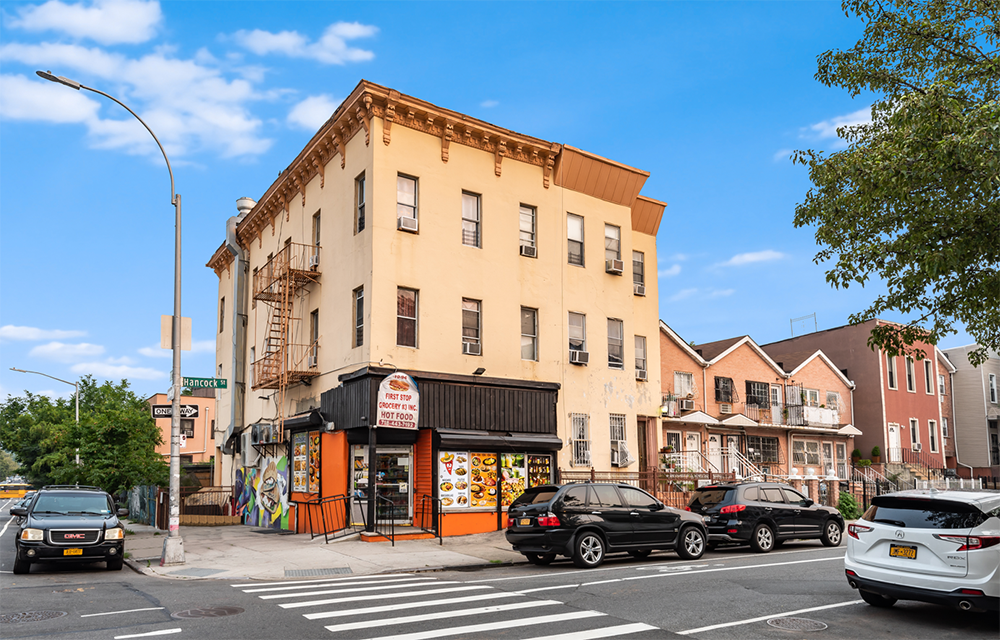
Investment Property Realty Group closes $1.75 million sale of 1094 Hancock Street in Brooklyn
Brooklyn, NY Investment Property Realty Group (IPRG), a New York-based commercial investment firm, has closed the sale of 1094 Hancock St., a mixed-use building in the Bushwick section, for $1.75 million.


Quick Hits
 (2).gif)

Columns and Thought Leadership

Hunt CRE question and answer: Choosing a real estate agent - by David Hunt
First, we will only work with one agent exclusively. The primary reason is that we want that agent to legally represent our client’s interests. In New York State, a real estate agent has a fiduciary

A guide to finding the right NYC property management company - by Sanjay Gandhi
Being a small to midsize landlord in NYC is an increasingly demanding endeavor. From navigating complex regulations, increased compliance demands to dealing with tenant issues and remediating violations. It is wise to enlist the assistance of a partner, a professional

New York’s streets are full again, and the retail numbers prove it - by Noam Aziz
Walk down any New York block this year and you can feel it. The sidewalks are crowded, the storefronts are lit, and the energy that defines this city is back at full volume.

Hunt commercial real estate question and answer: Fortune 500 wisdom - by David Hunt
Yes, there are lessons to be learned from the largest companies in America when comes to managing your real estate. But the decision to buy or lease real estate may not be one of
.gif)