



News:
Brokerage
Posted: November 6, 2009
Besen & Associates arranges two Manhattan sales totaling $16.3 million
Besen & Associates has completed two sales totaling $16.3 million.
In the first deal, Shallini Mehra and Carol Ann Flint, both senior directors at Besen, closed the sale of a seven-story elevator apartment building located at 107 West 68th St.for $6.8 million. The property was long held in a limited partnership with 400 shareholders, which was converted after bankruptcy filing for the limited partnership into a trust. This asset has traded after 50 years of ownership. The seller was represented by Alexander Berger of Reitler, Brown & Rosenblatt and the purchaser was represented by Aaron Seligson of Seligson, Rothman & Rothman.
Located in the Lincoln Sq., the property occupies 60.5 ft. of frontage along West 68th St. between Columbus Ave. and Broadway. The building contains thirty apartments with 22,380 existing s/f and 9,192 s/f of air rights. The property was originally built as three buildings in 1930 which were subsequently combined and renovated in 1956. The elevator was replaced in 2007. It is located within walking distance to the West 66th subway stop on Broadway.
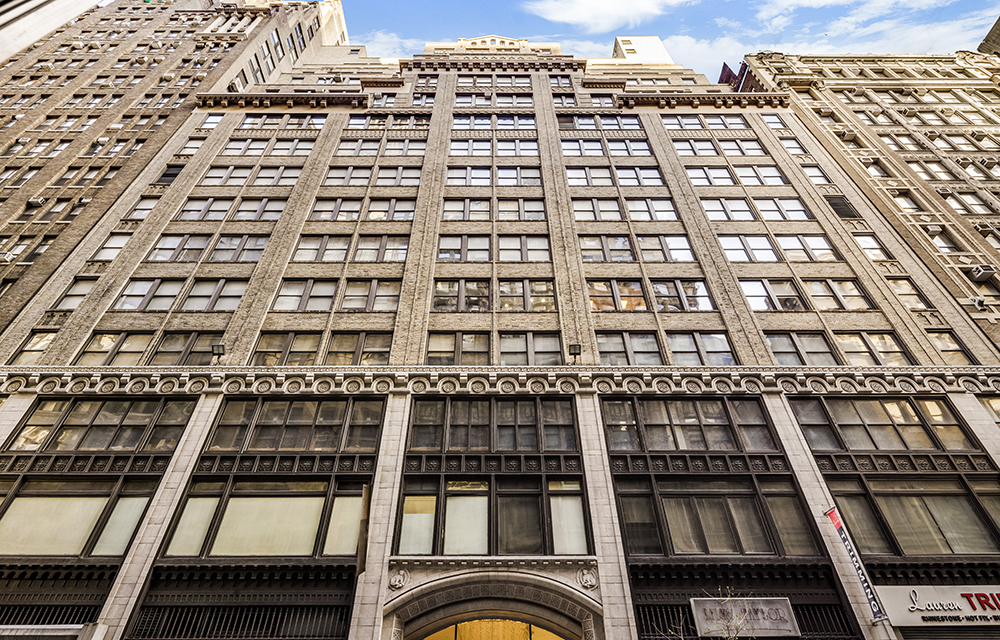
Larry Stryker, director at Besen, has also closed the sale of two adjacent loft buildings located at 150-152 East 23rd St. for $9.5 million. The property occupies 50 ft. of frontage along East 23rd St. between Lexington and Third Aves. The buildings are three-story and six-story retail/office mixed-use properties with 20,646 existing s/f and 28,714 s/f of usable air rights.
The properties were sold by the owners of Vercesi Hardware, which has occupied the retail portion of the buildings since 1911. They first rented the ground floor space in 152 in 1911, and later bought the building in 1946. They subsequently bought 150 East 23rd in 1956. They later broke through and combined the ground floors of both buildings to create one retail space for the store on the ground and second floors of 9,000 s/f.
The property is situated right next door to Baruch College and is within close proximity of several educational institutions such as the School of Visual Arts. It is also a single avenue away from the 23rd St. subway station on the 6 train. A brand new residential building now used by NYU for student housing is located across the street on the northwest corner of East 23rd St. and Third Ave.
The buildings have ceiling heights from 14 to 16 ft. on upper floors, and as high as 20 ft. on the ground floor. C2-8A zoning allows for various development opportunities including residential, hotel & office projects.
Tags:
Brokerage
MORE FROM Brokerage
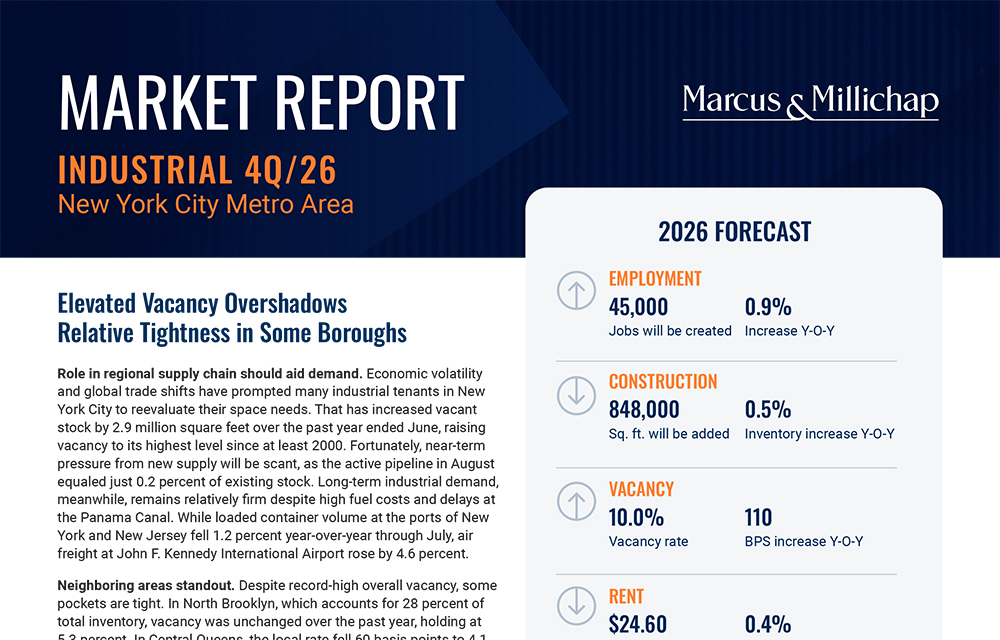
Marcus & Millichap releases fourth-quarter 2026 NYC industrial market report
Manhattan, NY Marcus & Millichap has published its fourth-quarter 2026 New York City Industrial Market Report. “New York City’s industrial market is showing a clear




 (2).gif)

Columns and Thought Leadership

The art of investing in real estate - by Thomas Donovan
Real estate investing is as much an art as it is a skill. No one can time the market, or the factors that drive it, perfectly. Location, zoning, size, transportation, and neighborhood density give you a baseline for

New York’s streets are full again, and the retail numbers prove it - by Noam Aziz
Walk down any New York block this year and you can feel it. The sidewalks are crowded, the storefronts are lit, and the energy that defines this city is back at full volume.

Hunt CRE question and answer: Choosing a real estate agent - by David Hunt
First, we will only work with one agent exclusively. The primary reason is that we want that agent to legally represent our client’s interests. In New York State, a real estate agent has a fiduciary

Hunt commercial real estate question and answer: Fortune 500 wisdom - by David Hunt
Yes, there are lessons to be learned from the largest companies in America when comes to managing your real estate. But the decision to buy or lease real estate may not be one of
.gif)