



News:
Brokerage
Posted: December 3, 2019
Beacon Communities completes $22 million rehab of Colonial I Apts.
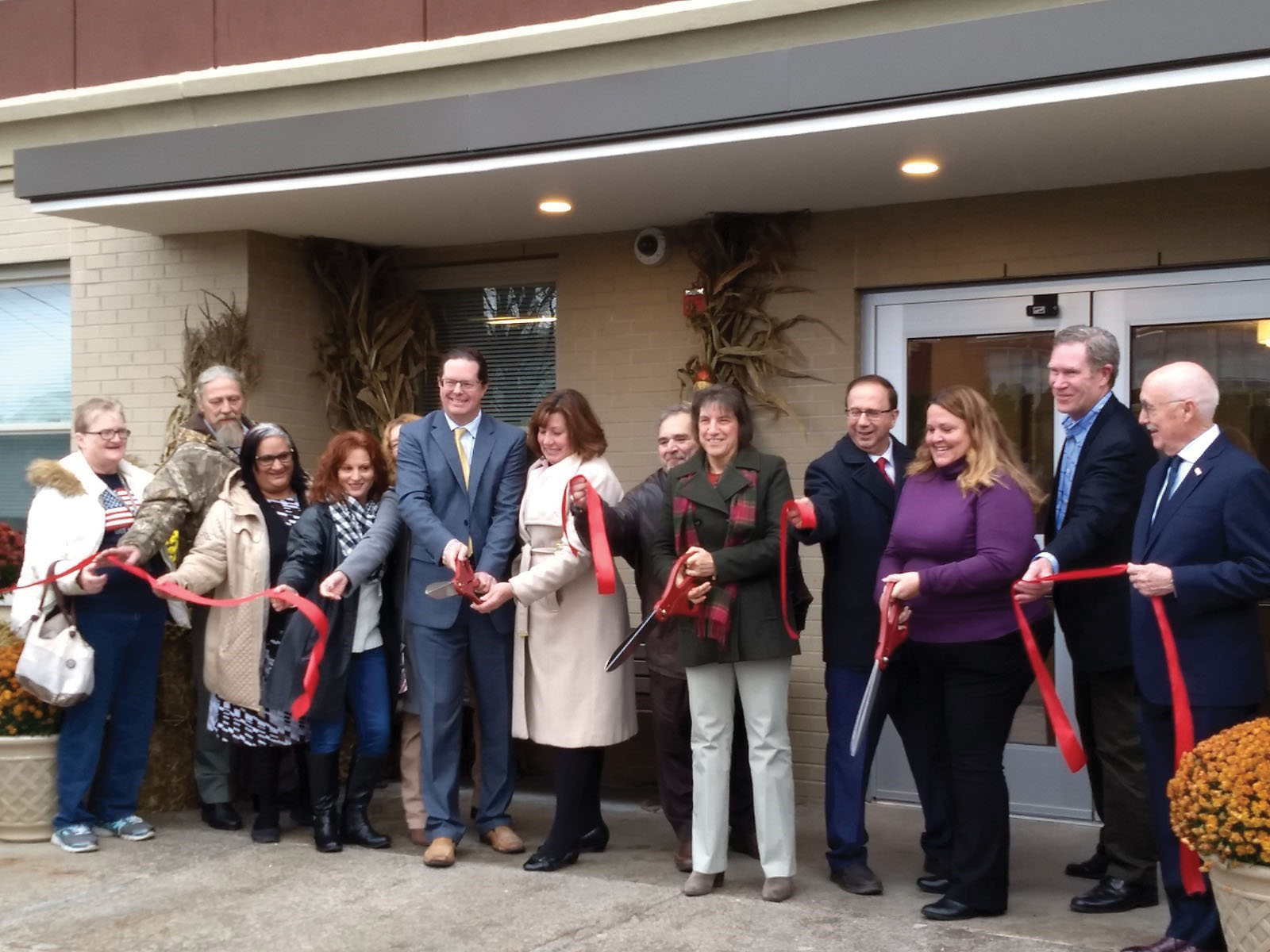
Rome, NY New York State Homes and Community Renewal (HCR) joined with local officials and community development partners to celebrate the completion of a $22 million upgrade and modernization of Colonial I Apartments, located at 203-205 St. Peter’s Ave. The project created 83 energy-efficient, affordable homes for elderly residents and those with physical disabilities.
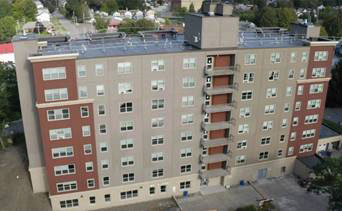 The development team consists of the Rome Housing Authority and Beacon Communities. HCR awarded federal Low-Income Housing Tax Credits which leveraged over $18.8 million in equity for the project and $83,000 from the NYS Energy Research and Development Authority (NYSERDA). The Rome Housing Authority provided $2.1 million.
“The comprehensive rehabilitation and modernization of Colonial I Apartments enhances the quality of life of its residents and provides them a safe place to call home,” governor Andrew Cuomo said. “These apartments are the perfect example of how affordable housing is key to moving the Mohawk Valley region forward while also strengthening the community in and around Rome.”
Built in 1966 by the Rome Housing Authority, the property became increasingly deteriorated over time and inefficient building systems resulted in escalating energy costs. Colonial I Apartments, located on St. Peter’s Ave., is close to retail businesses, and recreation opportunities. Construction started in spring of 2018.
The scope of rehabilitation work included extensive use of LED lighting to replace outdated fixtures; replacement of the heating plant with energy-efficient condensing boilers and adding temperature controls to each apartment; installing low-flow plumbing fixtures; roof replacement with added insulation; new windows and doors, and replacement of the exterior façade with an insulated panel system.
There are now nine accessible homes adapted for people with mobility impairment and four more for those with hearing or vision impairment. All apartments are affordable to households with incomes at or below 50% of the Area Median Income. The 83 units of Section 8 project-based vouchers are provided through a U.S. Department of Housing and Urban Development Housing Assistance Payments contract.
The governor’s commitment to providing all New Yorkers with access to safe, affordable housing is reflected in the state’s $20 billion, five-year housing plan. The plan makes housing accessible and combats homelessness by building or preserving more than 100,000 affordable homes and 6,000 with supportive services. Since 2011, New York State Homes and Community Renewal (HCR) has invested $122.8 million in the Mohawk Valley that has created or preserved more than 1,500 affordable homes for nearly 3,600 residents.
The state’s investment in Colonial I Apartments also supports the governor’s ‘Health Across All Policies and Age-Friendly State’ initiative by preserving affordable homes for seniors. The initiative is a collaborative approach that integrates health considerations into policymaking across all sectors to improve community health and wellness.
Tags:
Brokerage
MORE FROM Brokerage
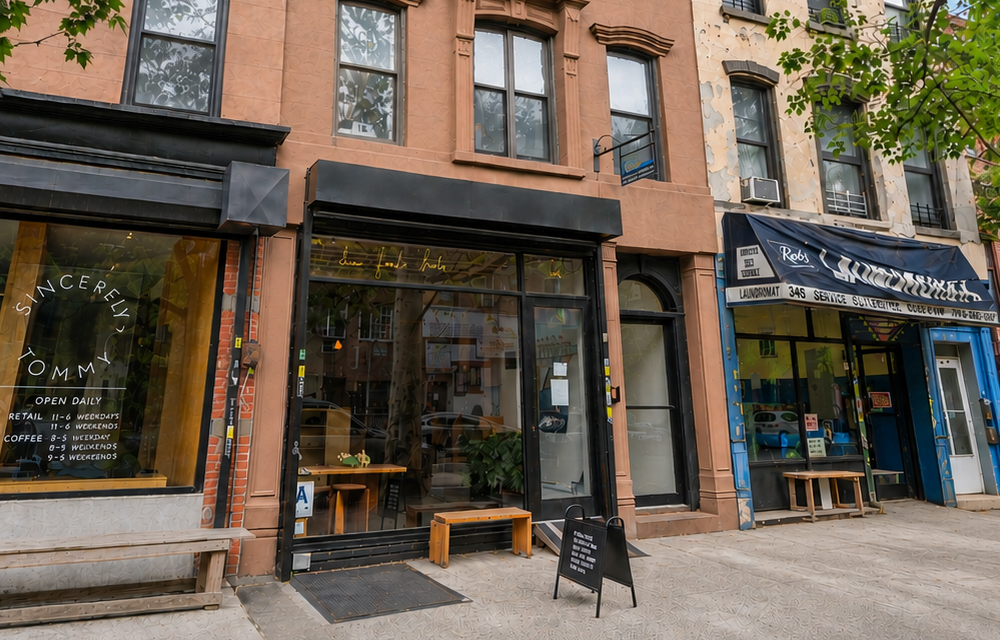
Bestreich, Reynolds, Davila, and Flaherty of Investment Property Realty Group close $1.97 million sale of 343A Tompkins Ave. in Bed-Stuy
Brooklyn, NY Investment Property Realty Group (IPRG) closed the sale of 343A Tompkins Ave., a mixed-use building located in the Bed-Stuy section of the borough, for $1.97 million.


Quick Hits

Columns and Thought Leadership

Hunt commercial real estate question and answer: Fortune 500 wisdom - by David Hunt
Yes, there are lessons to be learned from the largest companies in America when comes to managing your real estate. But the decision to buy or lease real estate may not be one of

New York’s streets are full again, and the retail numbers prove it - by Noam Aziz
Walk down any New York block this year and you can feel it. The sidewalks are crowded, the storefronts are lit, and the energy that defines this city is back at full volume.

Hunt CRE question and answer: Choosing a real estate agent - by David Hunt
First, we will only work with one agent exclusively. The primary reason is that we want that agent to legally represent our client’s interests. In New York State, a real estate agent has a fiduciary

A guide to finding the right NYC property management company - by Sanjay Gandhi
Being a small to midsize landlord in NYC is an increasingly demanding endeavor. From navigating complex regulations, increased compliance demands to dealing with tenant issues and remediating violations. It is wise to enlist the assistance of a partner, a professional
.gif)