



News:
Brokerage
Posted: December 18, 2009
Banker's holiday wishlist: More loan demand from commercial real estate borrowers
The demand for bank loans from commercial borrowers remains week, but the pace of that decline has started to slow, and that could be a good sign that the economic recovery is starting to take hold.
Although there was a lot of chatter all year about the failure of banks to lend, the reality is one of the big reasons overall bank lending was sluggish is that the loan demand just was not there. Businesses typically scale back, and remain cautious with their investment plans, during a recession. As manufacturers and distributors cut their output, due to lower sales demand, they simply need less working capital. During this recession, that trend was amplified to a much greater degree.
According to a recent poll of senior bank credit officers conducted by the Federal Reserve, a net 36% said commercial loan demand by small and mid-sized businesses was down in the fourth quarter. However, this decrease was moderately better than the 55% drop in the third quarter and 64% contraction in the second quarter, suggesting that the worst of the pullback may be over.
Many local banks in the Capital District have been actively lending all year, and prospecting for new loan customers, but like the U.S. trend, have seen a decrease in originations of term loans and lower draws on existing credit lines from commercial customers.
However, this pattern may be starting to change. Loan demand remains weak, but is now falling at a much slower pace than earlier in the year. This trend could continue, and we may even see loan demand increase in 2010, as the economy improves and the effect of federal stimulus spending multiplies in the region.
A number of state infrastructure projects funded by the stimulus bill, as well as capital investments at the Albany VA Medical Center and other federal facilities, are aiding the local construction industry. We've also seen a steady pace of new private-sector projects in the health care, senior housing and information technology sectors in the region. These are the kind of local trends that could give businesses more confidence to expand.
Demand for prime residential real estate loans has also been strong throughout the second half of 2009, because the low interest rates and first-time homebuyer tax credit have helped boost home sales. Demand for land development and residential construction loans in the region remains very weak, but that's probably a healthy trend because the local market had excess new home capacity heading into the recession.
Activity in the commercial real estate market has shown signs of improvement in the second half of the year led by an increase in refinancing opportunities which is the result of a combination of low interest rates and the disappearance of the CMBS lenders. In addition, the bank has seen an increase in new construction activity spurred by both low interest rates and a more optimistic view of 2010.
The significant wildcard factor with a major impact on the local business climate and real estate market in 2010 will be the state's current $3 billion budget deficit. The resolution - whether it's spending cuts, tax and fee increases or a combination of both which will impact the general business climate or the reduction in occupancy or rental rates which will affect the commercial real estate market - will resonate throughout the state and local economy. Hopefully our state leaders can work out a solution that will minimize the negative impact on our local economy's fledgling rebound.
Many of us in the local banking industry look forward to serving more customers when the demand for term loans and working capital rebounds.
Mark Stellwag is an administrative vice president at M&T Bank, Albany, N.Y.
Tags:
Brokerage
MORE FROM Brokerage
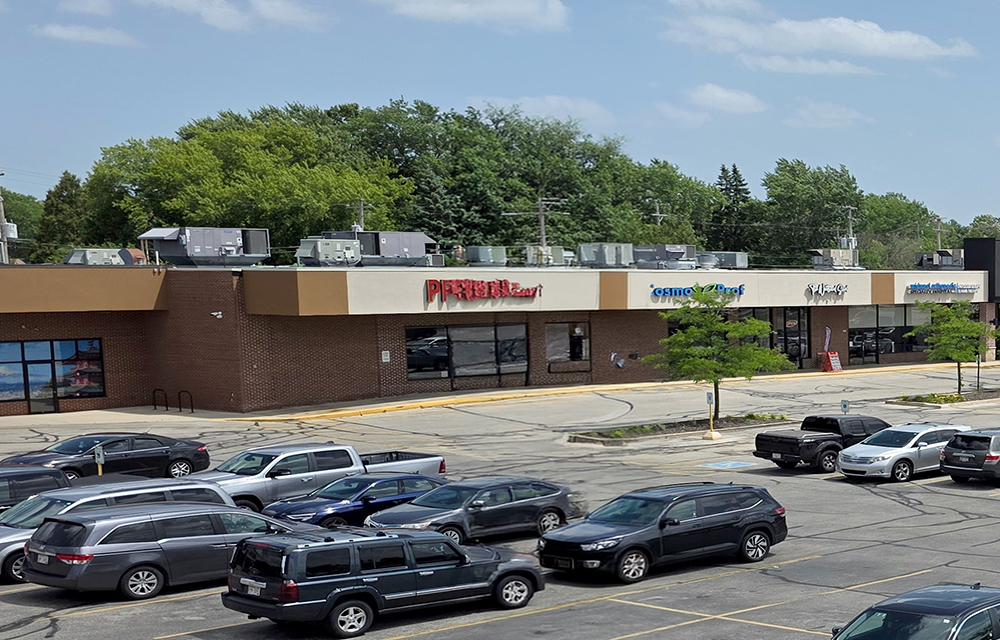
United Properties Corp. expands Wisconsin and Illinois retail presence adding 200,000 s/f
West Allis, WI United Properties Corp. completed two retail acquisitions totaling $27.4 million across Illinois and Wisconsin, adding 205,000 s/f of shopping center space to its portfolio




Quick Hits

Columns and Thought Leadership

New York’s streets are full again, and the retail numbers prove it - by Noam Aziz
Walk down any New York block this year and you can feel it. The sidewalks are crowded, the storefronts are lit, and the energy that defines this city is back at full volume.

Hunt commercial real estate question and answer: Fortune 500 wisdom - by David Hunt
Yes, there are lessons to be learned from the largest companies in America when comes to managing your real estate. But the decision to buy or lease real estate may not be one of

Positive forecast for New York’s pro-housing push? - by Philip Butler
New York’s housing crisis remains a hot button topic despite growing consensus that varied and affordable housing is desperately needed statewide. Governor Hochul has recently introduced several initiatives to overcome N.Y.’s anti-housing

A guide to finding the right NYC property management company - by Sanjay Gandhi
Being a small to midsize landlord in NYC is an increasingly demanding endeavor. From navigating complex regulations, increased compliance demands to dealing with tenant issues and remediating violations. It is wise to enlist the assistance of a partner, a professional
.gif)