



News:
Brokerage
Posted: March 12, 2012
Bahiri of Emerald Creek helps developer get 17,000 s/f land parcel for $8.5 million
Steve Cheung, developer, acquired a 17,000 s/f land parcel in the Queens Plaza area of Long Island City.
The $8.5 million price tag is almost a 40% discount from what Queens Plaza Development paid for the property in 2006 to U.S. Bancorp, before defaulting on a $17 million loan and forcing the parcel into foreclosure.
U.S. Bancorp's preference to offload the property for cash highlights the banks' reluctance to lend in this economy. Amid rising defaults and reduced bank assets, the FDIC reported only $235 billion in construction and land building loans as of September 2011, compared to $326 billion in 2010.
Cheung's E Home Real Estate LLC was short of the needed cash when the bridge lender, Emerald Creek Capital stepped in with a short-term loan, helping him close weeks before his purchase option expired. With developers feeling the funding crunch, private equity firms like Emerald Creek Capital are rapidly replacing bank lending with alternative financing that is quick and flexible. Emerald Creek Capital is small enough to act with speed and finesse, while counting on three decades of experience to structure the loans to the best interests of the parties involved.
With time running out, Cheung was happy that Emerald Creek Capital saw the value in the land and his development plans. According to Emerald Creek Capital's assessment, the development firm paid a third less per s/f than comparable deals in the area. "With the developer contributing 80% of the equity, our risk was reduced enough that we were able to offer Cheung a very reasonable interest rate," said Emerald Creek Capital's managing partner, Mark Bahiri, who structured the loan.
Cheung's plan to build a 200-plus condo building on the parcel attracted Emerald Creek Capital, which recently financed similar developments in the nearby Manhattan-feeding hubs of Williamsburg and Greenpoint, to the tune of $3.8 million and $3.3 million respectively. This one-year bridge loan fits neatly into Emerald Creek Capital's portfolio of residential bridge loans in up-and-coming areas.
Tags:
Brokerage
MORE FROM Brokerage
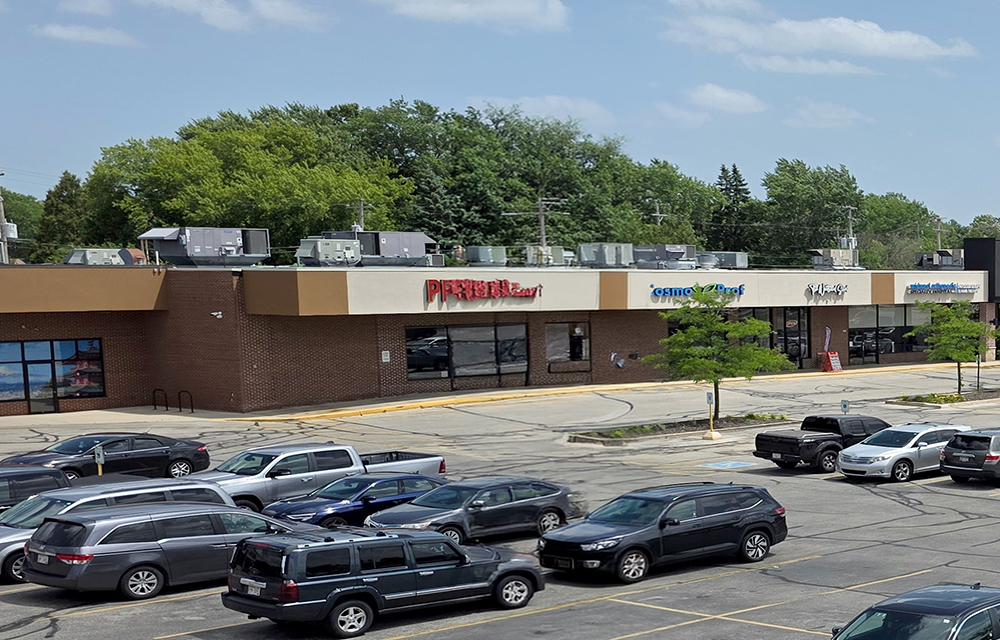
United Properties Corp. expands Wisconsin and Illinois retail presence adding 200,000 s/f
West Allis, WI United Properties Corp. completed two retail acquisitions totaling $27.4 million across Illinois and Wisconsin, adding 205,000 s/f of shopping center space to its portfolio


Quick Hits

Columns and Thought Leadership

Hunt commercial real estate question and answer: Fortune 500 wisdom - by David Hunt
Yes, there are lessons to be learned from the largest companies in America when comes to managing your real estate. But the decision to buy or lease real estate may not be one of

New York’s streets are full again, and the retail numbers prove it - by Noam Aziz
Walk down any New York block this year and you can feel it. The sidewalks are crowded, the storefronts are lit, and the energy that defines this city is back at full volume.

Positive forecast for New York’s pro-housing push? - by Philip Butler
New York’s housing crisis remains a hot button topic despite growing consensus that varied and affordable housing is desperately needed statewide. Governor Hochul has recently introduced several initiatives to overcome N.Y.’s anti-housing

A guide to finding the right NYC property management company - by Sanjay Gandhi
Being a small to midsize landlord in NYC is an increasingly demanding endeavor. From navigating complex regulations, increased compliance demands to dealing with tenant issues and remediating violations. It is wise to enlist the assistance of a partner, a professional
.gif)