



News:
Brokerage
Posted: July 15, 2013
Avoiding premises liability for real property owners
The concept of premises liability for property owners can be confusing. For years property owners have been inundated with information of how businesses have been sued for millions of dollars because they failed to provide adequate security for their invitees. Premises liability is the liability for a landowner for certain torts that occur on the real property. This can range from a variety of events, but for the purpose of this article, the focus will be on inadequate security. Anyone can be accused of inadequate security and if you are or wish to minimize your risk of such an allegation, what you need to know includes what the courts will review. There is a basic process the court will use in the event a claim is brought against you assuming a personal injury has occurred as a result of a crime:
* Did the business or land owner owe a duty of protection to the invitee (which since 1968 may even include trespassers)?
* Was the criminal activity which occurred foreseeable?
* Was the criminal activity the direct cause of the injury?
* Was there a reasonable security precaution which could have prevented the crime and resulting injury?
Let's rise above the legal wrangling; practically speaking, the two key tactics to defending yourself against successful premises liability claims are: 1) Conducting a crime analysis (otherwise known as a threat assessment) and 2) based upon the criminal threat present on or near a particular piece or real property, the owner needs to identify and reasonably rectify areas of clear vulnerability.
Statistics alone will not provide insight into foresee-ability. Qualitative analysis is a critical tactic and best conducted by a skilled security professional, who will analyze data and interview inhabitants and local law enforcement with operations insight into the crimes occurring and trends. This should be an exercise that is conducted regularly (at least annually).
Knowledge of prior case law is critical in this space. For example, in some businesses, if a violent criminal action has not occurred, foresee-ability is more difficult to establish by plaintiffs. However, dependent upon the nature of the premises, certain security measures are expected with or without a prior crime (e.g. higher education residence halls or boarding schools). This makes it particularly critical to be on top of your "security game" where you cannot afford to wait for a crime to occur to react and implement security measures.
For larger organizations, professional security expertise may be available in-house but for medium to smaller firms, this expertise will have to be sourced from a third party. Be wary of third parties that offer free security assessments. A "free" review is typically a guise to sell product and is counterproductive to a strategic goal of establishing effective security and defending oneself against claims of inadequate security. A thorough professional assessment is required if you expect to get the level of detail required to completely analyze both foresee-ability, vulnerability identification and the technical correctness of your security program. Certifications from such security professionals may include CPP, PSP or CSC and ideally, your security expert will be completely independent from any product or service so as to avoid a conflict of interest (e.g. a person who makes ones living from selling guard service is likely to gravitate toward that solution set). A person providing security advice should be getting compensated from the property owner, not from a manufacturer or security system installer who will profit from the recommendation resulting from the study.
Many persons experienced in the business of "expert witness" report that 40% of all premises liability cases are associated with parking garages. This obviously is a significant area of concern for property owners; particularly in high crime areas. However, even in light of known statistics, many property owners would rather turn a blind eye to security and take the position that, "nothing will ever happen here." The courts have weighed in time and again that ignorance is not a defense. Real property owners face a simple choice; conduct a threat and vulnerability assessment or roll the dice on a potential legal action. Most properties will operate and exist without litigation, but considering a threat and vulnerability assessment can cost between $5,000 - $20,000; versus a negligent security settlement which in a landmark negligent security case was valued at $15.7 million in damages in 2004, the property owner is left to make the call.
Frank Pisciotta, CSC is president of Business Protection Specialists, New York, Massachusetts and North Carolina.
Tags:
Brokerage
MORE FROM Brokerage
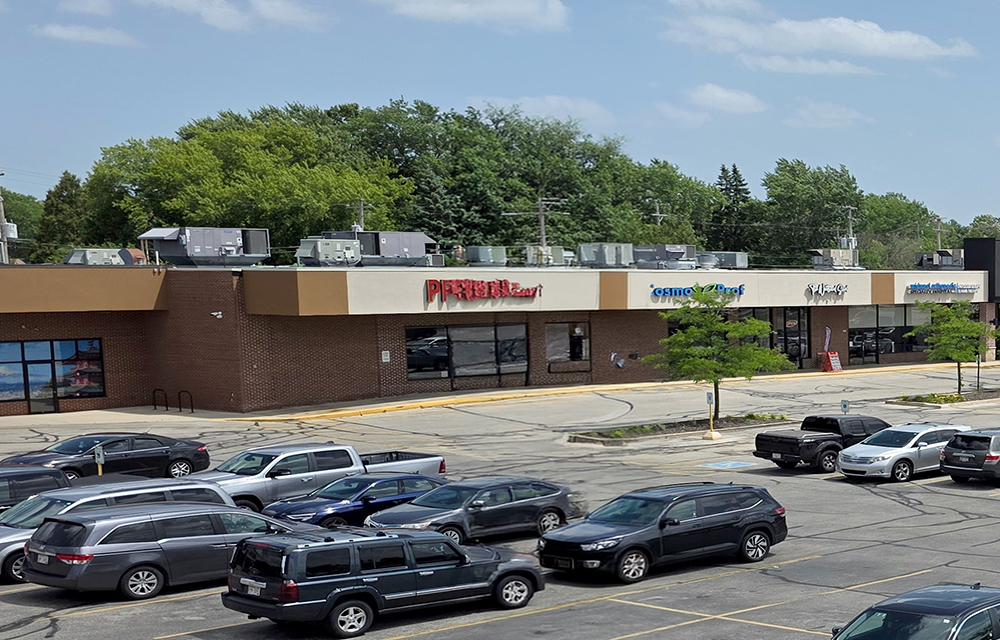
United Properties Corp. expands Wisconsin and Illinois retail presence adding 200,000 s/f
West Allis, WI United Properties Corp. completed two retail acquisitions totaling $27.4 million across Illinois and Wisconsin, adding 205,000 s/f of shopping center space to its portfolio




Quick Hits
 (2).gif)

Columns and Thought Leadership

Positive forecast for New York’s pro-housing push? - by Philip Butler
New York’s housing crisis remains a hot button topic despite growing consensus that varied and affordable housing is desperately needed statewide. Governor Hochul has recently introduced several initiatives to overcome N.Y.’s anti-housing

Hunt commercial real estate question and answer: Fortune 500 wisdom - by David Hunt
Yes, there are lessons to be learned from the largest companies in America when comes to managing your real estate. But the decision to buy or lease real estate may not be one of

A guide to finding the right NYC property management company - by Sanjay Gandhi
Being a small to midsize landlord in NYC is an increasingly demanding endeavor. From navigating complex regulations, increased compliance demands to dealing with tenant issues and remediating violations. It is wise to enlist the assistance of a partner, a professional

New York’s streets are full again, and the retail numbers prove it - by Noam Aziz
Walk down any New York block this year and you can feel it. The sidewalks are crowded, the storefronts are lit, and the energy that defines this city is back at full volume.
.gif)