



News:
Brokerage
Posted: October 3, 2017
Appraisal Institute’s Annual Conference focuses on Parks - by Julia Davis
The Metropolitan chapter of the The Appraisal Institute hosted a lively discussion at its Annual Conference, with the topic being Parks, If You Build Them, Value Will Come, at Club 101 on Park Ave. in New York on Monday, September 11, 2017. Speakers included Jordan Barowitz, of The Durst Organization; David Cheikin, of Brookfield Properties; Jay Cross, of Related Companies; David Greenbaum, of Vornado Realty Trust; Regina Myer, speaker, of the Downtown Brooklyn Partnership; Jed Walentas of Two Trees Management; and Dan Biederman of Biederman Ventures as the keynote speaker.
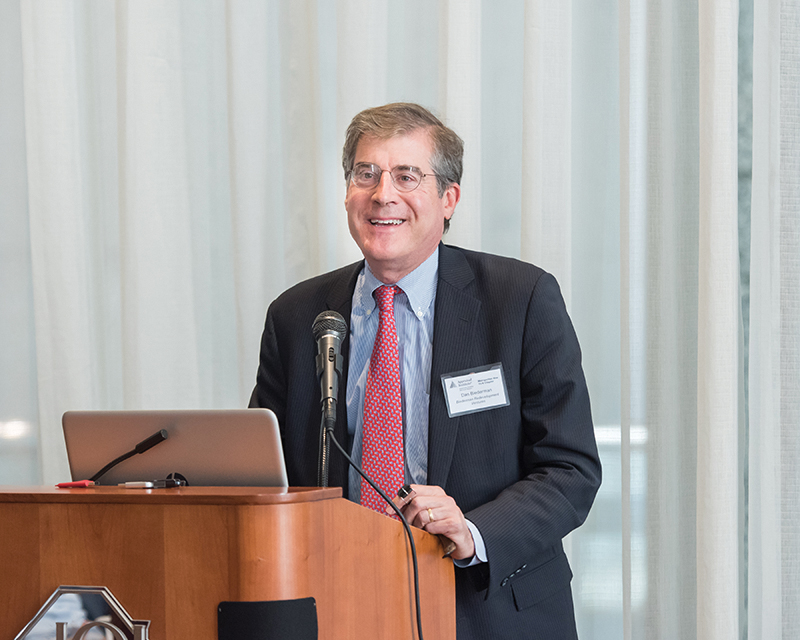 The focus of the discussion was on how open spaces enhance our dense city environment making it an exciting place to live, work and visit! With both public and private market participants, the conference appealed to a broad range of the real estate community.
Panelists discussed Brookfield Properties’ Manhattan West; Related Company’s Hudson Yards; Times Square; Vornado’s Penn Plaza developments and planning; Macy’s New York’s planned rooftop park; Apple’s park inside of its new ‘spaceship’ as well as Facebook’s garden roofed ‘fantasyland.’
Regina Myer, of the Downtown Brooklyn Partnership, served as the moderator.
Renowned designer/operator of public park projects and most notable, Bryant Park, Dan Biederman of Biederman Redevelopment Ventures and the mastermind behind the Bryant Park redevelopment, 34th St. BID and the Grand Central BID served as keynote speaker.
Dan spoke about the transformation of Bryant Park and what it takes to successfully program a park to increase the value of the surrounding area. He cited the keys to a thriving park: Movable furniture, “softscaping rather than hardscaping”–citing the lower cost of landscaping and its associated place-setting qualities versus a marble/stone park, which is not only much more costly but much less welcoming. He also advises city planners and developers to stay away from big name architects (too much cost), to avoid modernism (not welcoming, modernistic landscapes are always empty of people), the use of white rather than yellow light, ample security and signs of safety. Constant innovation is also the key, whether creating programming for musicians, winter activities such as winter villages and ice skating, or ping pong tables and outdoor bars. The other key to a successful park is clean high-end bathrooms.
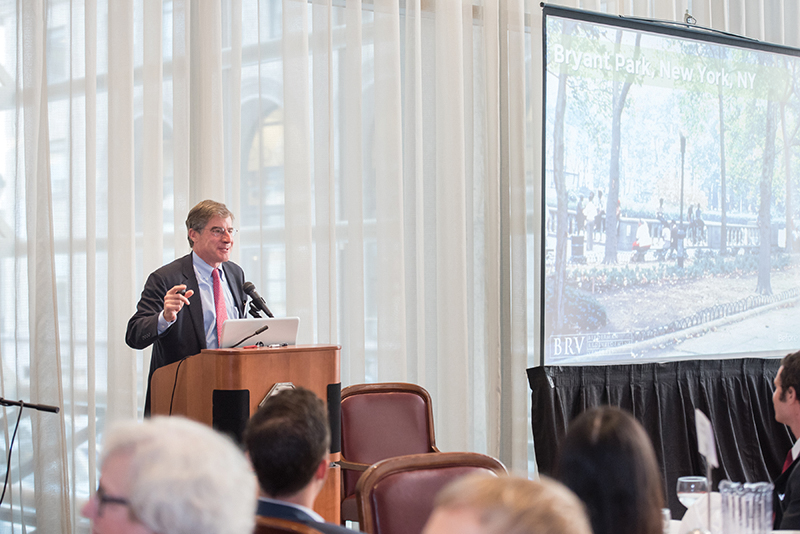 Biederman cited a direct link between programming and revenues. “When you have programming you can get sponsorships. You are going to have more users, more density. And sponsors will support you.”
Finally, one of the most important elements to a vibrant park is the phasing out the use of public money. “For Bryant Park we wrote out public money by 1997. The issue is that whenever city governments fund park activities they have their own ideas on how they want to run things. As much as possible, we try to get independent of public funding.”
Finally, Biederman spoke about creating value for the surrounding buildings. “When we started, Bryant Park these were the goals:
• Increase effective rents by $15 per s/f (according to area owners);
• Increase total rentable space in buildings;
• Increase annual rent rolls; and
• Increase the building value by at least 5%.
Today, Bryant Park office rents still outperform the rest of rents in Midtown, according to Biederman. “Real estate ads always tout ‘steps from Bryant Park.’ ”
He encouraged programming for public parks to continue “There are probably 100-200 places in the country that could use these same techniques–which could increase value of the buildings around it.”
“Going back to the title of today’s talk,” he said, “If you build a park the value will come. In the case of parks, if you build public spaces you can create value, but you have to do them right.”
Julia Davis is managing partner at Riot PR, LLC, New York, N.Y.
Tags:
Brokerage
MORE FROM Brokerage
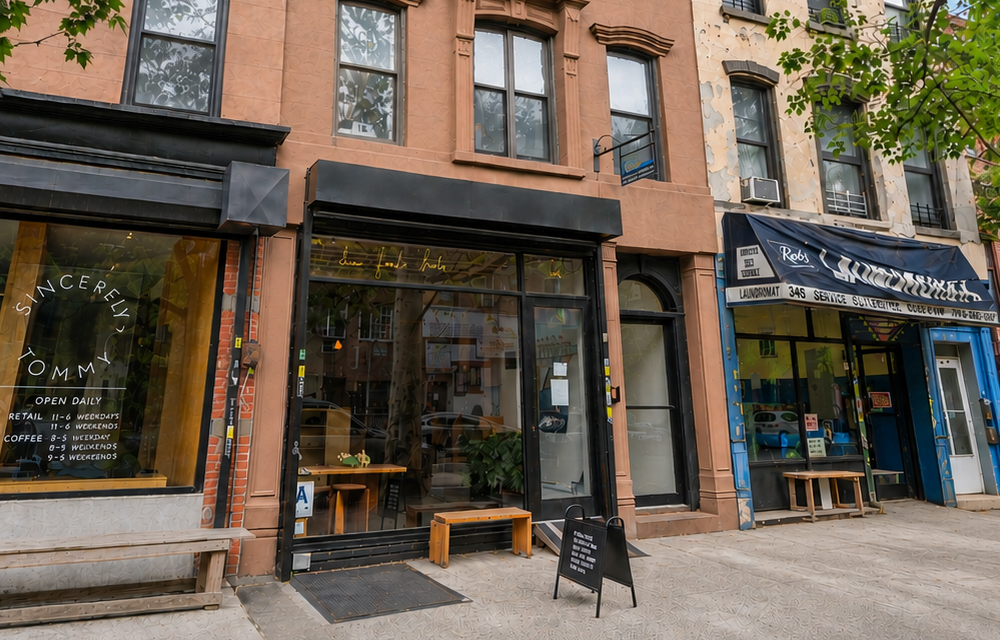
Bestreich, Reynolds, Davila, and Flaherty of Investment Property Realty Group close $1.97 million sale of 343A Tompkins Ave. in Bed-Stuy
Brooklyn, NY Investment Property Realty Group (IPRG) closed the sale of 343A Tompkins Ave., a mixed-use building located in the Bed-Stuy section of the borough, for $1.97 million.


 (2).gif)

Columns and Thought Leadership

A guide to finding the right NYC property management company - by Sanjay Gandhi
Being a small to midsize landlord in NYC is an increasingly demanding endeavor. From navigating complex regulations, increased compliance demands to dealing with tenant issues and remediating violations. It is wise to enlist the assistance of a partner, a professional

New York’s streets are full again, and the retail numbers prove it - by Noam Aziz
Walk down any New York block this year and you can feel it. The sidewalks are crowded, the storefronts are lit, and the energy that defines this city is back at full volume.

Hunt CRE question and answer: Choosing a real estate agent - by David Hunt
First, we will only work with one agent exclusively. The primary reason is that we want that agent to legally represent our client’s interests. In New York State, a real estate agent has a fiduciary

Hunt commercial real estate question and answer: Fortune 500 wisdom - by David Hunt
Yes, there are lessons to be learned from the largest companies in America when comes to managing your real estate. But the decision to buy or lease real estate may not be one of
.gif)