



News:
Spotlight Content
Posted: December 22, 2020
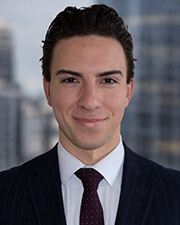
Andy DiMarino, Jr., IREON, ADM Landscape Corp.
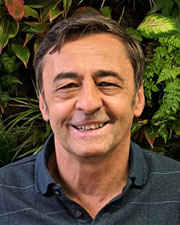 Name: ?Andy DiMarino, Jr.
Title: President
Company Name: ?ADM Landscape Corp.
What are your predictions for commercial real estate in 2021?
From what I’m seeing, 2021 looks bright. I see a lot of new projects coming out. Outdoor space became a valuable asset. Building owners will want to capitalize on it, and apartment owners are seeing the value of outdoor space, and roofs/terraces give them that option.
What was the most challenging part of working during the pandemic?
There were actually three challenges in working through the pandemic. First, it was making sure that my employees felt safe to come back to work and ensuring that their health would not be at risk. One of my team members unfortunately contracted covid while we were shut down. He was hospitalized and put on a ventilator, which he is still on to this day to assist his breathing. That really emphasized for me that health and safety was paramount. The second challenge was bringing in work during a turbulent and uncertain time. For a while, everything seemed to be on hold. While we were completing work already on the books, acquiring new work took months. The third challenge was in obtaining materials. By the time we closed a deal, the materials were tough to get. Specifically, the materials were either unavailable, or the lead time to get them was so long that prices would increase.
What aspects of working from home did you enjoy most?
I most enjoyed that it felt more leisurely. Not having to wake up as early to commute and working in more comfortable clothes was certainly a plus.
What was your greatest professional accomplishment in 2020?
My greatest accomplishment was keeping my team working safely and having everyone rally together to weather the storm. Ultimately, hard times brought out the best in everyone on my team. This year really made me see how valuable people are to my company.
What was your most notable project, deal, or transaction in 2020?
My most notable deal was negotiating a street tree planting for a new building. It saved the client 1/3 of the money they would have had to pay in restitution.
Tags:
Spotlight Content
MORE FROM Spotlight Content
Participate in Developing New York Featuring Westchester County - November 24, 2026
Choose how you’d like to participate in this edition of NYREJ’s Developing New York series featuring Westchester County.


.png)

Quick Hits
 (2).gif)

Columns and Thought Leadership

2026 Developing Queens: Long Island Board of Realtors advances commercial growth and advocacy in Queens
The Long Island Board of Realtors (LIBOR) Commercial Network continues to play a key role in advancing opportunities and strengthening the commercial real estate landscape across Queens. Through targeted programming and global outreach

CRE Guide Featured Company: Merritt Environmental Consulting Corp.
Merritt Environmental Consulting Corp. (MECC) was established in June of 2009 after being part of a larger engineering firm for almost 20 years. The focus of the company is to assist lending institutions, attorneys, real estate investors, and property owners with environmental concerns. Today, MECC has offices in New York, Florida, and Vermont and has grown into a regional consulting firm serving clients along the East Coast.

From vacancy to vitality: How adaptive reuse is reshaping Long Island’s CRE landscape - by Andrea Tsoukalas Curto
Adaptive reuse has become one of the most important conversations in commercial real estate today. Long Island has a large inventory of aging retail, office and industrial
2026 Developing Long Island: ERG Commercial Real Estate launches its new Retail Leasing division
North Hempstead, NY ERG Retail Leasing is the dedicated leasing division of ERG Commercial Real Estate, an established full-service commercial real estate brokerage for over 35 years.