



News:
Brokerage
Posted: April 19, 2016
An in-depth look into the recent expiration of the 421a program in New York City - by Peter Blond
 Brandt, Steinberg, Lewis & Blond LLP" width="200" height="275" /> Peter Blond, Brandt,
Steinberg, Lewis
& Blond LLP
A recent “who’s who” meeting of New York real estate giants resembled a mixed martial arts event and all of it over the recently expired 421a program! Refocusing on statistics instead of lore may result in less worry over the expiration of a once legendary program.
Regardless of which version of 421a is involved, it seems fewer projects – big or small – exit the exemption/abatement period in sound real estate tax condition. Many rental projects and residential condominiums exit the program with inflated real estate tax assessments and corresponding tax bills.
Much has been made of the uncertainty whether 421a will be renewed. Perhaps the question should really be whether 421a projects are treated better, the same, or worse than their new construction peers. It appears that 421a projects are assessed by the city at substantially higher levels than their non-exempt peers on a per square foot basis.
Our research is neither exhaustive nor conclusive. There are many variables, such as incomplete projects or projects which may have applied for 421a but have not yet received benefits that could skew the results. And the statistics do not explore the potential underlying justification behind the numbers. Nevertheless, what we found is startling.
The parameters of the study are all class 2 residential buildings (rentals and condominiums), constructed between 2009 and 2013 (buildings constructed in 2014 & 2015 were excluded to reduce the exposure to anomalies), regardless of whether they applied for 421a or not. The loci were chosen arbitrarily.
The first geographic zone analyzed was within a five-mile radius of Sixth Ave. and West 24th St. in Manhattan. 131 projects met the above criteria with 90 of them receiving 421a benefits. The 421a buildings presently have an average assessment per s/f of $147. The 41 buildings not receiving 421a benefits have an average assessment per s/f of $98. That is a 50% difference as between new construction awarded 421a benefits and those buildings not in the program. While inconsistency in assessments is nothing new, the divergence is shocking considering the apples to apples criteria.
The second geographic zone analyzed was a five-mile radius with a locus of Steinway St. and 30th Ave. in Queens. 121 projects met the above criteria with 105 of them receiving 421a benefits. The 421a buildings presently have an average assessment per s/f of $80. The 16 buildings not receiving 421a benefits have an average assessment per s/f of $62. While not as startling as the Manhattan divergence, this sampling still indicates a 30% assessment premium for 421a projects per s/f.
In light of the perplexing results of the first two studies, a third seemed prudent. The third zone, with a locus of Bedford Ave. and Atlantic Ave. in Brooklyn, resulted in 252 projects within the criteria. 215 of the projects are receiving 421a benefits and presently have an average assessment per s/f of $66. The 37 buildings not receiving 421a benefits have an average assessment per s/f of $39. The 70% divergence is dramatic.
A near perfect example is two condominium buildings, built one year apart, on East 79th St. in Manhattan. Both appear to be luxury, including apartment sizes in excess of 4,000 s/f each on average. One building “enjoys” a 421a benefit subject to the statutory maximum and is assessed at $193 per s/f. The other condo has larger units, is closer to the park and transportation, but is assessed for $85 per s/f! The 421a building’s upcoming 2016/17 tax bill will be approximately $2.34 million or $18 per s/f including the benefit! The non-exempt/abated condo’s 2016/17 estimated tax bill; $1.5 million or $10.50 per s/f.
Consequently, condominium boards increasingly wish to protest their real estate tax assessments despite little to no near term tax relief because of the 421a. Due diligence has real meaning in 2016, when even the most elementary of prospective purchaser can multiply an assessment by a tax rate to see what real estate taxes would be, but for that 421a benefit. In the end, prospective residential condo buyers deciding between two comparable choices are going to usually choose the one with the more reasonable carrying costs.
Assuming the program is renewed, any developer considering a future 421a application must carefully consider the increased affordable housing component and longer term rent stabilization in light of what may very well be an artificially high assessment that may plague the project for many years. As such, filing a timely annual real property tax protest is essential to safeguard the project. The consequences of not filing a protest can spell trouble for sponsors, landlords or eventual purchasers.
Peter Blond, Esq. is a partner at Brandt, Steinberg, Lewis & Blond LLP and the chair of the NYC Bar committee on condemnation & tax certiorari, New York, N.Y.
Tags:
Brokerage
MORE FROM Brokerage
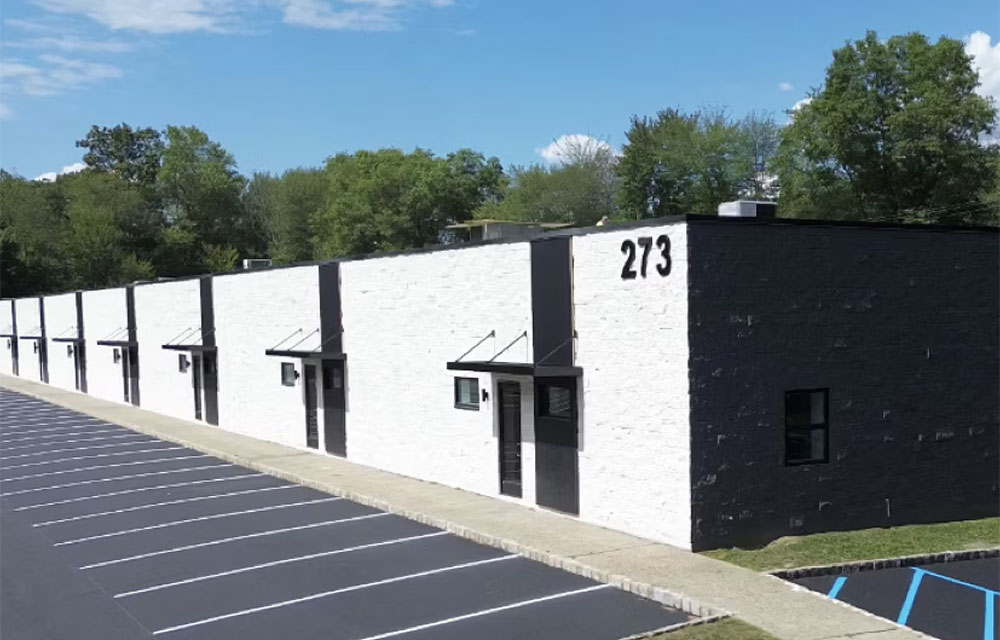
Resource Realty of Northern NJ delivers complete lease-up of 235 Franklin Rd. for Commerce Park Investors
Randolph, NJ Resource Realty of Northern New Jersey (RRNNJ) has completed the lease-up of a 10-unit small-bay industrial property at 273 Franklin Rd., marking the culmination of an investment strategy that began



Quick Hits

Columns and Thought Leadership

Hunt commercial real estate question and answer: Fortune 500 wisdom - by David Hunt
Yes, there are lessons to be learned from the largest companies in America when comes to managing your real estate. But the decision to buy or lease real estate may not be one of

Positive forecast for New York’s pro-housing push? - by Philip Butler
New York’s housing crisis remains a hot button topic despite growing consensus that varied and affordable housing is desperately needed statewide. Governor Hochul has recently introduced several initiatives to overcome N.Y.’s anti-housing

New York’s streets are full again, and the retail numbers prove it - by Noam Aziz
Walk down any New York block this year and you can feel it. The sidewalks are crowded, the storefronts are lit, and the energy that defines this city is back at full volume.

A guide to finding the right NYC property management company - by Sanjay Gandhi
Being a small to midsize landlord in NYC is an increasingly demanding endeavor. From navigating complex regulations, increased compliance demands to dealing with tenant issues and remediating violations. It is wise to enlist the assistance of a partner, a professional
.gif)