



News:
Brokerage
Posted: December 18, 2018
Amazon to Queens – Dissecting the deal: What does this imminent arrival entail? - by Rubin Isak and Mark Pietrogiacomo

Property Advisors
Amazon is coming to Queens. But just what does this imminent arrival entail? The Memorandum of Understanding (MOU) states that Amazon will build, renovate, and operate approximately 4 million s/f of commercial space on the Long Island City waterfront (Anable Basin) and create upwards of 25,000 new jobs with an average wage of over $150,000 annually. This is just the first phase of Amazon HQ2, there is a planned expansion of an additional 2 to 4 million commercial s/f and another 15,000 jobs to be added within five years after the completion of the first phase.
Of the 4 million s/f Amazon will build, some of it will be on publicly owned land that they will ground lease for $850,000 per year from the city. There will also be rent escalations based upon the Consumer Price Index.
Amazon will pay into the Payment In Lieu Of Taxes Program (PILOT) throughout the term of their lease that will contribute directly to infrastructure improvements within Long Island City. These improvements can include but are not limited to: streets, sidewalks, utility relocations, public open space, and schools. While not specifically stated in the MOU, a new school to ease the burden of Long Island City’s already packed public schools would go a long way in the court of public opinion for Amazon. Considering the average tax per square foot in Long Island City, the addition of a 4 million s/f commercial site (to be expanded up to 8 million s/f) is the potential of tens of millions of dollars in tax revenue per year that is earmarked specifically for infrastructure improvements in a rapidly growing neighborhood.
The actual construction of HQ2 will most likely take place in late 2019. As construction commences, so will Amazon’s workforce development and community commitments. The workforce development involves working with NYCHA tenants as well as other city agencies to cultivate talent from all backgrounds and walks of life. The various community commitments that Amazon will be responsible for include: a waterfront park that must conform to LIC Waterfront Development Standards, relocating city agencies that currently occupy the space, and construct and maintain infrastructure in and around the campus of HQ2. Amazon has also agreed to build 10,000 zoning s/f of workforce development and training space, 43,650 zoning s/f of public open space (to be built on city owned land that Amazon is leasing), 263,000 zoning s/f of light manufacturing space, 25,000 zoning s/f of community facility space, 10,000 zoning s/f of tech accelerator space, 22,500 zoning s/f of incubator space, 80,000 zoning s/f of step-out space (within Long Island City), and 106,000 zoning s/f of public space on privately owned land.
The controversial financial incentives that the state and city have made available to Amazon were made in recognition to the sheer scale and projected economic impact that the project would have on the city. The $1.705 billion on offer from Empire State Development is contingent on the fulfillment of various milestones set forth in the MOU. $505 million of this is earmarked to offset (not necessarily subsidize as the capital funds are reimbursed at the end of the year) the $3.686 billion of construction costs (approximately 13.70%). For the sake of comparison, the state of Maryland offered $8.5 billion in incentives to Amazon. The remaining $1.2 billion are Excelsior job credits that will be dispersed as jobs are created. The financial incentives on offer by New York City and state are not for 25,000 new jobs over 10 years, but for potentially 40,000 jobs in 15 years.
To start moving in to their new Queens home, Amazon has agreed to lease 1 million s/f of office space in the Citi building at One Court Sq. They have also just leased over 80,000 s/f of warehouse space, that will be used as a fulfillment and distribution center, in Woodside, Queens.
Since Amazon announced they are arriving in Long Island City, a few significant sales have occurred. I will briefly summarize them here:
• 52-34 Van Dam St. sales price: $36.5 million – A 12-story, 67,223 s/f, 154-room hotel that is currently a NYC homeless shelter. The sales price equates to $543 per s/f and $237,000 per door.
• 47-01 Vernon Blvd. sales price: $6.05 million – A 50’ x 100’ lot with 15,000 buildable s/f. The sales price equates to a high $403 per buildable s/f. Full demolition permits have already been filed with the DOB.
• 55-01 2nd St. – Reported contract price of $300 million. The property is an eight-acre development site near the new Amazon planned site.
• 39-04 Northern Blvd. sales price: $31 million – An approximately 40,000 s/f lot in an M1-5 Zone, with 200,000 buildable s/f towards a future commercial development.
Amazon has arrived. Who comes to Queens next?
Rubin Isak is the founding partner and Mark Pietrogiacomo is the vice president of operations at Goldenwood Property Advisors, New York, N.Y.
Tags:
Brokerage
MORE FROM Brokerage
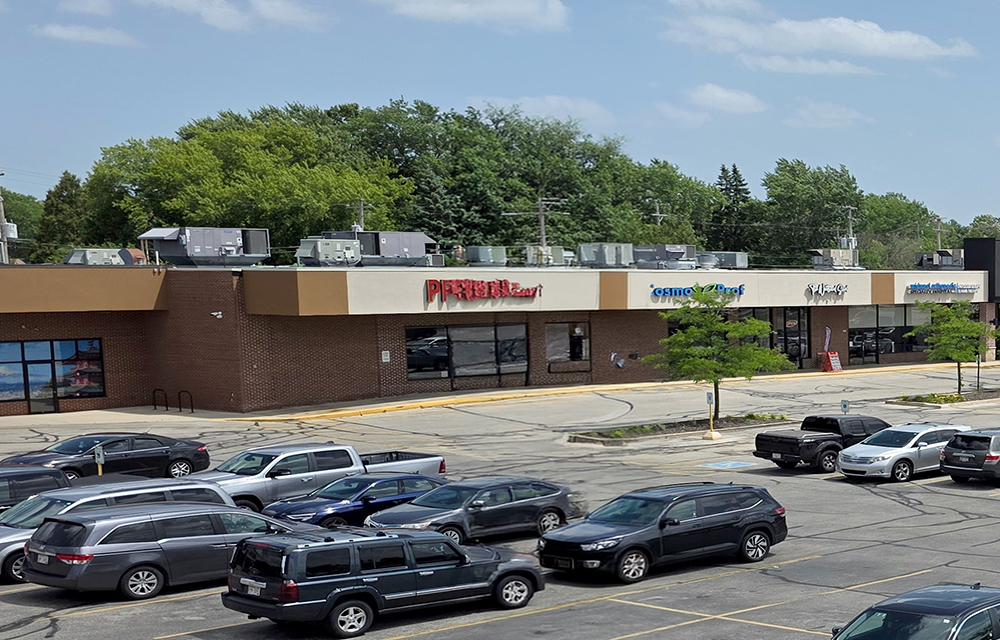
United Properties Corp. expands Wisconsin and Illinois retail presence adding 200,000 s/f
West Allis, WI United Properties Corp. completed two retail acquisitions totaling $27.4 million across Illinois and Wisconsin, adding 205,000 s/f of shopping center space to its portfolio


Quick Hits

Columns and Thought Leadership

Positive forecast for New York’s pro-housing push? - by Philip Butler
New York’s housing crisis remains a hot button topic despite growing consensus that varied and affordable housing is desperately needed statewide. Governor Hochul has recently introduced several initiatives to overcome N.Y.’s anti-housing

A guide to finding the right NYC property management company - by Sanjay Gandhi
Being a small to midsize landlord in NYC is an increasingly demanding endeavor. From navigating complex regulations, increased compliance demands to dealing with tenant issues and remediating violations. It is wise to enlist the assistance of a partner, a professional

New York’s streets are full again, and the retail numbers prove it - by Noam Aziz
Walk down any New York block this year and you can feel it. The sidewalks are crowded, the storefronts are lit, and the energy that defines this city is back at full volume.

Hunt commercial real estate question and answer: Fortune 500 wisdom - by David Hunt
Yes, there are lessons to be learned from the largest companies in America when comes to managing your real estate. But the decision to buy or lease real estate may not be one of
.gif)