



News:
Brokerage
Posted: August 3, 2021
ACRE Solutions partners with Silverpeak and Capstone to expand real estate secondaries market
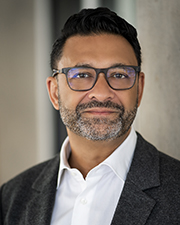
New York, NY Phil Barker and Sam Khatib, former executives of CBRE Capital Advisors, are launching a new venture, ACRE Solutions, to serve and foster the secondary market for limited partnership positions in open- and closed-end real estate funds and direct assets. The firm is backed by partnerships with Silverpeak and Capstone Equities, and the team is fully registered with FINRA to execute securities transactions.
ACRE, short for “Alternative Capital Replacement,” is a boutique real estate advisory focused on servicing institutional investors and family offices by offering strategic solutions to manage capital liquidity. ACRE advises real estate investors that have liquidity concerns and presents options that they may not have known were possible. Combining its affiliations with Silverpeak and Capstone, ACRE has assembled a unique origination network to find and nurture opportunities on both sides of the acquisition and exit equation.
“I’m delighted that we can form this venture with Phil Barker, one of the leading players in the real estate secondaries marketplace. We collectively saw the opportunity to grow an independent intermediary platform as a market and thought leader. We intend to prioritize liquidity and transparency in both the fund sector as well as private LP and partial interest secondaries,” said Josh Zamir, co-founder of Capstone Equities.
Barker, CEO and managing partner, and Khatib, senior director, worked together at CBRE, where they specialized in secondaries, capital raising, and all forms of investment advisory. The executive team possesses over 40 years of collective investment experience and has executed more than $6 billion of real estate alternative investments, including more than $2.5 billion in secondary transfers across 50+ transactions.
The secondary market has shown growth in recent years by offering buyers and sellers not only an avenue for liquidity but also a more efficient mechanism to re-adjust risk and proactively manage real estate exposure. Secondaries enable investors to immediately deploy capital alongside strategic sponsors and mitigate the risks associated with primary investments. Fund investors can often purchase vested LP exposure at a discount, eliminating blind pool risk and J-curve considerations while creating a diversified portfolio in an accelerated time frame. Conversely, sellers are able to crystallize investment returns before the original exit plan and, in certain cases, manage tax implications more effectively.
ACRE delivers the flexibility to adjust investment exposure. This is particularly relevant with the recent market uncertainty caused by the COVID-19 pandemic. When there is a misalignment of interest between LPs’ and GPs’ objectives or timelines, the need for secondary solutions becomes more critical. Independent intermediaries can facilitate anonymous price discovery and portfolio rebalancing in a more efficient and proactive manner.
“We’re 100% focused on real estate and have the experience and underwriting capabilities to be as granular as needed in our analysis of single assets through to evaluating positions in the largest open-end diversified funds. We understand the market need for these services and are actively working with owners of illiquid positions to monetize their interests and find replacement capital,“ said Barker.
Based on ACRE’s estimates, the annual U.S. secondary volume in the real estate market is projected to be in excess of $5 billion in the next few years and is expected to grow significantly as the market develops and matures.
For more information about ACRE Solutions LLC, please go to www.acresolutionsllc.com
Tags:
Brokerage
MORE FROM Brokerage

200E20TH sells out in Gramercy, penthouse A closes out sales at the CetraRuddy-designed condominium residences
Manhattan, NY 200E20TH, the CetraRuddy-designed architectural masterwork that brought a curved, contemporary sensibility to Gramercy’s Beaux-Arts streetscape, has



Quick Hits
 (2).gif)

Columns and Thought Leadership
The art of investing in real estate - by Thomas Donovan
Real estate investing is as much an art as it is a skill. No one can time the market, or the factors that drive it, perfectly. Location, zoning, size, transportation, and neighborhood density give you a baseline for

Hunt CRE question and answer: Choosing a real estate agent - by David Hunt
First, we will only work with one agent exclusively. The primary reason is that we want that agent to legally represent our client’s interests. In New York State, a real estate agent has a fiduciary

Hunt commercial real estate question and answer: Fortune 500 wisdom - by David Hunt
Yes, there are lessons to be learned from the largest companies in America when comes to managing your real estate. But the decision to buy or lease real estate may not be one of

New York’s streets are full again, and the retail numbers prove it - by Noam Aziz
Walk down any New York block this year and you can feel it. The sidewalks are crowded, the storefronts are lit, and the energy that defines this city is back at full volume.
.gif)