Sierra Real Estate





Considering all of the thousands of buildings in New York City, it is surprising how many are mismanaged. Often, communication between the leasing firm and property management company goes awry or just isn’t happening. We are fortunate to work on a team where these functions are combined and the two of us work closely to ensure both processes run as smoothly as possible. Currently, we are working together on a proposal to lease and manage a high-end building in the Plaza District. Between our two divisions, we are equipped with in-house counsel as well as a construction manager, accounting team and marketing department, all of which allow us here at Lee NYC to provide first-rate service to our clients.
We typically target smaller, family-owned commercial buildings with high numbers of vacancies. The teams at these buildings do not usually have the skills or manpower to manage all of the operations alone. Property management for commercial buildings is immensely complicated with many hurdles to overcome such as insurance, unions and estimating costs, just to name a few. The management of commercial properties can thus become much more complicated than the management of residential buildings. A well-trained staff is clearly important in the management of both types of properties but it is absolutely vital for commercial buildings.
It’s not uncommon for individuals to inherit smaller family-owned commercial buildings and to then have to determine the leasing and management processes that they would like to employ. The cost of creating a new management infrastructure for a commercial property is astronomical, leading many people to seek out a firm that can handle both the leasing and management for them. In order for an individual to create their own management infrastructure, they would have to hire their own legal counsel and construction manager, two functions that are already taken care of at Lee NYC, as they are at most combined leasing and property management companies. Many people try to put their own infrastructure in place but end up becoming overwhelmed and unable to best negotiate on behalf of themselves and their building.
A firm that combines leasing and property management capabilities is better able to position the building in the highest possible stratum and to create and maintain a positive narrative surrounding the building within the brokerage community. A combined firm is also better suited for establishing strong communications with brokers, providing more accurate cost estimates for clients and handling the management of assets.
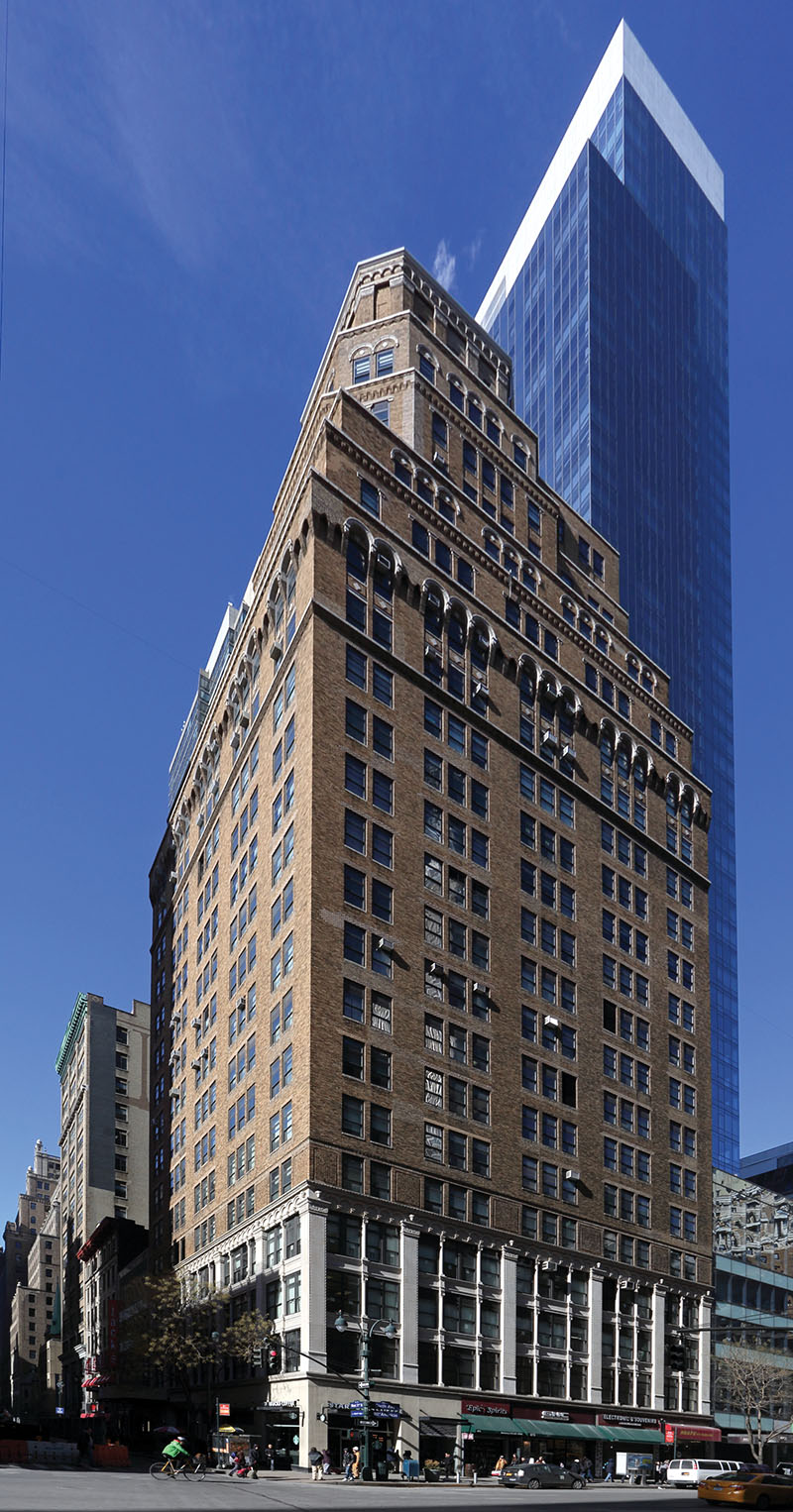
Over the past year, we have been working on a $1.6 million elevator modernization project at 648 Broadway as well as a multimillion-dollar façade restoration at 875 Sixth Ave. Throughout the façade project, the building staff has been working closely with both of us to communicate how the property’s office tenants are coping with the construction, which is just one benefit of having commercial leasing and property management under one company.
Many combined real estate firms have been able to accomplish major repositioning assignments, upgrades and overhauls of tenant rosters. While these feats are likely due to many factors, having the leasing and property management functions under one roof has no doubt made effective management simpler, less expensive and ultimately has led to better outcomes for both landlords and tenants.
John Ambrosini is the executive vice president of Sierra Real Estate; and Charles Goldberg is a senior managing director at Lee & Associates NYC, New York, N.Y.








.gif)