



News:
Spotlight Content
Posted: September 21, 2021
2021 Ones to Watch: Andrew Curto, Forchelli Deegan Terrana LLP
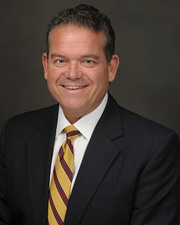 Name: Andrew Curto
Title: Partner
Company Name: Forchelli Deegan Terrana LLP
Real estate associations or organizations that you are currently a member of: Long Island Board of Realtors, Theodore Roosevelt American Inn of Court, Nassau County Bar Association, Suffolk County Bar Association
What recent project, transaction or accomplishment are you most proud of?
I am most proud of the cases I have handled where I have resolved business disputes between family members. I have identified these cases as “Family Business Matrimonials,” which are disputes between family members concerning real estate, closely-held family businesses and other assets. These matters tear families apart and are driven by emotion, greed and lack of proper planning. I have extensive experience in commencing these types of lawsuits and resolving these types of disputes. I am also keenly aware that the law is only one factor to consider in these disputes—you also have to assess the psychology of the parties involved and address concerns on a human emotional level. My skill set encompasses both the aggressive litigator and the creative negotiator who can assess a situation and bring parties together to mediate a dispute.
How do you keep your team motivated despite conflicts and obstacles?
As chair of my firm’s litigation department, I motivate my team to listen carefully to clients and completely understand their objectives and strategically use all aspects of our firm collaboratively to solve their problems. There is no greater satisfaction than drawing on the knowledge of a team of professionals to solve a complicated issue. I have found that in its simplest terms, life is about pushing harder when you meet resistance, never to give up and to think creatively in every matter. The answer is always no if you don’t ask the question.
Who was/is your mentor and how did s/he influence/help you in your career?
I would attribute much of my attitude towards problem solving to my father, who is also an attorney, and to other senior litigation attorneys with whom I was co-counsel over the past 30 years. Their collective style and wisdom certainly helped mold the lawyer I am today. My belief is that you will have greater success if you approach a problem with the attitude that you are going to solve it, instead of looking for every reason why you may fail. This is my attitude with every problem that comes across my desk and with every strategy meeting with my litigation team here at the firm.
Tags:
Spotlight Content
MORE FROM Spotlight Content

Artificial intelligence war stories - by Thomas Kearns
The proliferating artificial intelligence products for law firms show promise of improving the quality of legal services and making lawyers more efficient, but as with any developing technology, the results are mixed, with some results being not worth




.png)

Quick Hits
 (2).gif)

Columns and Thought Leadership

From vacancy to vitality: How adaptive reuse is reshaping Long Island’s CRE landscape - by Andrea Tsoukalas Curto
Adaptive reuse has become one of the most important conversations in commercial real estate today. Long Island has a large inventory of aging retail, office and industrial

Properly serving a lien law Section 59 Demand - by Bret McCabe
Many attorneys operating within the construction space are familiar with the provisions of New York Lien Law, which allow for the discharge of a Mechanic’s Lien in the event the lienor does not commence an action to enforce following the service of a “Section 59 Demand”.

CRE Guide Featured Company: Merritt Environmental Consulting Corp.
Merritt Environmental Consulting Corp. (MECC) was established in June of 2009 after being part of a larger engineering firm for almost 20 years. The focus of the company is to assist lending institutions, attorneys, real estate investors, and property owners with environmental concerns. Today, MECC has offices in New York, Florida, and Vermont and has grown into a regional consulting firm serving clients along the East Coast.

2026 Developing Queens: Long Island Board of Realtors advances commercial growth and advocacy in Queens
The Long Island Board of Realtors (LIBOR) Commercial Network continues to play a key role in advancing opportunities and strengthening the commercial real estate landscape across Queens. Through targeted programming and global outreach
September Promotion
