



News:
Spotlight Content
Posted: October 25, 2022
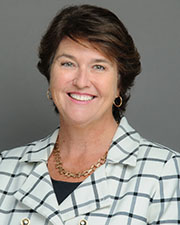
2022 Women in Professional Services: Risë Rosen, Forchelli Deegan Terrana LLP

Partner
Forchelli Deegan Terrana LLP
In the last 12 months, what was your TOP career highlight? The greatest highlight has been the merging of Koeppel Martone & Leistman, L.L.C. (KML) with Forchelli Deegan Terrana LLP (FDT). I am excited to be part of what is now an unparalleled powerhouse in the field of tax certiorari. Both firms come together with a singular philosophy – advocate for the client in the most efficient, creative, and beneficial way possible. I am extremely proud of the level of experience that my colleagues and I provided at KML. This merger ensures that our clients will continue to be the beneficiaries of a legal team that not only addresses their tax certiorari needs, but now offers a multitude of other practice areas.
In the last 12 months how have you helped your industry grow through professional creativity, innovation and leadership? The advent of COVID has in some ways changed the way we practice law. From “electronic filings” to virtual conferences, it has been crucial that we be partners in the growth and evolution taking place in the field of tax certiorari. I am proud to have worked with my colleagues, municipalities and the courts to ensure the smooth transition that is critical for our industry to thrive.
What advice would you give the next generation of women in your industry? My advice to women entering the field of tax certiorari would be to never be intimidated to be the only woman at the table. When I began my career, I was part of a clear minority, but over the years, there has been an increasing number of women. I believe our field is better for it. Never doubt the value that your life’s experiences bring – the ability to utilize flexible approaches to problem solving, the ability to see an issue from varying perspectives and most of all, the ability to be part of a team that takes pride in supporting their fellow team members.
Tags:
Spotlight Content
MORE FROM Spotlight Content
2026 Women in Commercial Real Estate: Deborah Smith, The CenterCap Group
What leadership lesson has made the greatest impact on your career? Leadership isn’t about being the smartest person in the room; it’s about creating an environment where the best ideas win.



.png)

Quick Hits
 (2).gif)

Columns and Thought Leadership

2026 Developing Queens: Long Island Board of Realtors advances commercial growth and advocacy in Queens
The Long Island Board of Realtors (LIBOR) Commercial Network continues to play a key role in advancing opportunities and strengthening the commercial real estate landscape across Queens. Through targeted programming and global outreach

CRE Guide Featured Company: Merritt Environmental Consulting Corp.
Merritt Environmental Consulting Corp. (MECC) was established in June of 2009 after being part of a larger engineering firm for almost 20 years. The focus of the company is to assist lending institutions, attorneys, real estate investors, and property owners with environmental concerns. Today, MECC has offices in New York, Florida, and Vermont and has grown into a regional consulting firm serving clients along the East Coast.

From vacancy to vitality: How adaptive reuse is reshaping Long Island’s CRE landscape - by Andrea Tsoukalas Curto
Adaptive reuse has become one of the most important conversations in commercial real estate today. Long Island has a large inventory of aging retail, office and industrial

Properly serving a lien law Section 59 Demand - by Bret McCabe
Many attorneys operating within the construction space are familiar with the provisions of New York Lien Law, which allow for the discharge of a Mechanic’s Lien in the event the lienor does not commence an action to enforce following the service of a “Section 59 Demand”.
September Promotion
