



News:
Spotlight Content
Posted: December 28, 2021
2021 Year in Review: John Robbins, Turner & Townsend
Name: John Robbins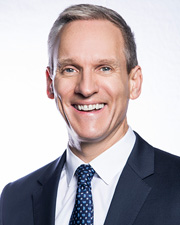
Job Title: Country Managing Director, USA
Company Name: Turner & Townsend
What are your predictions for your industry in 2022?
The construction industry will be among the first to move to the metaverse, collaborating in virtual environments to plan, design, sequence, build, test and commission new assets before a single shovel is in the ground. I also think that every aspect of the supply chain will be tracked using blockchain technology. It will provide investors and buyers with assurance about the quality of the property they purchase, and help insurers make smarter decisions about the risks and associated premiums. And, IoT will revolutionize safety and productivity, making construction sites “smart” sites.
What was your greatest professional accomplishment or most notable project, deal, or transaction in 2021?
In November of this year, Turner & Townsend closed a deal to form a global strategic partnership with CBRE. I’m particularly excited about this deal because it will allow an acceleration of our growth. Where we once competed against each other in certain circumstances, we are now going to partner to help drive better outcomes and value for our clients. This partnership will help accelerate the once-in-a-lifetime investments being made in infrastructure, carbon reduction, and sustainability. We can influence supply chain diversity; offering more choice an opportunity to small, local, minority and women owned businesses. We are really going to make the difference!
What is the best advice you received in 2021, and who was it from?
Practice gratitude daily. This is paraphrased from something I read recently in Harvard Business Review. It’s certainly not a new concept, and we’ve all been taught from a young age to say thank you, but are we grateful? The past year has brought extraordinary change—a global pandemic, social injustices, devastating effects of climate change, etc. There’s plenty of proven science that when we associate our thinking with gratitude, we improve how we feel about ourselves and others. The outcomes allow us to persevere with resilience, show more kindness, and accomplish a greater good in our personal and business lives.
What was the biggest lesson you learned while working during the pandemic?
Our team’s productivity increased by several percentage points when compared to the year prior to the pandemic. We found that transitioning to a flexible, smarter working environment gave our people the opportunity to manage their personal life commitments, while also exceeding our expectations on the volume and quality of their work. Our people look after one another, respect one another, and offer help when someone is in need. I don’t see how we go back to the “traditional” work environment. We all tend to put in longer workdays when at home, so lessons around how to truly promote and support wellbeing have remained paramount.
How has your working environment changed over the last year?
The main change was further digitization of our business through investments like Microsoft’s 365 tools. We made sure our people were able to set up their home offices so that they could stay safe, connected, and productive. When it was safe to do so, we did reopen our offices, with no subtext or implicit requirements that they come in. It remains a choice based on what is best for them and their family. Our numbers returning to the office have organically grown as a result. Our teams have appreciated the choices that a flexible work environment can provide, along with the ability to meet face-to-face, when appropriate.
Tags:
Spotlight Content
MORE FROM Spotlight Content

NYREJ's 2026 Developing Long Island Spotlight is here!
This spotlight showcases projects completed and currently under construction across Long Island as well as highlights improvements made to the region through Industrial and Economic Development Agencies and BIDs.



.png)

Quick Hits


Columns and Thought Leadership

CRE Guide Featured Company: Merritt Environmental Consulting Corp.
Merritt Environmental Consulting Corp. (MECC) was established in June of 2009 after being part of a larger engineering firm for almost 20 years. The focus of the company is to assist lending institutions, attorneys, real estate investors, and property owners with environmental concerns. Today, MECC has offices in New York, Florida, and Vermont and has grown into a regional consulting firm serving clients along the East Coast.

From vacancy to vitality: How adaptive reuse is reshaping Long Island’s CRE landscape - by Andrea Tsoukalas Curto
Adaptive reuse has become one of the most important conversations in commercial real estate today. Long Island has a large inventory of aging retail, office and industrial

2026 Developing Queens: Long Island Board of Realtors advances commercial growth and advocacy in Queens
The Long Island Board of Realtors (LIBOR) Commercial Network continues to play a key role in advancing opportunities and strengthening the commercial real estate landscape across Queens. Through targeted programming and global outreach

Properly serving a lien law Section 59 Demand - by Bret McCabe
Many attorneys operating within the construction space are familiar with the provisions of New York Lien Law, which allow for the discharge of a Mechanic’s Lien in the event the lienor does not commence an action to enforce following the service of a “Section 59 Demand”.