



News:
Spotlight Content
Posted: April 20, 2021
2021 Ones to Watch: Kevin Barry, Marks Paneth LLP
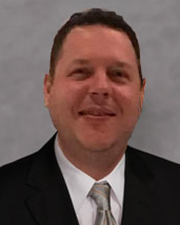 Name: Kevin Barry
Title: Senior Manager
Company Name: Marks Paneth LLP
Real estate associations or organizations that you are currently a member of:
Real Estate Committee, New York State Society of CPAs; Marks Paneth Real Estate Editorial Board
What recent project, transaction or accomplishment are you most proud of?
Recently I worked on a tax basis audit which included a very complicated 704(b) transaction that dealt with basis of property contributed by one of the members. A lot of research, time and effort on behalf of my team and myself went into understanding the transaction so that we could properly perform the audit. Completing the engagement and issuing the audited financial statement was very satisfying—we provided an important service to the client and learned a lot during the process.
How do you keep your team motivated despite conflicts and obstacles?
The best way to handle conflicts or obstacles that arise on a team is with open communication—I believe that if my team knows that they can come to me at any time for help resolving a problem, or even just to listen, it prevents problems from festering and then boiling over. Open communication keeps morale high and keeps the team motivated to work efficiently. Thanks to a great team and an open-door policy, these instances are generally rare.
Who was/is your mentor and how did s/he influence/help you in your career?
Throughout my career I have been fortunate to know many people who have helped me along the way. The person who has helped me the most is Neil Sonenberg, co-partner-in-charge of the Real Estate Group at Marks Paneth, with whom I have worked closely for more than 20 years. Early in my career, Neil showed faith in my ability to handle a very important account for the firm. Since putting that trust in me early on, he has continued to provide me with guidance and counsel as my career has developed, and 20 years later, his insight into furthering my career is just as important as it was at the start.
How do you contribute to your community or your profession?
I am committed to donating my time and resources to the school my children attend, helping ensure that they and their fellow students are provided the tools they need to succeed academically. Volunteering in this way also provides me with the opportunity to spend more quality time with my children. I contribute to the accounting profession by taking an interest in those just starting out at Marks Paneth and in the Real Estate Group especially. I think it is only right at this point in my career to provide the same opportunities that I received when I started out. This way, our new employees know they have someone looking out for them who they can reach out to for much-needed guidance.
What did you want to be when you grew up?
I wanted to be a professional baseball player. Unfortunately, my skill level wasn’t enough to obtain this goal. I now settle for watching baseball on television.
What led you to your current profession?
When I was trying to select a major in college, I was drawn to accounting because of the many options it provided. Almost every type of industry or company needs accountants, and that flexibility appealed to me. Once I decided to become an accountant, I made the choice to go into public accounting. The thought of working on different projects and interacting with a variety of people is something I really wanted and continue to value in my career—focusing my services within the real estate industry in New York adds an exciting layer into my work.
Top three things on your bucket list:
Professionally, I hope to become a partner at Marks Paneth. In my personal life, I am passionate about travel and I want to continue exploring the world. I hope to someday take a cruise to Alaska as well as a trip to visit Greece.
Favorite quote:
One of my favorite quotes is by Theodore Roosevelt: “Believe you can and you’re halfway there.” I feel this is a great quote because the first step in accomplishing any goal is believing that you can do it. If you don’t try because you feel you will fail, you will never accomplish what you hope to.
Tags:
Spotlight Content
MORE FROM Spotlight Content

NYREJ's 2026 Developing Long Island Spotlight is here!
This spotlight showcases projects completed and currently under construction across Long Island as well as highlights improvements made to the region through Industrial and Economic Development Agencies and BIDs.




.png)

Quick Hits


Columns and Thought Leadership

From vacancy to vitality: How adaptive reuse is reshaping Long Island’s CRE landscape - by Andrea Tsoukalas Curto
Adaptive reuse has become one of the most important conversations in commercial real estate today. Long Island has a large inventory of aging retail, office and industrial

CRE Guide Featured Company: Merritt Environmental Consulting Corp.
Merritt Environmental Consulting Corp. (MECC) was established in June of 2009 after being part of a larger engineering firm for almost 20 years. The focus of the company is to assist lending institutions, attorneys, real estate investors, and property owners with environmental concerns. Today, MECC has offices in New York, Florida, and Vermont and has grown into a regional consulting firm serving clients along the East Coast.

Properly serving a lien law Section 59 Demand - by Bret McCabe
Many attorneys operating within the construction space are familiar with the provisions of New York Lien Law, which allow for the discharge of a Mechanic’s Lien in the event the lienor does not commence an action to enforce following the service of a “Section 59 Demand”.

2026 Developing Queens: Long Island Board of Realtors advances commercial growth and advocacy in Queens
The Long Island Board of Realtors (LIBOR) Commercial Network continues to play a key role in advancing opportunities and strengthening the commercial real estate landscape across Queens. Through targeted programming and global outreach