


 (2).gif)
News:
Spotlight Content
Posted: August 18, 2020
2020 Ones to Watch: Ryan Severino, JLL
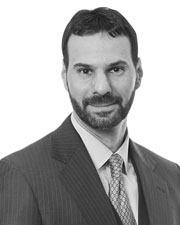 Name: Ryan Severino
Company: JLL
Title: Chief Economist
Education: Columbia University, master’s; Georgetown University, bachelor’s
How do you contribute to your community or your profession?
In addition to working at JLL, I have been an adjunct professor here in New York for the last 11 years. In the fall, I will also begin teaching at the Fordham Real Estate Institute. I really enjoy engaging with the students, particularly around some of the more esoteric aspects of finance and economics that many students and even professionals do not often think about, but are vital to the performance of the commercial real estate industry.
What do you like most about your job?
I enjoy the challenge of it. As my grandfather used to say in his slightly imperfect English, “If it was easy, everybody would do it.” I am charged with analyzing and forecasting the economy, discretely understanding the implications for commercial real estate, and then explaining that to people in a way that they can easily understand. It must also be why I enjoy teaching so much.
Who or what inspires you?
I have been blessed with great teachers and mentors from elementary school through my career. I would not be where I am without them. I try to pay that forward wherever I can–in the classroom, in the office, or speaking at a conference.
What led you to your current profession?
I have always been a very academic person. In another life, I would have been a full-time professor. My career has increasingly involved academic aspects of real estate. I gained a foundation in commercial real estate by working in functions such as asset management, portfolio management, and acquisitions during the early stages of my career. After graduate school, I transitioned to research and then found my niche in economics. I enjoy that my position sits at the intersection of core knowledge areas such as commercial real estate and economics, technical skills such as coding and mathematics, and soft skills such as speaking and writing.
Tags:
Spotlight Content
MORE FROM Spotlight Content
Participate in Developing New York Featuring Westchester County - November 24, 2026
Choose how you’d like to participate in this edition of NYREJ’s Developing New York series featuring Westchester County.



.png)

Quick Hits
 (2).gif)

Columns and Thought Leadership

From vacancy to vitality: How adaptive reuse is reshaping Long Island’s CRE landscape - by Andrea Tsoukalas Curto
Adaptive reuse has become one of the most important conversations in commercial real estate today. Long Island has a large inventory of aging retail, office and industrial
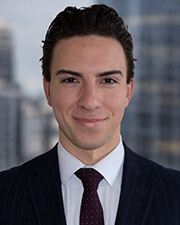
2026 Developing Long Island: ERG Commercial Real Estate launches its new Retail Leasing division
North Hempstead, NY ERG Retail Leasing is the dedicated leasing division of ERG Commercial Real Estate, an established full-service commercial real estate brokerage for over 35 years.

2026 Developing Queens: Long Island Board of Realtors advances commercial growth and advocacy in Queens
The Long Island Board of Realtors (LIBOR) Commercial Network continues to play a key role in advancing opportunities and strengthening the commercial real estate landscape across Queens. Through targeted programming and global outreach

CRE Guide Featured Company: Merritt Environmental Consulting Corp.
Merritt Environmental Consulting Corp. (MECC) was established in June of 2009 after being part of a larger engineering firm for almost 20 years. The focus of the company is to assist lending institutions, attorneys, real estate investors, and property owners with environmental concerns. Today, MECC has offices in New York, Florida, and Vermont and has grown into a regional consulting firm serving clients along the East Coast.