


 (2).gif)
News:
Spotlight Content
Posted: February 18, 2020
2020 Ones to Watch: Richard Kalinowski, Zetlin & De Chiara LLP
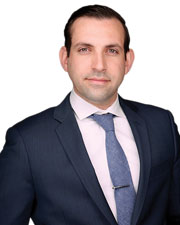
Name: Richard Kalinowski
Company: Zetlin & De Chiara LLP
Title: Associate
Education: B.S. Civil Engineering and B.S. Architectural Engineering (Drexel University); J.D. (Seton Hall University School of Law)
Which project, deal, or transaction was the “game-changer” in the advancement of your career?
The Central Artery/Tunnel Project, also known as “The Big Dig,” in Boston. While an undergraduate in engineering, I was an intern for a firm that had worked on a portion of the design. While discussing claims that arose alleging issues with the design, I realized that much of the meeting was spent with the engineers reading plans for the attorneys and the attorneys explaining the legal process to the engineers. At that moment, the idea to combine both professions was planted in my head. Thankfully, I found Zetlin & DeChiara, a firm that specializes in that combination.
What do you like most about your job?
The “gray area.” Many professions are either focused on structure or focused on creativity. For me, the legal profession, especially litigation, is the perfect complement of both. While the law and the legal system create a structured framework, each client, project, or case bring unique facts, which offer the opportunity to be creative. That creative area, melding individual facts to the relative law is what I call the “gray area,” and why I believe is the most fun and exciting part of my job.
If your life were made into a movie, what actor would you want to portray you?
I would like to be portrayed by Joseph Gordon-Levitt because we appear to have similar characteristics. He seems to be a hard-worker, passionate about his career, well-grounded with a good sense of humor. He has the ability to play the lead role or a vital supporting character. But most importantly, I haven’t heard or read anything overtly negative about him or his personal character. I would like to think that portraying me would come quite naturally to him!
Tags:
Spotlight Content
MORE FROM Spotlight Content

NYREJ's 2026 Developing Long Island Spotlight is here!
This spotlight showcases projects completed and currently under construction across Long Island as well as highlights improvements made to the region through Industrial and Economic Development Agencies and BIDs.



.png)

Quick Hits
 (2).gif)

Columns and Thought Leadership

Properly serving a lien law Section 59 Demand - by Bret McCabe
Many attorneys operating within the construction space are familiar with the provisions of New York Lien Law, which allow for the discharge of a Mechanic’s Lien in the event the lienor does not commence an action to enforce following the service of a “Section 59 Demand”.

From vacancy to vitality: How adaptive reuse is reshaping Long Island’s CRE landscape - by Andrea Tsoukalas Curto
Adaptive reuse has become one of the most important conversations in commercial real estate today. Long Island has a large inventory of aging retail, office and industrial

CRE Guide Featured Company: Merritt Environmental Consulting Corp.
Merritt Environmental Consulting Corp. (MECC) was established in June of 2009 after being part of a larger engineering firm for almost 20 years. The focus of the company is to assist lending institutions, attorneys, real estate investors, and property owners with environmental concerns. Today, MECC has offices in New York, Florida, and Vermont and has grown into a regional consulting firm serving clients along the East Coast.

2026 Developing Queens: Long Island Board of Realtors advances commercial growth and advocacy in Queens
The Long Island Board of Realtors (LIBOR) Commercial Network continues to play a key role in advancing opportunities and strengthening the commercial real estate landscape across Queens. Through targeted programming and global outreach