


 (2).gif)
News:
Spotlight Content
Posted: September 17, 2019
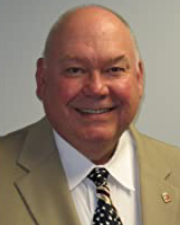
2019 Women in Real Estate: Annemarie DiCola, Trepp, LLC
 Name: Annemarie DiCola
Title: CEO
Company Name: Trepp, LLC
Association/Organization Affiliations (REAL ESTATE ONLY): Commercial Real Estate Finance Council (CREFC), Advisory Board of the NYU Stern Center for Commercial Real Estate Finance Research, Commercial Real Estate Women (CREW), President’s Council of the Real Estate Roundtable
What is your favorite motivational quote?
My favorite quote (which hangs in my office) is, “If you don’t know it’s impossible, it’s easier to do.” To me, this means: Never talk yourself out of doing something because it’s hard. If you believe it can be done, you have already empowered yourself to get it done. When I look at the important things we’ve done at Trepp, especially the challenges we’ve tackled, and the mountains we’ve climbed, this quote stands out because we continue to advance. At the end of the day, don’t negotiate against yourself.
How do you hold your own in a negotiation?
The most important thing to do is to know your walk-away point. You have to go into a negotiation privately aware of everything you are willing to give up and everything that you are not. It is also important to start the negotiation by getting some easy agreement going. Find the areas of commonality that help you connect with the opposing side and send a message that you both can get this done.
What is the best advice you have received, and who was it from?
The best advice I have received was from a former boss on my first day of work. He said, “Remember one thing; you are more valuable to me when you disagree with me.” This allowed me to realize that because no one knows everything, it is helpful if we point out other viewpoints and perspectives to each other. It was an important message early in my career about the value of diverse views: The need to have multiple perspectives in a room so that you reach a better decision that will have seen the problem from all sides.
What recent project or transaction are you most proud of?
During the fiscal crisis, we were selected by the Federal Reserve to provide insight and analysis of newly issued CMBS assets. That was a groundbreaking achievement for us. More recently, I’m proud of the work we’ve done with US banks to help them assess their commercial real estate risk for stress testing and address new CECL accounting regulations. We continue to succeed at helping banks, insurance companies and commercial mortgage REITs better assess their level of risk and exposure to this important but cyclical asset class.
What was one of your biggest accomplishments in the last 12 months?
We’ve instituted a number of ways to drive innovation at Trepp–we keep improving our development to more modern and responsive forms of product building, we have created a team within Trepp to focus on constant innovation, and we’ve brought in additional talent to drive even more creativity and more innovation.
What books, blogs, podcasts, resources or influencers would you recommend to women?
Well, of course I recommend Trepp’s blogs and research for everyone who seeks great insights about the commercial real estate industry. In addition, I recommend “TED Talks.” My favorite is a must-see for women – and frankly for everyone. It’s titled “Your Body Language May Shape Who You Are,” by Amy Cuddy. Her premise is that while body language affects how others see us, it also affects our attitudes based on how we hold our bodies. She posits the theory that we should adopt a “power pose” – something that winning athletes do. If we do so before a speech or a difficult conversation, we send our mind a message that we will succeed – and we do.
Who inspired you to join the CRE Industry?
For me, this is not a question of who, but what. When I was in law school, I spent summers interning at law firms. I had the opportunity to do a rotation among corporate law, litigation, and commercial real estate. I realized then that I loved commercial real estate! I valued how productive it was; it had a clear goal to accomplish, working with tangible assets. I enjoyed the overall positivity and progress that it represented, which I found to be the most rewarding. I had an early passion for commercial real estate – and I still do!
Tags:
Spotlight Content
MORE FROM Spotlight Content
Participate in Developing New York Featuring Westchester County - November 24, 2026
Choose how you’d like to participate in this edition of NYREJ’s Developing New York series featuring Westchester County.



.png)

Quick Hits


Columns and Thought Leadership

From vacancy to vitality: How adaptive reuse is reshaping Long Island’s CRE landscape - by Andrea Tsoukalas Curto
Adaptive reuse has become one of the most important conversations in commercial real estate today. Long Island has a large inventory of aging retail, office and industrial

2026 Developing Long Island: ERG Commercial Real Estate launches its new Retail Leasing division
North Hempstead, NY ERG Retail Leasing is the dedicated leasing division of ERG Commercial Real Estate, an established full-service commercial real estate brokerage for over 35 years.

2026 Developing Queens: Long Island Board of Realtors advances commercial growth and advocacy in Queens
The Long Island Board of Realtors (LIBOR) Commercial Network continues to play a key role in advancing opportunities and strengthening the commercial real estate landscape across Queens. Through targeted programming and global outreach

CRE Guide Featured Company: Merritt Environmental Consulting Corp.
Merritt Environmental Consulting Corp. (MECC) was established in June of 2009 after being part of a larger engineering firm for almost 20 years. The focus of the company is to assist lending institutions, attorneys, real estate investors, and property owners with environmental concerns. Today, MECC has offices in New York, Florida, and Vermont and has grown into a regional consulting firm serving clients along the East Coast.