


 (2).gif)
News:
Spotlight Content
Posted: November 5, 2019
2019 Ones to Watch: Ashley Doukas, Stroock & Stroock & Lavan LLP
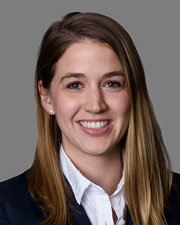 Name: Ashley Doukas
Title: Associate
Company Name: Stroock & Stroock & Lavan LLP
Address: 180 Maiden Lane, New York, NY 10038
What do you consider to be your greatest success in the past 12 months?
As a land use and zoning attorney in New York City, I’ve learned that development projects and city land use applications take time – sometimes years. This past year, I got approval by the City Planning Commission for three special permit applications. The approvals required public hearings at all levels: Community Board, borough president, City Planning and City Council.
?What advice can you offer to someone who is just getting started in your industry?
Read, read, read! Sign up for every real estate subscription. Knowing city policy and up-to-date changes in the neighborhoods throughout the city is extremely important. Know the process from start to finish – lease or sale, transaction, parties involved, development potential, re-sale, client’s goals, etc. Even if your work is only one aspect of real estate, understanding the full picture will help you be that much more successful.
How have your life experiences impacted who you are professionally?
Having children early on in my career has significantly impacted me professionally. You must learn to prioritize, balance work and home, and focus on time management. Being a mom also gave me a boost of confidence. You have to take control, and you realize all that you can do.
Who or what do you attribute to your success?
My success stems from being part of a team and working in a supportive environment for personal growth and professional development. The Land Use and Zoning team at Stroock is collaborative and strategic. We work together, bounce ideas off of each other, and evaluate what is best for our clients and specific projects. We each have a defined role, but behind the scenes we support each other and every project we are working on. The leaders I have worked for in this industry are full of knowledge and details about development in NYC. The insight, history and even anecdotes I’ve learned from them are not only interesting, but they also play well with clients and city officials.
Tags:
Spotlight Content
MORE FROM Spotlight Content

The commercial classroom: 1031 tax-deferred exchanges - by Edwad Smith Jr.
The sale of real estate may trigger capital gains taxes on the net profits of that sale. These taxes may be deferred by participating in a 1031 tax exchange, in essence, by purchasing property(s) to replace the




.png)

Quick Hits


Columns and Thought Leadership

From vacancy to vitality: How adaptive reuse is reshaping Long Island’s CRE landscape - by Andrea Tsoukalas Curto
Adaptive reuse has become one of the most important conversations in commercial real estate today. Long Island has a large inventory of aging retail, office and industrial

2026 Developing Queens: Long Island Board of Realtors advances commercial growth and advocacy in Queens
The Long Island Board of Realtors (LIBOR) Commercial Network continues to play a key role in advancing opportunities and strengthening the commercial real estate landscape across Queens. Through targeted programming and global outreach

2026 Developing Long Island: ERG Commercial Real Estate launches its new Retail Leasing division
North Hempstead, NY ERG Retail Leasing is the dedicated leasing division of ERG Commercial Real Estate, an established full-service commercial real estate brokerage for over 35 years.

CRE Guide Featured Company: Merritt Environmental Consulting Corp.
Merritt Environmental Consulting Corp. (MECC) was established in June of 2009 after being part of a larger engineering firm for almost 20 years. The focus of the company is to assist lending institutions, attorneys, real estate investors, and property owners with environmental concerns. Today, MECC has offices in New York, Florida, and Vermont and has grown into a regional consulting firm serving clients along the East Coast.