


 (2).gif)
News:
Spotlight Content
Posted: May 15, 2018
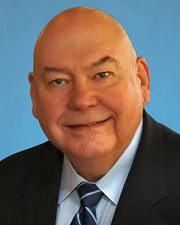
2018 Ones to Watch: Sanjay Mody, Special Counsel at Windels Marx Lane & Mittendorf, LLP
Name: Sanjay Mody
Title: Special Counsel
Company: Windels Marx Lane & Mittendorf, LLP
Address: 156 West 56th Street, New York, NY 10019
Year that you entered your current field? 2003
How did you get your start in your current field?
After law school I planned to be a litigator. I clerked in the Southern District and worked in private practice. In 2006, Tony Coscia asked me to join him at Port Authority where he was serving as chairman. For the next four years as his senior advisor, I had a hand in the agency’s major projects, including the World Trade Center redevelopment, a new cross-Hudson rail tunnel, and airline terminal modernization projects. I realized that I really enjoyed working on the built environment. In 2012, we formed a practice at Windels Marx advising private companies and public authorities on the legal, financial and governmental aspects of infrastructure projects.
What are your professional goals for 2018?
Client work is keeping me busy but I am starting to take on a more visible role in the public dialogue around infrastructure. I recently moderated a panel to discuss how the public sector and private industry can work together to help overcome our region’s infrastructure challenges (of which there are many). In addition, I have articles, roundtables and industry conferences in the pipeline. One specific area I’d like to explore is what lessons the U.S. might draw from other parts of the world on infrastructure investment.
Who or what do you attribute to your success?
Maintaining relationships is one of the biggest factors. Tony has been a great mentor and friend, and I’m grateful for his support for more than 20 years. Another factor is remaining curious. The practice of law has become increasingly specialized and technical over my career, but I’ve found that knowledge across sectors – real estate, corporate, government relations, and others – helps a great deal in the infrastructure space.
Tags:
Spotlight Content
MORE FROM Spotlight Content

The commercial classroom: 1031 tax-deferred exchanges - by Edwad Smith Jr.
The sale of real estate may trigger capital gains taxes on the net profits of that sale. These taxes may be deferred by participating in a 1031 tax exchange, in essence, by purchasing property(s) to replace the



.png)

 (2).gif)

Columns and Thought Leadership

2026 Developing Queens: Long Island Board of Realtors advances commercial growth and advocacy in Queens
The Long Island Board of Realtors (LIBOR) Commercial Network continues to play a key role in advancing opportunities and strengthening the commercial real estate landscape across Queens. Through targeted programming and global outreach

From vacancy to vitality: How adaptive reuse is reshaping Long Island’s CRE landscape - by Andrea Tsoukalas Curto
Adaptive reuse has become one of the most important conversations in commercial real estate today. Long Island has a large inventory of aging retail, office and industrial

CRE Guide Featured Company: Merritt Environmental Consulting Corp.
Merritt Environmental Consulting Corp. (MECC) was established in June of 2009 after being part of a larger engineering firm for almost 20 years. The focus of the company is to assist lending institutions, attorneys, real estate investors, and property owners with environmental concerns. Today, MECC has offices in New York, Florida, and Vermont and has grown into a regional consulting firm serving clients along the East Coast.
2026 Developing Long Island: ERG Commercial Real Estate launches its new Retail Leasing division
North Hempstead, NY ERG Retail Leasing is the dedicated leasing division of ERG Commercial Real Estate, an established full-service commercial real estate brokerage for over 35 years.