



News:
Spotlight Content
Posted: May 16, 2017
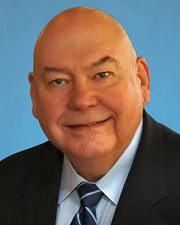
2017 Women in Professional Services: Karen Scanna of Stroock & Stroock & Lavan LLP

Stroock & Stroock & Lavan LLP
Name: Karen Scanna
Title: Partner
Company Name: Stroock & Stroock & Lavan LLP
Years in real estate: 20+
What real estate associations or organizations are you a member of? Urban Land Institute, Real Estate Board of New York, New York City Bar Association, WX, Inc.
How have you navigated obstacles to achieve success in your career? I am an only child of non-college graduate parents who grew up in a middle class neighborhood where people worked hard but were not doctors, lawyers or other professionals. Thanks to the support and encouragement of my mother and my teachers, and a lot of perseverance on my part, I was able to attend the best schools and seize the opportunities bestowed on me in order to become a successful real estate attorney.
How do you play your strengths to your advantage in your career? In addition to having a good head on my shoulders, I am organized, hardworking, detail oriented and responsive to client needs. I also inspire confidence so that my clients trust me and feel comfortable relying on the advice I give them. In the world of commercial real estate, where deals are made (and lost) overnight, the foregoing qualities are essential to any lawyer’s success.
What trends are you seeing so far this year? A fair amount of my work consists of “public private” partnerships, representing developers who respond to “requests for proposals” put out by The City of New York to develop city-owned property. In 2016, a number of deals were going sideways and getting stuck in the system. In recent months I see a renewed energy within the city to transact, and deals are getting done in a systematic and thoughtful way, which is encouraging for the future.
What do you do for fun? When we are not hanging out in Central Park with our mixed-breed dog Sprout, my husband and I enjoy hiking, biking and yoga.
Tags:
Spotlight Content
MORE FROM Spotlight Content
Participate in Developing New York Featuring Westchester County - November 24, 2026
Choose how you’d like to participate in this edition of NYREJ’s Developing New York series featuring Westchester County.



.png)

 (2).gif)

Columns and Thought Leadership

2026 Developing Queens: Long Island Board of Realtors advances commercial growth and advocacy in Queens
The Long Island Board of Realtors (LIBOR) Commercial Network continues to play a key role in advancing opportunities and strengthening the commercial real estate landscape across Queens. Through targeted programming and global outreach

CRE Guide Featured Company: Merritt Environmental Consulting Corp.
Merritt Environmental Consulting Corp. (MECC) was established in June of 2009 after being part of a larger engineering firm for almost 20 years. The focus of the company is to assist lending institutions, attorneys, real estate investors, and property owners with environmental concerns. Today, MECC has offices in New York, Florida, and Vermont and has grown into a regional consulting firm serving clients along the East Coast.

From vacancy to vitality: How adaptive reuse is reshaping Long Island’s CRE landscape - by Andrea Tsoukalas Curto
Adaptive reuse has become one of the most important conversations in commercial real estate today. Long Island has a large inventory of aging retail, office and industrial

2026 Developing Long Island: ERG Commercial Real Estate launches its new Retail Leasing division
North Hempstead, NY ERG Retail Leasing is the dedicated leasing division of ERG Commercial Real Estate, an established full-service commercial real estate brokerage for over 35 years.