


 (2).gif)
News:
Spotlight Content
Posted: October 17, 2017
2017 Women in Building Services: Danielle Semp, Lothrop Associates LLP
Name: Danielle Semp
Title: Interior Designer
Company Name: Lothrop Associates LLP
Years in real estate: 2
How have you navigated obstacles to achieve success in your career?
Major obstacles presented have been the tight budgets and deadlines of clients within the real estate market. The keys to accomplishing the goals of the client are an organized schedule and to provide creative solutions that keep the job inexpensive but accomplish a powerful aesthetic.
My age may be a personal obstacle but I utilize it as a strength as well. I am eager to absorb an immense amount of knowledge and climb the ladder within my industry as quick as possible. I take on any challenge or project that presents itself to keep growing and pushing myself further.
How do you play your strengths to your advantage in your career?
Visualization is a strength of mine that helps guide the design process much easier. Once the initial conversation with a client occurs to discuss their wants and needs, a visual begins to form in my mind of what the final design may entail. This allows for a more efficient process when materials and FF&E must be selected.
A minor in Accounting is more beneficial than one would think. It allows a better understanding of a client’s budget while understanding the needs of the business to remain profitable.
What trends are you seeing so far this year?
Hexagons. They are the new latest and greatest geometric shape in design. I have seen carpet, tiles, wallcovering and much more in the shape of a hexagon. For this upcoming fall season, I have seen quite a bit of maroon and teal as the “hot” colors.
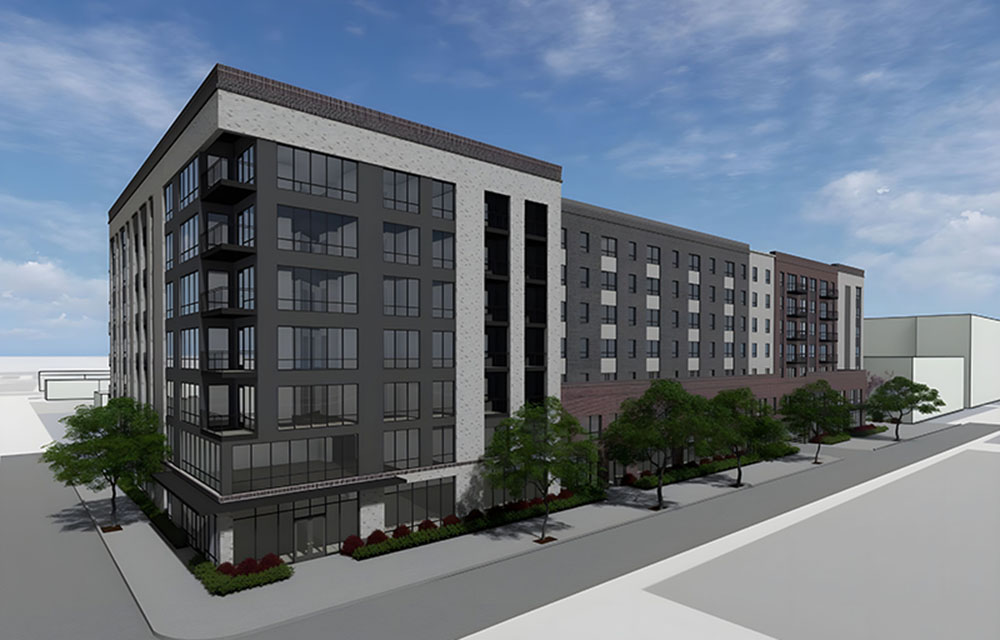
Renting as opposed to buying property has been the big trend in real estate lately. There are new mixed use and apartment rental buildings being constructed all across New York, especially Westchester County in particular.
What do you do for fun?
Bowling is a long-time hobby of mine.
Tags:
Spotlight Content
MORE FROM Spotlight Content

NYREJ's 2026 Developing Long Island Spotlight is here!
This spotlight showcases projects completed and currently under construction across Long Island as well as highlights improvements made to the region through Industrial and Economic Development Agencies and BIDs.


.png)

Quick Hits
 (2).gif)

Columns and Thought Leadership

2026 Developing Queens: Long Island Board of Realtors advances commercial growth and advocacy in Queens
The Long Island Board of Realtors (LIBOR) Commercial Network continues to play a key role in advancing opportunities and strengthening the commercial real estate landscape across Queens. Through targeted programming and global outreach

Properly serving a lien law Section 59 Demand - by Bret McCabe
Many attorneys operating within the construction space are familiar with the provisions of New York Lien Law, which allow for the discharge of a Mechanic’s Lien in the event the lienor does not commence an action to enforce following the service of a “Section 59 Demand”.

From vacancy to vitality: How adaptive reuse is reshaping Long Island’s CRE landscape - by Andrea Tsoukalas Curto
Adaptive reuse has become one of the most important conversations in commercial real estate today. Long Island has a large inventory of aging retail, office and industrial

CRE Guide Featured Company: Merritt Environmental Consulting Corp.
Merritt Environmental Consulting Corp. (MECC) was established in June of 2009 after being part of a larger engineering firm for almost 20 years. The focus of the company is to assist lending institutions, attorneys, real estate investors, and property owners with environmental concerns. Today, MECC has offices in New York, Florida, and Vermont and has grown into a regional consulting firm serving clients along the East Coast.