


 (2).gif)
News:
Spotlight Content
Posted: December 20, 2016
2016 Year in Review: Craig Rosenman, The Daten Group
 Craig Rosenman, The Daten Group
Name & Title: Craig Rosenman, Director of Acquisitions
Company Name: The Daten Group
What was your most notable project, deal, transaction or professional achievement in 2016?
2016 was a busy year. The Daten Group, along with Valyrian Capital, purchased and started work on 856 Washington Avenue in Prospect Heights designed by KBA and interiors by Stephanie Goto. This is an amazing condominium building overlooking Prospect Park.
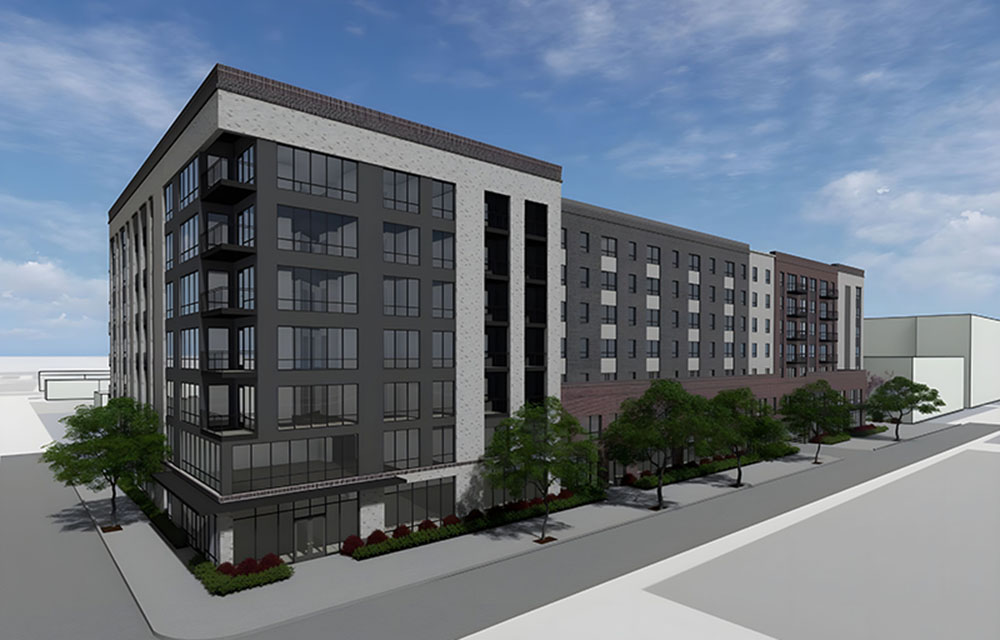
Daten also bought 575 Fourth Avenue and started demolition on what will become a 70-unit condo building in Park Slope designed by KFA and interiors by The Meshberg Group.
We continue progress on 600 Harrison in Hoboken, NJ and 840 Fulton in Clinton Hill, Brooklyn which are both rental projects.
I am very proud that we have been able to work hard and complete so much to make all these great projects happen.
What project, transaction, market trend or product had the greatest impact on your industry this year?
The biggest impact for us was the loss of 421A. It has really made it impossible to do a rental project right now. It is a big loss for the city. Our project, 840 Fulton, was started in December 2015, and so we got in under the wire to qualify for 421A. Without it that would have become a condominium project and we wouldn’t have been able to give the neighborhood 8 affordable apartments.
How will you be supercharging your productivity in 2017?
The Daten Group has always had slow and steady growth, but with 4 projects underway and a number that we have finished and now manage we have added to our team to make sure we are prepared to handle the work load. With many of these projects finishing or in full on construction we need to be on our toes to get these projects to the finish line and make them as successful as they can be. The extra help around here makes it that much easier to get them there.
What emerging trends will drive investment and development in 2017?
Hopefully the city and state can get their act together and get 421A back on the books so that developers can build new rental projects that give back affordable units to the neighborhoods that need them. I also hope that the banks ease up a little on their lending so that projects can get built.
It is always a good thing for the market when banks get a little cautious so that projects don’t get overbuilt. However, I think they have gone a little too far, and Dodd Frank has made it harder to attract lenders to properties that have been owned for a long time. Trump has talked about paring that back to make it easier on the banks. If all these things happen then we could see investment and developments booming into 2017 and beyond.
Tags:
Spotlight Content
MORE FROM Spotlight Content

NYREJ's 2026 Developing Long Island Spotlight is here!
This spotlight showcases projects completed and currently under construction across Long Island as well as highlights improvements made to the region through Industrial and Economic Development Agencies and BIDs.


.png)

Quick Hits


Columns and Thought Leadership

CRE Guide Featured Company: Merritt Environmental Consulting Corp.
Merritt Environmental Consulting Corp. (MECC) was established in June of 2009 after being part of a larger engineering firm for almost 20 years. The focus of the company is to assist lending institutions, attorneys, real estate investors, and property owners with environmental concerns. Today, MECC has offices in New York, Florida, and Vermont and has grown into a regional consulting firm serving clients along the East Coast.

Properly serving a lien law Section 59 Demand - by Bret McCabe
Many attorneys operating within the construction space are familiar with the provisions of New York Lien Law, which allow for the discharge of a Mechanic’s Lien in the event the lienor does not commence an action to enforce following the service of a “Section 59 Demand”.

From vacancy to vitality: How adaptive reuse is reshaping Long Island’s CRE landscape - by Andrea Tsoukalas Curto
Adaptive reuse has become one of the most important conversations in commercial real estate today. Long Island has a large inventory of aging retail, office and industrial

2026 Developing Queens: Long Island Board of Realtors advances commercial growth and advocacy in Queens
The Long Island Board of Realtors (LIBOR) Commercial Network continues to play a key role in advancing opportunities and strengthening the commercial real estate landscape across Queens. Through targeted programming and global outreach