



News:
Spotlight Content
Posted: June 22, 2016
2016 Women in Real Estate: Jane Lyons
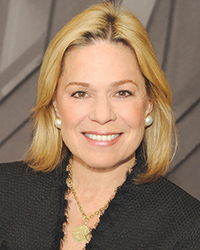 Jane Lyons, Rhodes Associates
Name: Jane Lyons
Title: Managing Partner
Email: [email protected]
Years in real estate: 30 years
Company Name: Rhodes Associates
Year Founded: 1969
URL: www.rhodesassociates.com
Telephone: (212) 983-2000
Twitter @rhodesassociate
How did you get your start in real estate?
Was recruited at a Wharton networking event by a Partner at Rhodes Associates
What real estate associations or organizations are you a member of?
Urban Land Institute, Pension Real Estate Association, Mortgage Bankers Associates, CREW New York
What recent project or transaction are you most proud of?
When looking at Rhodes’ active projects and transactions to date for 2016, the project I am most proud of is one with a regional developer whose issue is two-fold. The developer is a generational family office structure with aging senior management and no succession plan that is currently transitioning into a new development product strategy. In this project, we are assisting our client in analyzing how to recalibrate, deconstruct and then reconstruct the firm by looking at each individual senior manager and their current functional roles within the firm. As a result, we are redefining functionality at that level and staffing the firm to achieve a succession plan that has the new product experience and the talent to meet the challenges and opportunities that go with it.
What have been some of the benefits of being a mentor or having a mentor?
Being a mentor provides me with the opportunity to challenge my colleagues in the industry who are mid-to-senior level real estate professionals to actively mentor newcomers. By doing so, we create a legacy of excellence across the industry. Demographics are often times against us to recruit and retain the best and the brightest, so it therefore becomes critical to develop talent at the entry level. Proper mentorship not only acknowledges and fosters diversity and career development, it allows for greater retention at each respective firm throughout our industry.
Tags:
Spotlight Content
MORE FROM Spotlight Content
Participate in Developing New York Featuring Westchester County - November 24, 2026
Choose how you’d like to participate in this edition of NYREJ’s Developing New York series featuring Westchester County.




.png)

 (2).gif)

Columns and Thought Leadership

From vacancy to vitality: How adaptive reuse is reshaping Long Island’s CRE landscape - by Andrea Tsoukalas Curto
Adaptive reuse has become one of the most important conversations in commercial real estate today. Long Island has a large inventory of aging retail, office and industrial

CRE Guide Featured Company: Merritt Environmental Consulting Corp.
Merritt Environmental Consulting Corp. (MECC) was established in June of 2009 after being part of a larger engineering firm for almost 20 years. The focus of the company is to assist lending institutions, attorneys, real estate investors, and property owners with environmental concerns. Today, MECC has offices in New York, Florida, and Vermont and has grown into a regional consulting firm serving clients along the East Coast.

2026 Developing Queens: Long Island Board of Realtors advances commercial growth and advocacy in Queens
The Long Island Board of Realtors (LIBOR) Commercial Network continues to play a key role in advancing opportunities and strengthening the commercial real estate landscape across Queens. Through targeted programming and global outreach

2026 Developing Long Island: ERG Commercial Real Estate launches its new Retail Leasing division
North Hempstead, NY ERG Retail Leasing is the dedicated leasing division of ERG Commercial Real Estate, an established full-service commercial real estate brokerage for over 35 years.