



News:
Brokerage
Posted: September 18, 2009
2009 upstate New York apartment market report: Financially healthier than other commercial classes
The fundamentals of the apartment business across upstate New York remain strong in 2009, apartments should do well in more conservative times. Occupancy remains strong; the modest rents offered by most of the suburban garden complexes appeal to the large majority of the working class population and compare well with average incomes. Stable collections maintain value as properties in recent years were never sold on future expectations. Overbuilding never occurred so there is no inventory oversupply or speculative excess to correct. Mortgage financing for properties up to the $10 million range, the majority of all sales, is available as local and regional banks active in multifamily lending are mostly unscathed by the sub prime crises.
Reasonably priced close-in first ring suburban properties in the metropolitan markets of upstate New York including Buffalo, Rochester, Syracuse and Albany make excellent investments in recessionary times. These densely populated suburban locations with their proximity to tenant conveniences, easy transportation access and proximity to employment opportunities offer minimal leasing risk. With turmoil elsewhere investors more than ever are looking for stable long term returns and there is sufficient buyer activity to help cushion any property value decline. First year returns here for investment quality suburban garden apartments are in the 8% range. Small high net worth investors and their partnerships comprise the majority of apartment investors, they have equity to place and a long term time horizon.
Potential legislation now pending in congress, specifically the proposed increase in the capital gains tax rate, may threaten the health of the business. Higher taxes lower potential future sale proceeds and reduce the price a potential buyer will pay. The uncertainty of when and if this and other pending legislation will be passed has many investors postponing buy or sell decisions. Sellers, lacking a specific motivation to sell, will wait and market velocity, a measure of the number of properties sold in a given time frame, began slowing noticeably starting in the fourth quarter of last year.
Major sales of 2008 included the 84-unit Winton Village Apartments near Rochester sold for $12 million. This top of the market property rents a 1,050 s/f, two-bedroom unit for $800 monthly and a three bedroom 1,300 s/f apartment for $1,045. In a more middle of the market sale the 148-unit Losson Gardens Apartments in the Cheektowaga suburb near Buffalo sold for $7.5 million. The all two bedroom complex reported occupancy at near 100%, the apartments at 950 to 1,100 s/f rent from $720 to $750 monthly. Both properties are 1960s vintage garden apartments. Overall, rent growth remains steady, Sunrise Management and Consulting in Albany in its biannual Fall 2008 Multifamily Rental Market Report reports most New York markets reported monthly rental rate increases of up to $18/month, consistent with the 2-3% yearly increase reported from various sources the last few years.
Looking forward changes in value will be tough to predict; the American consumer has been impacted by the economic slowdown. Rent growth may slow and managers will be tasked to generate higher net income from the same rent roll, reduce expenses and maintain the same occupancy. Troubled deals have yet to surface, the apartment sector is financially healthier than other commercial real estate classes and investors will gravitate towards income property classes offering the most attractive opportunities including middle class apartments in upstate New York with affordable rents and predictable tenant demand.
Brian Heine is a licensed real estate broker in New York State.
Tags:
Brokerage
MORE FROM Brokerage
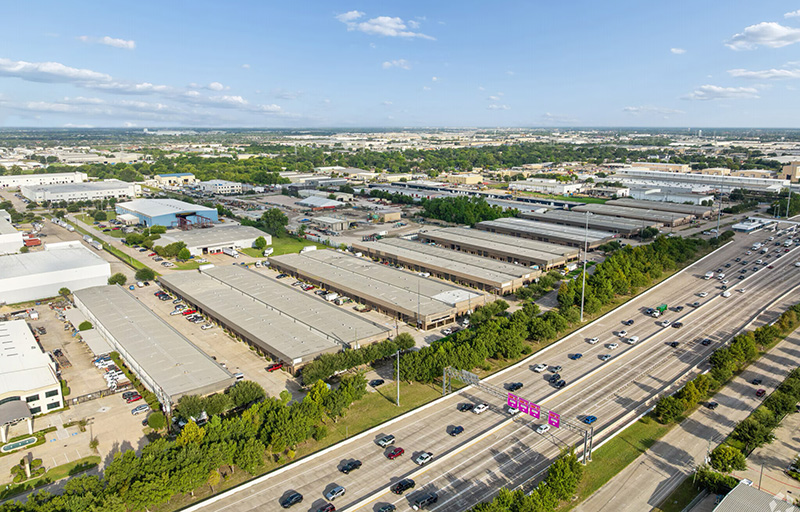
Simi Capital enters Texas with acquisition of 359,000 s/f small-bay industrial portfolio in Northwest Houston
Houston, TX Simi Capital acquired a three-property, 359,000 s/f small-bay industrial portfolio. The transaction, completed in a joint venture with Decker Capital, marks Simi


Quick Hits

Columns and Thought Leadership

Hunt CRE question and answer: Choosing a real estate agent - by David Hunt
First, we will only work with one agent exclusively. The primary reason is that we want that agent to legally represent our client’s interests. In New York State, a real estate agent has a fiduciary

Hunt commercial real estate question and answer: Fortune 500 wisdom - by David Hunt
Yes, there are lessons to be learned from the largest companies in America when comes to managing your real estate. But the decision to buy or lease real estate may not be one of

A guide to finding the right NYC property management company - by Sanjay Gandhi
Being a small to midsize landlord in NYC is an increasingly demanding endeavor. From navigating complex regulations, increased compliance demands to dealing with tenant issues and remediating violations. It is wise to enlist the assistance of a partner, a professional

New York’s streets are full again, and the retail numbers prove it - by Noam Aziz
Walk down any New York block this year and you can feel it. The sidewalks are crowded, the storefronts are lit, and the energy that defines this city is back at full volume.
.gif)