



News:
Brokerage
Posted: May 27, 2014
Sellers: Beware of inequitable conduct
In two recent cases, New York courts have punished sellers of mortgages in auctions who were held to have acted inequitably despite the existence of express contract clauses or emails designed to protect them.
Stonehill Capital
The growing popularity of auctions to sell defaulted commercial mortgages caused an issue in judge Sherwood's March 24 decision in Stonehill Capital v. Bank of the West. The bank declared Stonehill the winner of an auction for a defaulted mortgage owned by the bank subject to the execution of a contract. There was confusion about the correct type of contract to use which caused delays. About a month after first confirming the accepted bid, a contract had not yet been signed. In the interim Stonehill had advanced sums to the borrower under the mortgage thereby greatly increasing the value of the mortgage - the bank found out and elected not to sell the mortgage to Stonehill. Judge Sherwood granted Stonehill summary judgment holding that a contract was formed upon the declaration that Stonehill was the winner of the auction in part because the bank did not negotiate in good faith to finalize the contract.
While I certainly would not have counseled Stonehill to proceed without a signed agreement, the result shows that New York courts, in extraordinary circumstances, will give equitable relief to the buyer at an auction where the seller acts inequitably.
PMJ Capital
Sometimes lawyers do a adequate job of drafting a contract clause protecting clients from typical risks. But sometimes, the clients then act in a way that causes judges of the Appellate Division to say, in a 3 to 2 vote, that notwithstanding the clause drafted by the lawyer, the subsequent actions of the client are so inequitable that the client is refused a victory under a motion to dismiss based on the clause. In PMJ Capital Corp v. PAF Capital, LLC (August 14, 2012), that's what happened to the seller of a mortgage. The bid form for the sale required a potential buyer to acknowledge that the contract would not be binding on the seller until a counter-signed copy of the contract was given to the buyer.
That clause is customary in commercial real estate transactions. It is designed to protect the seller from a claim of an oral agreement. And it works, most of the time. It did not work in the view of the majority in PMJ because the seller kept the contract signed by the buyer and the deposit paid by the buyer for 2 weeks while the seller apparently negotiated and signed a competing offer.
While the court mentions an email from the seller that seems to confirm a deal, to me the crux of the decision is that the deposit was held by the seller's lawyer for 2 weeks with no word. The clause protecting the seller was deemed not sufficient in light of the inequitable conduct.
The lesson is that the best contest clauses won't necessarily protect a party from its inequitable conduct. Keep in mind that the PMJ decision was an appeal from a motion to dismiss where the plaintiff is afforded a "liberal construction and...the benefit of every possible inference." But in real life, losing a motion to dismiss or a summary judgment motion means full discovery and a trial must follow which means significant time and expense.
Conclusion
Some practical advice based on these court decisions:
1. Have the proposed contract ready prior to the auction to avoid delays in contractual back and forth;
2. If the winner of the auction takes steps in reliance on word that they are the winner, think twice about reneging on that word if you learn of such steps. Thinking that a contract clause or a disclaiming email may protect you is risky;
3. Don't sit on a signed, agreed contract for an extended period of time - if you change your mind, send it back quickly.
Tom Kearns is a partner at Olshan Frome Wolosky, New York, N.Y.
Tags:
Brokerage
MORE FROM Brokerage
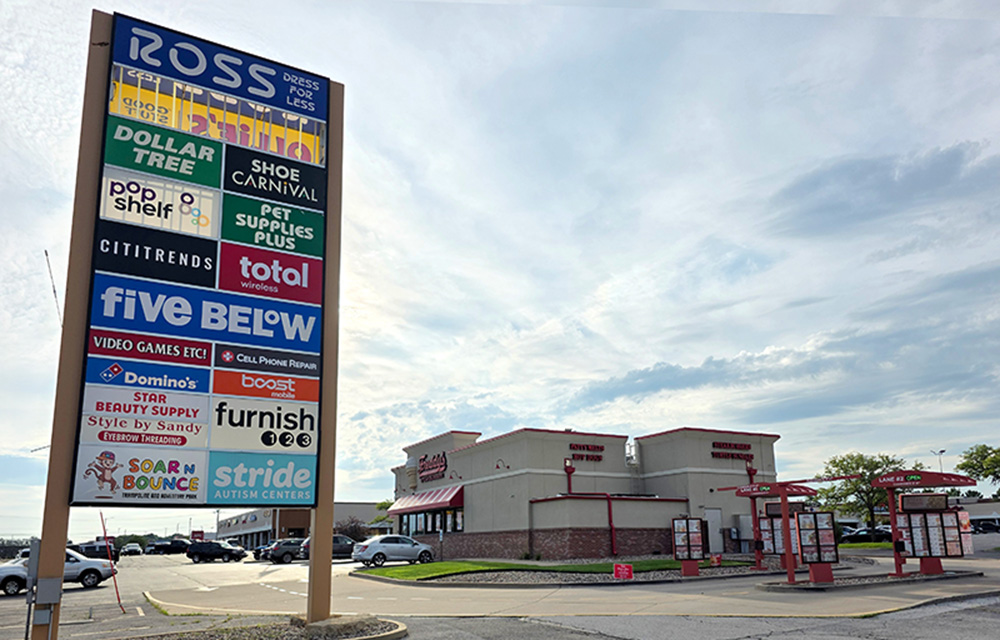
United Properties Corp. adds 380,354 s/f of Midwest retail to portfolio - reaching over 10 million s/f
East Meadow, NY United Properties Corp. has completed two significant retail acquisitions totaling $34.3 million across Ohio and Iowa. The portfolio has crossed 10 million s/f, boosted by 380,354 s/f of premier commercial shopping center space acquired in these purchases.





Columns and Thought Leadership

Hunt commercial real estate question and answer: Fortune 500 wisdom - by David Hunt
Yes, there are lessons to be learned from the largest companies in America when comes to managing your real estate. But the decision to buy or lease real estate may not be one of

The art of investing in real estate - by Thomas Donovan
Real estate investing is as much an art as it is a skill. No one can time the market, or the factors that drive it, perfectly. Location, zoning, size, transportation, and neighborhood density give you a baseline for

New York’s streets are full again, and the retail numbers prove it - by Noam Aziz
Walk down any New York block this year and you can feel it. The sidewalks are crowded, the storefronts are lit, and the energy that defines this city is back at full volume.

Hunt CRE question and answer: Choosing a real estate agent - by David Hunt
First, we will only work with one agent exclusively. The primary reason is that we want that agent to legally represent our client’s interests. In New York State, a real estate agent has a fiduciary
.gif)