



News:
Brokerage
Posted: December 13, 2010
Recession hits bottom - Time to return to work
What happened December 7th 1941? If you recall that day, you're at least as old as I am or did your history class homework.
Can you imagine how people felt that Sunday afternoon when a radio announcer broke into the popular show, The Shadow, and announced that Pearl Harbor had been attacked by the Japanese?
The next day the 12-year recession (Great Depression) was over. Hell of a way to end a recession, but that's what happened. Why did the Japanese attack? Many reasons, but mainly oil. (I guess things change, but
remain the same.) They were already fighting the Chinese and had invaded Indochina. When that happened, the USA, mainly ruled by isolationists, diplomatically stopped Japan from receiving oil from several sources,
thus making them angry. Their goal was to control the Pacific and so decided that by destroying our Navy, the job would be easy. Instead, the action created many jobs in the USA as most patriotic males couldn't sign up fast enough to became soldiers. Many females went to work to replace the males and manufacture war materials. The president spoke to the nation the next day on radio and said, "We have nothing to fear other than fear itself." (Whatever that means). What does all this have to do with the current situation in the U.S. and around the world? Maybe a lot. If that war was brought on by the need and greed for oil, what was learned from it? Apparently not much. Oil still causes much headache and wars around the world. Meanwhile, since you and I really can't do much about that situation, what we can do is stop being afraid.
The batter who's afraid to go to bat against a fast ball pitcher will most likely strike out. The batter who isn't afraid, has a good chance of getting a hit. Same as in business. The recession is two years old and has
definitely bottomed out finally. That means that things will begin to improve, but not if we are afraid. What goes up must come down, and the reverse is true. We've been down long enough, afraid long enough, time to come back up and get back up to the plate.
Bryce Blair, CEO of successful public real estate development company Avalon Properties, said, "The recession is over." (By the way, I'm proud to say he's my son-in-law).
National Association of Realtors commercial economist George Rheiu (no relation) said, "At long last it is here, the bottom of what has been the worst real estate and capital market cycle in recent memory." (Where was this guy in 1989,1990, 1991? Well, we survived that one but it took three years). He states that figures to prove we have bottomed out, and among them are investor purchases, $148 billion in 2008, $54 billion in 2009, close to $100 billion in 2010. Investors don't buy when they are afraid. Those of you who have been watching and waiting can now get back up to the plate, recall all the things you did that made you successful in the first place and begin doing them over again.
P.S. - I only mentioned Dec. 7th because I wrote this important message on Dec. 7th, and it was a major turning point in world history.
Roland Hopkins is the founder of the New York Real Estate Journal, Norwell, Mass.
Tags:
Brokerage
MORE FROM Brokerage
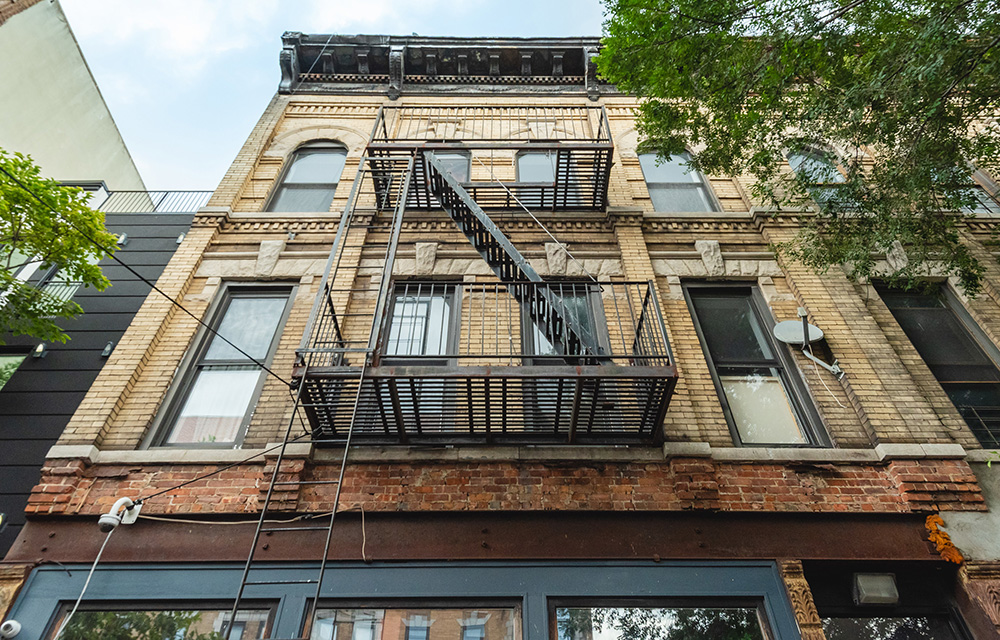
Marcus & Millichap brokers $2.8 million sale of free-market mixed-use property in Brooklyn
Brooklyn, NY Marcus & Millichap brokered the sale of 733 Dekalb Ave., a fully free-market multifamily and retail property in the Bed-Stuy neighborhood. The asset sold for $2.8 million.




Quick Hits
 (2).gif)

Columns and Thought Leadership

Positive forecast for New York’s pro-housing push? - by Philip Butler
New York’s housing crisis remains a hot button topic despite growing consensus that varied and affordable housing is desperately needed statewide. Governor Hochul has recently introduced several initiatives to overcome N.Y.’s anti-housing

Hunt commercial real estate question and answer: Fortune 500 wisdom - by David Hunt
Yes, there are lessons to be learned from the largest companies in America when comes to managing your real estate. But the decision to buy or lease real estate may not be one of

New York’s streets are full again, and the retail numbers prove it - by Noam Aziz
Walk down any New York block this year and you can feel it. The sidewalks are crowded, the storefronts are lit, and the energy that defines this city is back at full volume.

A guide to finding the right NYC property management company - by Sanjay Gandhi
Being a small to midsize landlord in NYC is an increasingly demanding endeavor. From navigating complex regulations, increased compliance demands to dealing with tenant issues and remediating violations. It is wise to enlist the assistance of a partner, a professional
.gif)
September Promotion
