



News:
Brokerage
Posted: January 27, 2009
Frizlen Group and Johnson & Sons partner in $3.25m 257 Lafayette Center: A 30,000 s/f mixed-use project
The 257 Lafayette Center, located on 257 Lafayette Ave., is a $3.25 million mixed-use project that entails the conversion of a three-story 30,000 s/f former school building (built in1928) into:
* A 6,000 s/f corporate office space: Housing the offices of The Frizlen Group Architects and Johnson & Sons, general contractor
* The 4,000 s/f Rose Garden Early Childhood center housing the Aurora Waldorf School satellite program and the Dandelion Daycare..
* 20 loft style apartments (units consisting of two bedrooms and one bath.)
The project is located on the city's west side Grant-Ferry neighborhood. The Frizlen Group's Karl Frizlen, architect, and Johnson & Sons' Paul Johnson, general contractor, teamed up for this project out of need for office space. Both met each other through the Elmwood Village Association, a community organization in which they have been active for many years. The apartments are market-rate and will offer a loft-style open floorplan with large windows to the 12' high ceiling affording daylight throughout the apartment. Authentic doors with transoms, blackboards and other features will help maintain the building's landmark character.
The development will assist stabilizing the neighborhood and the Grant St. commercial corridor which has fallen into urban decay. The school was empty for three years and had fallen into disrepair. The project was well supported by the community and the few variances required were granted by the city's planning, zoning and preservation boards in public hearings. In order to attract historic tax investors, the developers applied and were granted state and federal historical status. The developers applied and are in the process of obtaining LEED silver certification, which will verify the building as a highly energy efficient, environmentally responsible and green building. Some measures to obtain LEED certification are:
* Photovoltaic solar panel system to provide 33% of building's electrical demand
* Water use reduction and water efficiencies
* 20% increase of energy performance above building code requirements.
* Purchase of high efficient equipment and appliances.
* Recycling of waste material: 50% diversion from landfill.
* Reuse and restoration of windows, doors, hardware, etc.
* Purchase of construction material with high-recycled content.
* Purchase of low-emitting construction materials for enhanced indoor air quality.
The project was privately financed from following sources:
* A $2.2 million commercial loan from Community Preservation Corporation (CPC).
* $600,000 historic tax credit investors.
* $300,000 from private investors.
* $120,000 from the N.Y. Energy Smart PV Incentive.
* $40,000 in energy credits through the NYSERDA Energy Reduction Plan.
* $950,000 in savings through mixed-use tax abatement program over 12 years.
The project is currently under construction and scheduled to be completed by September 2009.
Tags:
Brokerage
MORE FROM Brokerage
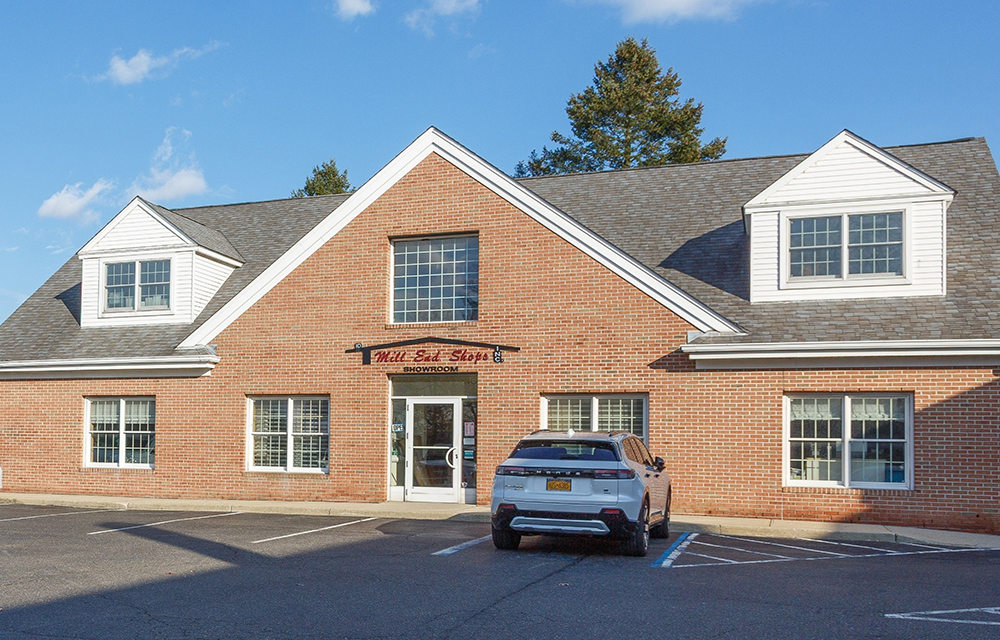
People’s Arc of Suffolk signed at 10-year lease 59 Sunrise Hwy East Islip, NY
East Islip, NY People’s Arc of Suffolk has signed a 10-year lease for a 4,000 s/f freestanding retail/office building at 59 Sunrise Hwy. The property




Quick Hits

Columns and Thought Leadership

A fresh start - by Shallini Mehra and Amit Doshi
For the past several years, the New York City multifamily housing market has been defined by disruption. The combined impact of the HSTPA rent laws and a sharply higher interest rate environment has fundamentally reduced

The anticipated effect of Basel III and ISO 20022 implementation on commercial real estate - by Michael Zysman
July 1, 2025 is the deadline for US banks to begin to adopt Basel III banking standards and July 14, 2025 is the deadline for U.S. banks to adopt ISO 20022 messaging standards. Both will have a significant effect on the banking and commercial real estate (CRE) finance sectors.

Tri-state capital migrates nationally amid regulation pressure - by Reese Weaver
New York tri-state multifamily investors are increasingly reallocating capital to less-regulated markets across the U.S. as rent control and legislative risk erode returns at home. With over 60% of New York City’s rental housing stock classified as rent-stabilized, the traditional value-add model — buying under-performing buildings,

The death of the generic offering memorandum: What buyers expect in 2025 - by Kimberly Zar Bloorian
There was a time when an offering memorandum (OM) was pretty bare bones, some photos, a few bullet points on income, and a rent roll thrown in at the back. That used to get the job done. Not anymore. In 2025, buyers are sharper, faster, and more selective. They’re looking
