



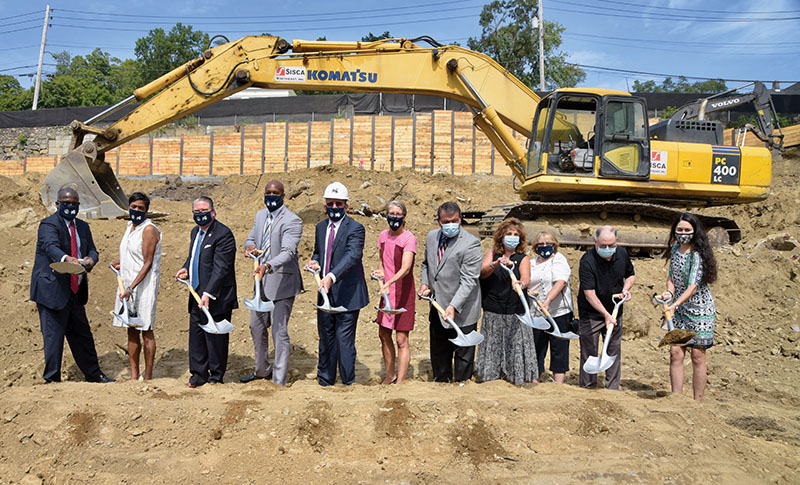
Peekskill, NY On September 9th, 645 Main, a new $50.8 million mixed income residential development by Wilder Balter Partners, officially broke ground, supporting the city’s commitment to future growth and the redevelopment of its downtown. Joining Bill Balter, president, Wilder Balter Partners, Inc., were Andre Rainey, mayor, City of Peekskill; George Latimer, county executive, Westchester County; RuthAnne Visnauskas, commissioner, NYS Division of Housing & Community Renewal; Peter Harckham, senator, NYS Senate; Rose Noonan, executive director, Housing Action Council; Jean Friedman, director of planning, City of Peekskill; and Matthew Rudikoff, Peekskill IDA executive director & economic development specialist, City of Peekskill
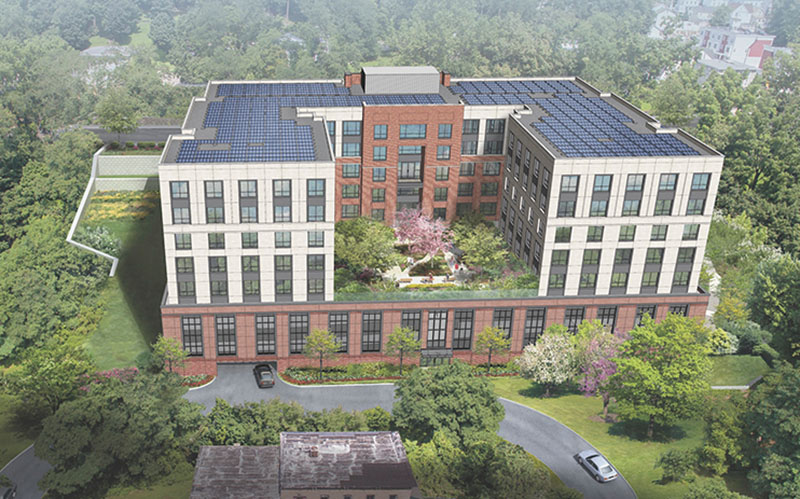
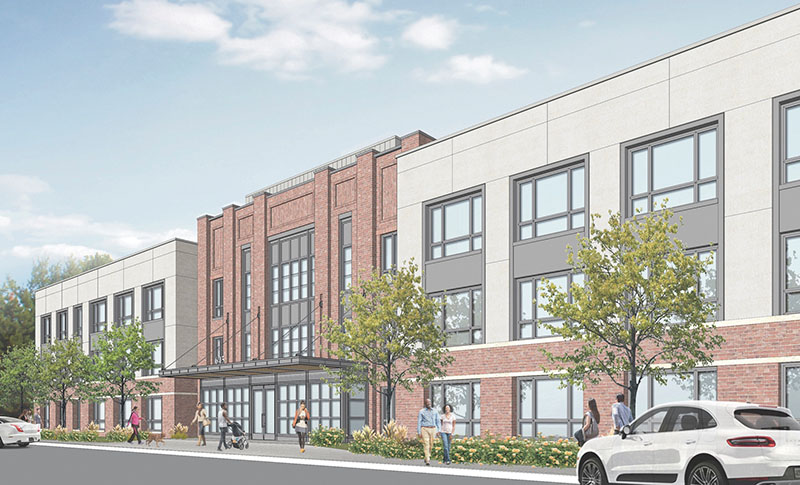
Situated in a prime location downtown, 645 Main will be an 82-unit mixed income, new construction development with three stories of apartments fronting Main St., five stories of apartments facing Central Ave., and parking on the first two levels that can be accessed from Central Ave.
The unit mix currently proposed includes 18 one-bedroom units, 50 two-bedroom units, and 14 three-bedroom units representing 106,000 gross s/f of rentable residential space and 65,000 s/fof non-residential space including a parking garage. Amenities available to all residents will include a community room with kitchen, great room, fitness center, central laundry, green roof and courtyard, and an on-site management office.
An eight-minute walk from the Peekskill Metro North train station and waterfront as well as a five-minute walk to Peekskill’s business district, 645 Main is also on the Central Ave. route that links the two target areas identified in the citys Downtown Revitalization Initiative (DRI) grant from New York State. The development will further expand housing diversity by offering 82 units under the Income Averaging set aside, providing greater income diversity and deeper affordability.


 (2).gif)





.gif)