



News:
Brokerage
Posted: June 22, 2021
What real estate practitioners need to know when buying/selling vet clinics - by Jeremy Musella

It is important to advise veterinary clients–when buying or selling clinics–as to the importance of real estate. Real estate is always a negotiated term, whether the real estate will be sold or leased.
When representing a seller who owns both the clinic and real estate, the seller must decide whether to become the buyer’s landlord or to sell the real estate. Leasing the space to the buyer allows the seller to earn monthly revenue in the form of rent; however, a seller who has limited experience as a commercial landlord may opt to sell the land out-right to the buyer. Retaining the real estate also leaves a seller with the flexibility to sell the veterinary real estate to a company who specializes in said purchases. A middle ground approach is including a right of first refusal or an option to purchase in the lease agreement.
Whether representing a corporate-consolidator buyer or a solo practitioner buyer, identifying their long-term goals factors into their decision to buy or lease real estate. For example, a corporate-consolidator may ultimately wish to sell to a larger consolidator, and thus be less interested in purchasing the real estate and prefer a term lease with relaxed lease assignment terms. A solo practitioner who purchases the clinic may not have the capital to purchase the real estate at the same time. In this example, the buyer typically prefers a lease with an option to buy the real estate in the future.
Real estate in veterinary transactions is a critical deal point that should not be overlooked. When representing veterinary clients, it is best practice to discuss the client’s long-term goals and the pros and cons of selling or leasing the real estate associated with the practice.
Jeremy Musella is an attorney in Forchelli Deegan Terrana LLP’s Corporate and M&A and Veterinary practice groups, Uniondale, N.Y.
Tags:
Brokerage
MORE FROM Brokerage
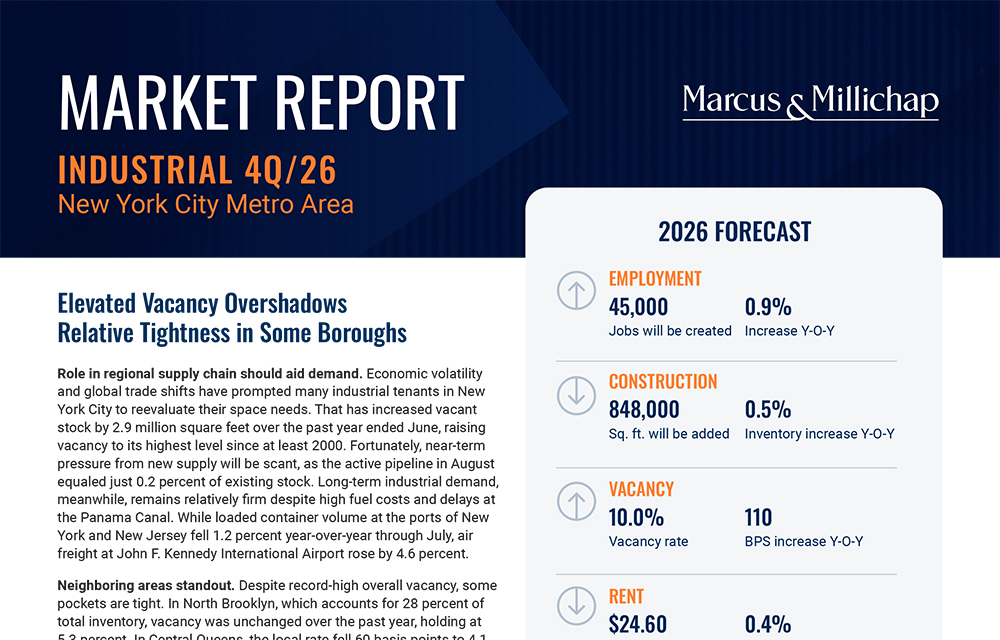
Marcus & Millichap releases fourth-quarter 2026 NYC industrial market report
Manhattan, NY Marcus & Millichap has published its fourth-quarter 2026 New York City Industrial Market Report. “New York City’s industrial market is showing a clear






Quick Hits
 (2).gif)

Columns and Thought Leadership

New York’s streets are full again, and the retail numbers prove it - by Noam Aziz
Walk down any New York block this year and you can feel it. The sidewalks are crowded, the storefronts are lit, and the energy that defines this city is back at full volume.

The art of investing in real estate - by Thomas Donovan
Real estate investing is as much an art as it is a skill. No one can time the market, or the factors that drive it, perfectly. Location, zoning, size, transportation, and neighborhood density give you a baseline for

Hunt CRE question and answer: Choosing a real estate agent - by David Hunt
First, we will only work with one agent exclusively. The primary reason is that we want that agent to legally represent our client’s interests. In New York State, a real estate agent has a fiduciary

Hunt commercial real estate question and answer: Fortune 500 wisdom - by David Hunt
Yes, there are lessons to be learned from the largest companies in America when comes to managing your real estate. But the decision to buy or lease real estate may not be one of
.gif)