



News:
Spotlight Content
Posted: January 27, 2009
Weise and Tate join Hoffmann Architects
Hoffmann Architects, an architectural and engineering firm specializing in the rehabilitation of building exteriors, welcomes new staff.
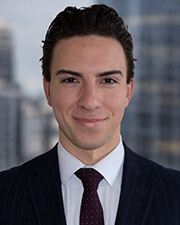
Kevin Weise joins Hoffmann Architects' New York City office as project coordinator. His responsibilities include conducting condition assessments, preparing contract documents and specifications, and administering construction for building envelope rehabilitation projects, including roof repairs and replacements, facade restoration, and plaza/terrace waterproofing. Since receiving a bachelor of architecture degree from Temple University, Weise has specialized in exterior rehabilitation design, with experience in all phases of remedial architectural practice.
Hoffmann Architects has named Cari Tate to the position of marketing coordinator in the Conn. office, where she will be responsible for overseeing marketing initiatives, corporate communications and public relations. Tate brings extensive experience in the fields of marketing an client relations. Previously, she worked as the marketing and membership manager for the Airport Consultants Council, where she liaised among designers, engineers and airport facility management, organized trade shows and spearheaded business development initiatives. Tate received a degree in journalism with an emphasis in public relations from Biola University in Calif.
Tags:
Spotlight Content
MORE FROM Spotlight Content

The commercial classroom: 1031 tax-deferred exchanges - by Edwad Smith Jr.
The sale of real estate may trigger capital gains taxes on the net profits of that sale. These taxes may be deferred by participating in a 1031 tax exchange, in essence, by purchasing property(s) to replace the



.png)

Quick Hits
 (2).gif)

Columns and Thought Leadership

CRE Guide Featured Company: Merritt Environmental Consulting Corp.
Merritt Environmental Consulting Corp. (MECC) was established in June of 2009 after being part of a larger engineering firm for almost 20 years. The focus of the company is to assist lending institutions, attorneys, real estate investors, and property owners with environmental concerns. Today, MECC has offices in New York, Florida, and Vermont and has grown into a regional consulting firm serving clients along the East Coast.

From vacancy to vitality: How adaptive reuse is reshaping Long Island’s CRE landscape - by Andrea Tsoukalas Curto
Adaptive reuse has become one of the most important conversations in commercial real estate today. Long Island has a large inventory of aging retail, office and industrial
2026 Developing Long Island: ERG Commercial Real Estate launches its new Retail Leasing division
North Hempstead, NY ERG Retail Leasing is the dedicated leasing division of ERG Commercial Real Estate, an established full-service commercial real estate brokerage for over 35 years.

2026 Developing Queens: Long Island Board of Realtors advances commercial growth and advocacy in Queens
The Long Island Board of Realtors (LIBOR) Commercial Network continues to play a key role in advancing opportunities and strengthening the commercial real estate landscape across Queens. Through targeted programming and global outreach