



News:
Brokerage
Posted: January 12, 2009
We need to bring fairness and equity to the R.E. tax system
As 2008 drew to a close, the softening economy produced growing deficits in the New York City budget. In his November financial plan, the mayor called for a 7% property tax increase and the elimination of the $400 real property tax rebate for home-owners. The City Council strongly opposed the mayor on eliminating the homeowner rebate. Some individual council members were opposed to the property tax increase. However, in its final meeting of the year, the City Council and the administration reached an agreement to impose the real property tax increase and to send out the homeowner rebate.
At a City Council hearing at the end of November on the budget REBNY strongly oppose the proposed 7% real property tax increase and the planned issuance of the $400 real property tax rebate to homeowners. Here are the reasons for our opposition to the tax increase and our support of eliminating the $400 homeowner rebate.
In 2002, the city enacted an 18.5% real property tax increase to address what many government officials were saying was the most serious fiscal crisis since the 1970s. At the time that this mid-year real property tax was imposed, these government officials were saying that the increase would be eliminated once the city's fiscal condition improved. It was characterized as a temporary tax increase intended to preserve the city's quality of life that was the foundation of the city's economic recovery from the harsh recession of the mid 1990s.
Beginning in the year the tax was enacted FY 2003 and continuing through FY 2008, the city has had an official budget surplus in each year equal to or substantially greater than the revenue from the 18.5% tax increase. Over this six-year period the city has had a budget surplus of $19.9 billion.
More importantly, this surplus was not generated because we controlled our spending. From FY 2002 to FY 2008, the city budget has grown 51%, from $41.48 billion to $62.77 billion.
In our view this "temporary" real property tax increase was excessive and ultimately unnecessary. The recent 7% tax reduction was too little and too late, given the official surplus over the last six years as well as the growth in the budget. Further, the property tax rebate program was an inadequate and inequitable remedy for much broader and deeper tax relief that the city was clearly in a position to provide over the last six years.
As should be clear our opposition to the $400 property tax rebate is not that it lowers taxes. Rather, we oppose this targeted tax relief because it is inequitable and further distorts a real property tax system that has placed an unfair burden on income producing property.
The fervent call by council members to send out the rebate checks was accompanied by a moving story of a constituent for whom the $400 matters. One inherent problem with the rebate program is that owners of multimillion dollar co-op apartments on Fifth Ave. are also receiving these $400 rebate checks.
At the same time that these one million homeowners have been receiving a tax break, the tenants in residential rental properties and the small business owners have been bearing the full burden of the 18.5% tax increase.
The homeowners receiving a tax rebate pay 31% of the tax levy and their property accounts for 61.5% of the market value of real property in the city. While the taxpayers who receive no rebate of their property taxes pay 69% of the tax levy and account for 38.5% of the city's real estate market value.
It would appear that homeowners are already getting a significant break on their property taxes and could do without the rebate.
In our view, the most serious problem with the $400 rebate program is that it makes an unfair real property tax system more unfair. We need to bring fairness and equity to this system and lower real estate taxes for all New Yorkers.
From FY 2002, before the 18.5% tax increase, the city's real property tax levy was $9.271 billion. In FY 2008 the real property tax levy was $14.356 billion, a 55% increase. When it comes to paying property taxes, we all pay too much and we shouldn't be asked to pay more.
Since the mayor released his plan to address the city's budget deficit, the governor has called for a dramatic reduction in spending to address the state's budget deficit. However, his upcoming budget that he released a month earlier than required calls for approximately $4 billion in fees and taxes, such as the imposition of sales tax on clothes under $115 and a tax on non-diet soda.
In view of our worsening economic situation, we have conveyed to our city and state elected officials the same strong message:
Now is not the time to raise taxes.
Now is not the time to make New York more expensive for struggling businesses and struggling families and less competitive business location in our region.
Now is the time for government to do more with less as families and businesses in New York are doing.
As 2009 proceeds we are hopeful that the actions in Washington will begin to bring stability to our economy and that the steps taken by our local leaders to address the city and state budget deficits will recognize the harsh impact new taxes would have on our area's competitiveness. We will urge our leaders to address these fiscal problems by more stringent controls on government spending and not on new taxes.
Steven Spinola is the president of the Real Estate Board of New York, New York, N.Y.
Tags:
Brokerage
MORE FROM Brokerage
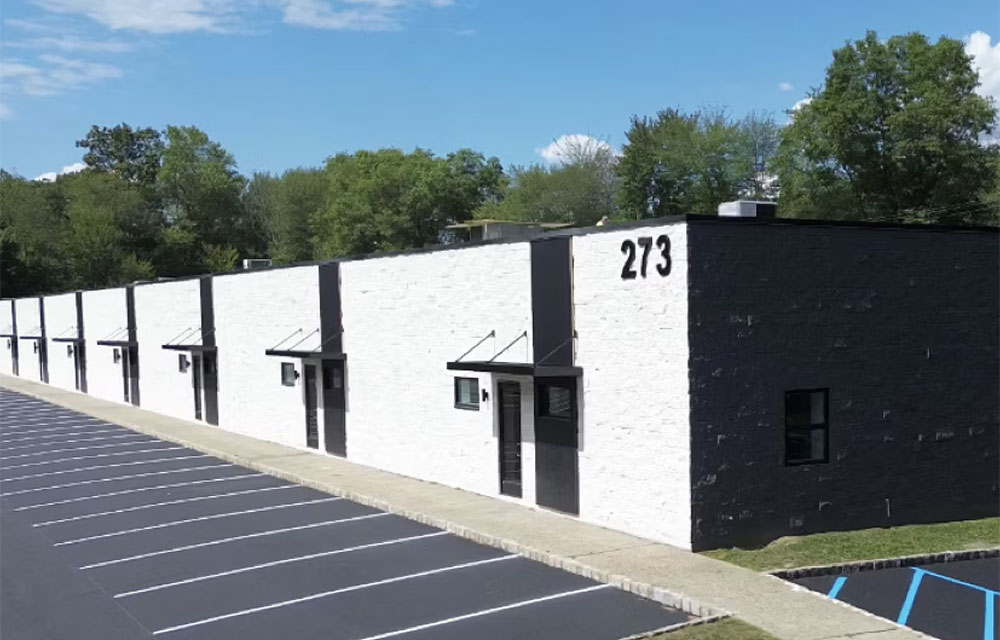
Resource Realty of Northern NJ delivers complete lease-up of 235 Franklin Rd. for Commerce Park Investors
Randolph, NJ Resource Realty of Northern New Jersey (RRNNJ) has completed the lease-up of a 10-unit small-bay industrial property at 273 Franklin Rd., marking the culmination of an investment strategy that began



Quick Hits

Columns and Thought Leadership

Hunt commercial real estate question and answer: Fortune 500 wisdom - by David Hunt
Yes, there are lessons to be learned from the largest companies in America when comes to managing your real estate. But the decision to buy or lease real estate may not be one of

A guide to finding the right NYC property management company - by Sanjay Gandhi
Being a small to midsize landlord in NYC is an increasingly demanding endeavor. From navigating complex regulations, increased compliance demands to dealing with tenant issues and remediating violations. It is wise to enlist the assistance of a partner, a professional

Positive forecast for New York’s pro-housing push? - by Philip Butler
New York’s housing crisis remains a hot button topic despite growing consensus that varied and affordable housing is desperately needed statewide. Governor Hochul has recently introduced several initiatives to overcome N.Y.’s anti-housing

New York’s streets are full again, and the retail numbers prove it - by Noam Aziz
Walk down any New York block this year and you can feel it. The sidewalks are crowded, the storefronts are lit, and the energy that defines this city is back at full volume.
.gif)