



News:
Brokerage
Posted: April 27, 2015
Walter & Samuels buys 160-162 Lexington Avenue for $24.5 million
Walter & Samuels chairman David Berley owns a number of architecturally distinct commercial buildings in his portfolio, and his latest acquisition, 160-162 Lexington Ave., stands out as another asset of architectural distinction.
An investment group headed by Berley acquired the building for $24.5 million. Cohen Real Estate senior executive director Ric Kaiser represented the seller, Lexington Landmark Properties, who had purchased the building from Touro College in June 2006.
The Beaux-Arts building, constructed in 1909 to resemble a Greek temple, is ornamented with a limestone base and granite ionic columns as well as a frieze, cast from sculptures obtained from the Metropolitan Museum of Art, that replicates the Parthenon. The building is punctuated with a sharply sloped roof situated above a classical rose window.
Comprising 25,000 s/facross seven floors and basement, the building historically housed educational institutions such as the New York School of Applied Design for Women and Touro College.
The current tenant is Dover Street Market, a subsidiary of Comme Des Garçons, the fashion label based in Paris and run by renowned designer Rei Kawakubo, who is considered one of the world's most influential and unique designers. In addition to the New York Dover Street Market, there are three others worldwide, in Tokyo, London, and Beijing.
"This building is around the corner from 419 Park Avenue South, the twenty-story terracotta building that has been the home of Walter & Samuels since 1978," Berley said. "I have passed 160 Lexington for many years and admired its beauty. I was very happy to have the opportunity to purchase it."
"We continue to add quality retail assets to our portfolio and are always especially pleased to acquire a building with rich architecture and history," said Berley. "Dover Street Market is a destination retail store for the world's fashion trendsetters and celebrities. This high-end, cutting-edge fashion destination helps to continue the transformation of the area."
Tags:
Brokerage
MORE FROM Brokerage
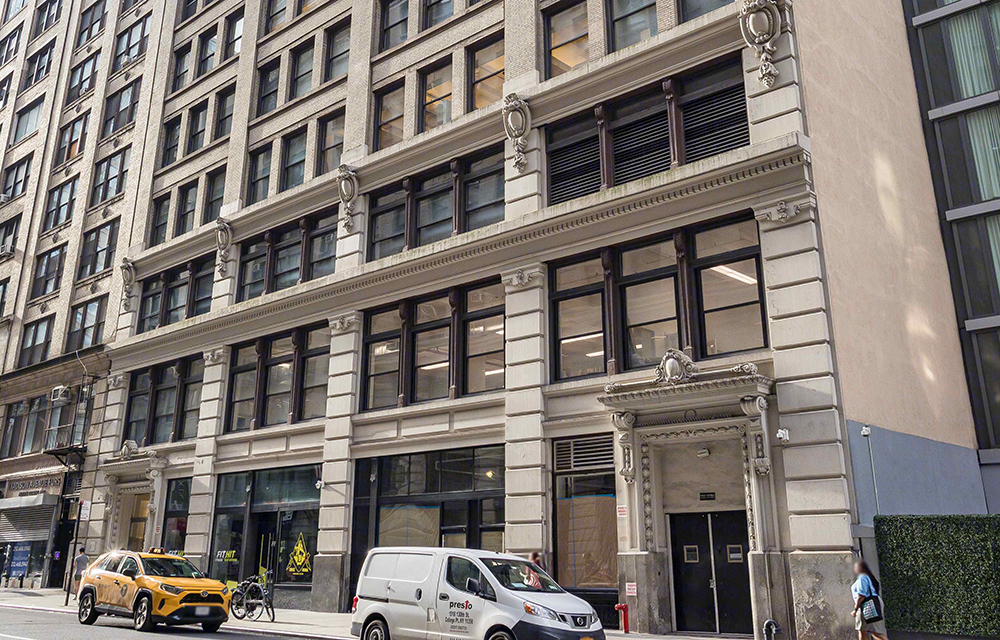
Koeppel Rosen inks 16-year 33,783 s/f lease for coworking firm Nomadworks at 122 West 27th St.
Manhattan, NY According to Koeppel Rosen LLC, leasing and management agent for the Rosen family portfolio, Nomadworks has signed a new 16-year, two-month lease totaling 33,783 s/f at 122 West




Quick Hits

Columns and Thought Leadership

Hunt commercial real estate question and answer: Fortune 500 wisdom - by David Hunt
Yes, there are lessons to be learned from the largest companies in America when comes to managing your real estate. But the decision to buy or lease real estate may not be one of

New York’s streets are full again, and the retail numbers prove it - by Noam Aziz
Walk down any New York block this year and you can feel it. The sidewalks are crowded, the storefronts are lit, and the energy that defines this city is back at full volume.

Hunt CRE question and answer: Choosing a real estate agent - by David Hunt
First, we will only work with one agent exclusively. The primary reason is that we want that agent to legally represent our client’s interests. In New York State, a real estate agent has a fiduciary

The art of investing in real estate - by Thomas Donovan
Real estate investing is as much an art as it is a skill. No one can time the market, or the factors that drive it, perfectly. Location, zoning, size, transportation, and neighborhood density give you a baseline for
.gif)