



News:
Brokerage
Posted: September 13, 2022
Walker & Dunlop closes $1 billion in deals in 30 days
New York, NY Walker & Dunlop’s growing New York capital markets team continues to build momentum as it guides its clients in securing various types of financings for all asset classes. In the past 30 days, the team closed more than $1 billion in capital markets activity across the country.
Led by Aaron Appel, Keith Kurland, Jonathan Schwartz, Adam Schwartz and Mo Beler, the group provides the expertise and relationships within the market to assist clients with their financing needs. Their success in this volatile capital markets landscape reflects their multi-faceted ability to source aggressive capital from virtually every type of lender and equity provider in today’s marketplace.
“We live in times of uncertainty, but it doesn’t mean we need to sit on the sidelines. Despite continued market volatility and a more conservative financing landscape, our team’s expertise up and down the capital stack has allowed us to continue closing complex transactions for our clients across the country,” said Appel. “Our expertise and deep relationships with the market’s most active lenders and equity providers has allowed us to stay ahead of the curve and tailor financing solutions specific to our clients’ unique business plans and needs.”
Select recent transactions include:
- The Brook - $388 million: Walker & Dunlop structured financing from Bank of America for The Brook located at 565 and 547-557 Fulton St., a development consisting of 448,000 rentable s/f of mixed-use multifamily and retail space located at the cross-section of Fulton St., Flatbush Ave. Extension, and DeKalb Ave. in downtown Brooklyn. The unique bookending development is located next to some of the area’s most popular thoroughfares, the Fulton Mall, and a 5-minute walk from the Barclays Center.
- 452 Fifth Ave. - $385 million: Walker & Dunlop stepped in after a proposed sale fell through in May to arrange a refinance on behalf of the property’s owner, PBC. The team quickly identified JP Morgan Chase as the optimal lender to secure a floating rate refinance of the 885,000 s/f office property. The financing will enable PBC to retire existing debt and fund future capital expenditure and leasing costs as they reposition the asset.
- 100 Church St. - $370 million: The team arranged a floating rate refinancing for SL Green Realty Corp, selecting Aareal Capital as the lender after an extensive marketing process. With the city of New York as its anchor tenant, the Lower Manhattan property offers over one million s/f of office space at the intersection of TriBeCa and the Financial District.
- 95 Morton St. - $155 million: Walker & Dunlop arranged financing for Meadow Partners’ acquisition of the property with Deutsche Pfandbriefbank AG as the lender. Built in 1911, the West Village property is home to tenants such as Venmo, Paypal, Integral Ad Science, and Fanatics, a rapidly growing e-sports company that plans to occupy 75,000 s/f of the 220,000 s/f building.
- 130 Fifth Ave. - $77 million: As the exclusive advisor to Olnick Organization, Walker & Dunlop arranged loan proceeds from New York Community Bank to refinance 130 Fifth Ave., a boutique office building in the Flatiron District. Standing 11 stories tall, the property is a few blocks from Union Sq. Park, Gramercy Park, and Madison Sq. Park and has benefited from the limited supply of class A office space in the immediate submarket, resulting in a tenancy base with long-term leases and strong economics. The seven-year loan originated includes four years of interest-only payments.
“I want to congratulate the New York team on their recent success and know that the momentum will continue, considering their robust pipeline. As we continue to expand our capital markets team and capabilities, we offer our clients deep relationships with more than 350 capital sources across the country including banks, insurance companies, alternative lending sources and commercial mortgage-backed securities conduits,” said Susan Mello, executive vice president & group head, capital markets Walker & Dunlop.
Tags:
Brokerage
MORE FROM Brokerage
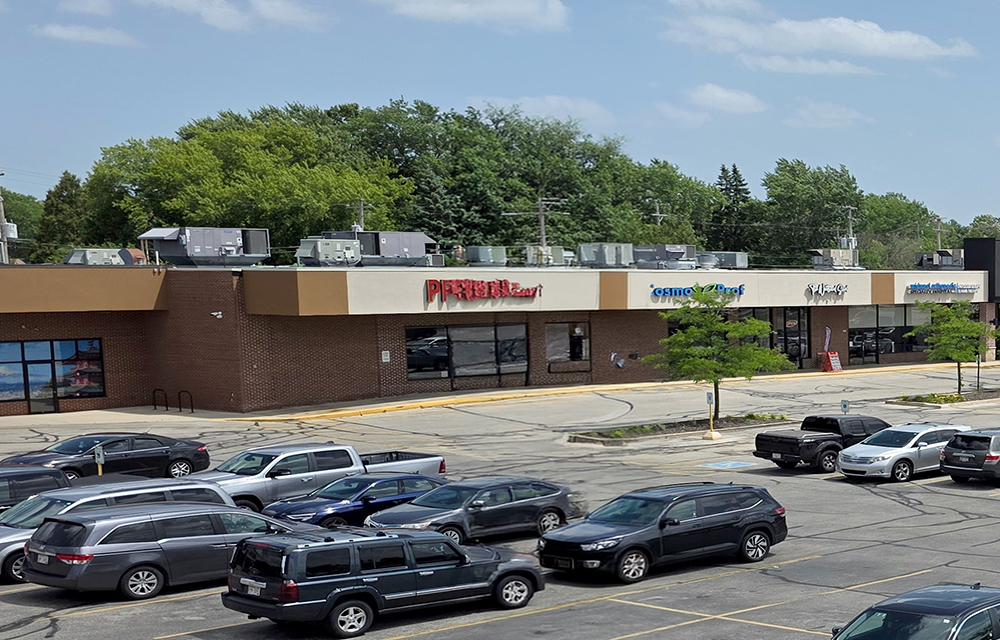
United Properties Corp. expands Wisconsin and Illinois retail presence adding 200,000 s/f
West Allis, WI United Properties Corp. completed two retail acquisitions totaling $27.4 million across Illinois and Wisconsin, adding 205,000 s/f of shopping center space to its portfolio


Quick Hits
 (2).gif)

Columns and Thought Leadership

New York’s streets are full again, and the retail numbers prove it - by Noam Aziz
Walk down any New York block this year and you can feel it. The sidewalks are crowded, the storefronts are lit, and the energy that defines this city is back at full volume.

A guide to finding the right NYC property management company - by Sanjay Gandhi
Being a small to midsize landlord in NYC is an increasingly demanding endeavor. From navigating complex regulations, increased compliance demands to dealing with tenant issues and remediating violations. It is wise to enlist the assistance of a partner, a professional

Positive forecast for New York’s pro-housing push? - by Philip Butler
New York’s housing crisis remains a hot button topic despite growing consensus that varied and affordable housing is desperately needed statewide. Governor Hochul has recently introduced several initiatives to overcome N.Y.’s anti-housing

Hunt commercial real estate question and answer: Fortune 500 wisdom - by David Hunt
Yes, there are lessons to be learned from the largest companies in America when comes to managing your real estate. But the decision to buy or lease real estate may not be one of
.gif)